
Japan and China are developing 600 km/h maglev trains that could rival air travel on journey time, with Japan’s train already reaching 603 km/h in testing.
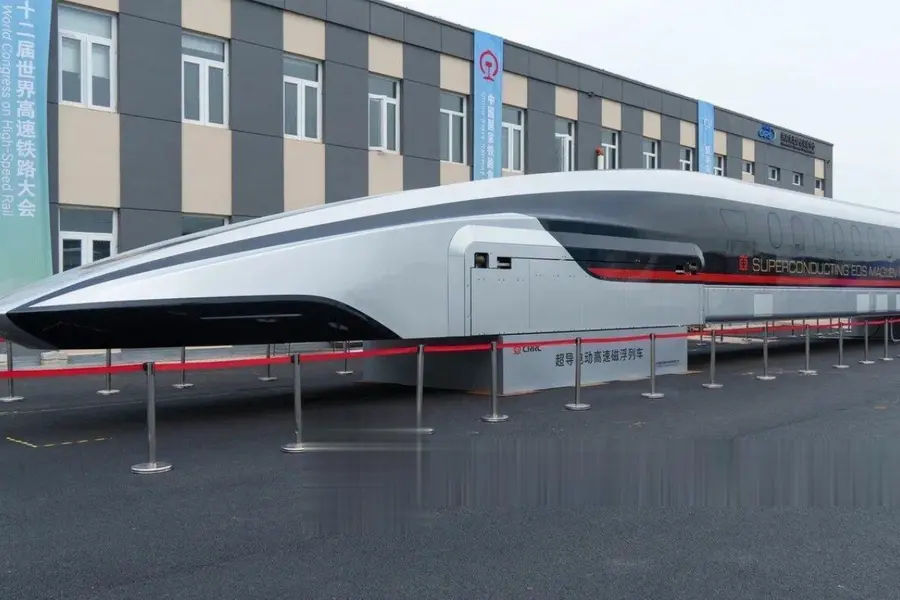
A train travelling at around 600 km/h could soon change the way passengers travel between some of Asia’s biggest cities, as Japan and China race to develop next-generation maglev trains capable of reaching speeds far beyond conventional high-speed rail.
Japan and China are both developing magnetic-levitation technology designed to push rail travel to around 600 km/h (373 mph). Instead of running directly on rails, maglev trains are lifted above the track using magnetic forces, reducing friction and allowing them to operate at much higher speeds.
Japan has already recorded a speed of 603 km/h during testing, while China is developing its own 600 km/h-class maglev system through train manufacturer CRRC.
Japan’s 603 km/h maglev could cut Tokyo-Nagoya journey to 40 minutes
Japan’s major project is the Chuo Shinkansen, being developed using Superconducting Magnetic Levitation (SCMAGLEV) technology.
The system is designed to transform travel between Tokyo and Nagoya. A journey that currently takes around two hours by train, depending on the service, is expected to fall to just 40 minutes once the maglev line becomes operational.
The first phase of the route is planned to cover nearly 286 km, connecting the two major Japanese cities at speeds that would put the journey well below an hour.
Japan’s government has highlighted the technological differences between its SCMAGLEV system and other maglev approaches.
Noriyuki Shirakuni, a senior corporate executive officer at Central Japan Railway Company (JR Central), which is developing SCMAGLEV, said Japan’s system uses superconducting technology that differs fundamentally from maglev technology developed outside the country.
According to Shirakuni, other systems use larger non-superconducting coils and can levitate trains by about 1 cm while reaching speeds of around 430 km/h. Japan’s technology, he said, is designed around a different technological approach.
He also linked the safety and passenger comfort of SCMAGLEV to the principles developed through Japan’s Shinkansen bullet trains.
China’s 600 km/h maglev aims to transform Beijing-Shanghai travel
China is also working on a 600 km/h high-speed maglev train, with CRRC leading its development.
The proposed technology could dramatically reduce the overall time required to travel between Beijing and Shanghai, according to Ding Sansan, deputy chief engineer at CRRC and head of the company’s maglev research and development team.
Ding compared the potential journey with current travel options. Flying between Beijing and Shanghai takes about 4.5 hours when airport-related preparation and other time are included, while the proposed maglev system could bring the total travel time down to approximately 3.5 hours.
However, China has not yet announced a confirmed date for when its new high-speed maglev train will enter public passenger service. The technology remains under development and testing.
When will Japan’s maglev train start running?
Japan has a more defined timeline for its maglev project. The first stage of the Chuo Shinkansen, linking Tokyo and Nagoya, was originally planned for completion in 2027.
The two projects highlight the competition to develop faster rail systems that could bridge the gap between conventional high-speed trains and air travel.
Published: 10 Sept 2026, 09:43 pm IST
ABOUT THE AUTHOR

Related Topics
Disclaimer: Kindly avoid objectionable, derogatory, unlawful and lewd comments, while responding to reports. Such comments are punishable under cyber laws. Please keep away from personal attacks. The opinions expressed here are the personal opinions of readers and not that of Mathrubhumi.