Faster than rivals, cheaper than elite weapons: Why BrahMos is becoming India’s defence export star
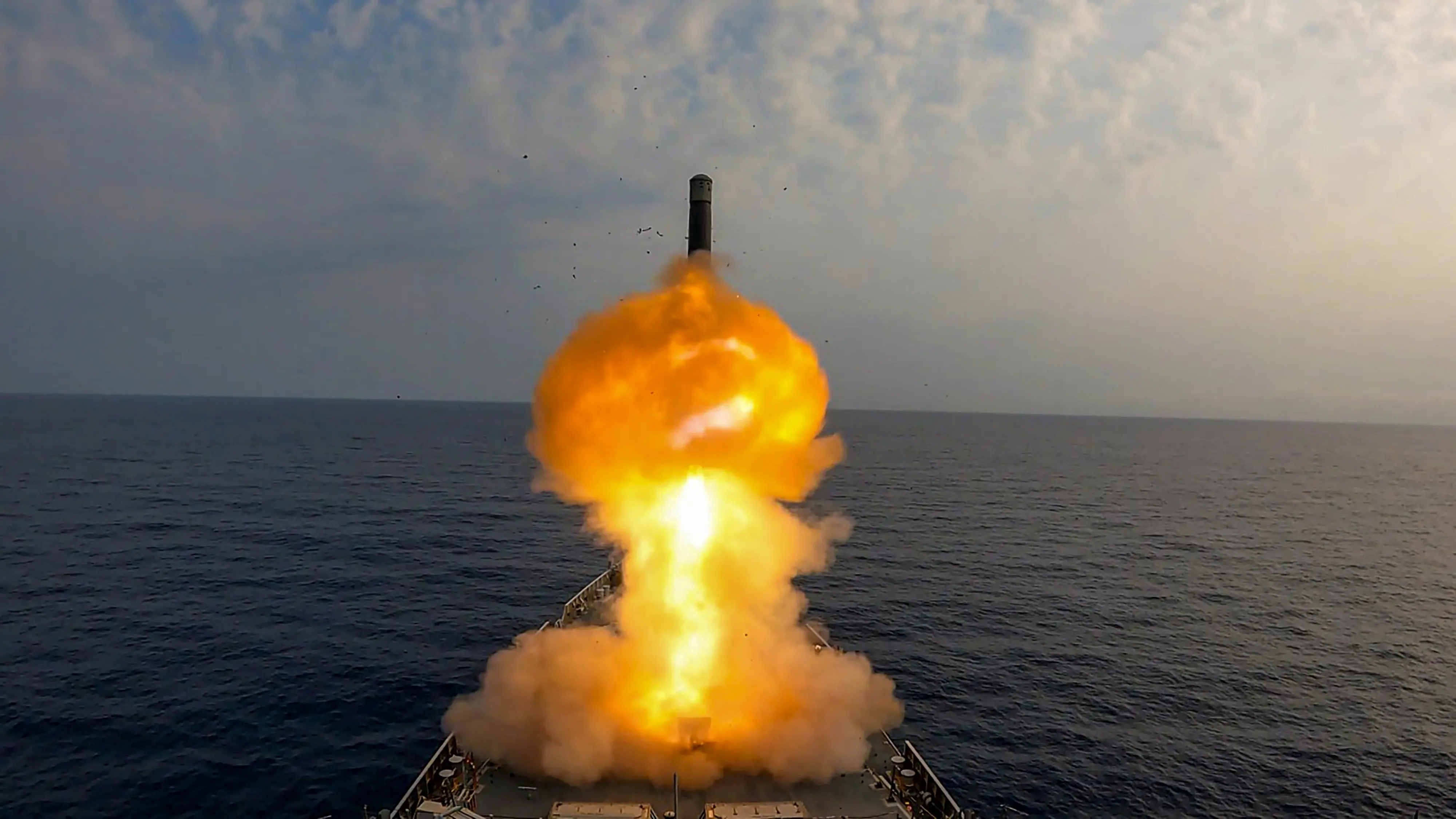
The Indo-Russian BrahMos missile has become one of India’s most recognised defence exports, combining high speed, precision targeting and multi-platform launch capability. Developed by BrahMos Aerospace, the missile is considered one of the fastest operational cruise missiles in the world.
BrahMos entered service with the Indian armed forces in 2006 and has since been deployed across land, naval and air platforms. Its operational record and growing export interest have strengthened India’s position as an emerging defence supplier.
What makes BrahMos different from other cruise missiles?
Unlike many cruise missiles that focus mainly on long-range strikes, BrahMos prioritises speed and impact. It can travel at around Mach 3.5, reducing the reaction time available to enemy air defence systems.
Key features of BrahMos include:
- Supersonic speed of around Mach 3.5
- Range of approximately 290-500 km depending on variant
- Around 3,000 kg launch weight
- High-explosive and penetrator warhead options
- Launch capability from land, ships and aircraft
Its combination of speed, accuracy and flexibility allows it to perform anti-ship and land-attack missions.
BrahMos price: Why countries are willing to pay millions
With an estimated cost of $3-5 million per missile, BrahMos falls into the premium category of cruise missiles. It is more expensive than several subsonic alternatives, but buyers see value in its speed, survivability and strike capability.
The missile’s high velocity increases kinetic energy at impact and creates challenges for enemy defence systems. For countries looking for a powerful stand-off weapon without depending entirely on Western defence suppliers, BrahMos offers an alternative.
BrahMos vs Tomahawk vs Exocet: Speed becomes India’s advantage
The US Tomahawk cruise missile follows a different strategy. It focuses on range, with some variants capable of travelling more than 1,600 km, but moves at subsonic speeds of around Mach 0.8.
France’s Exocet missile is smaller and cheaper but operates at around Mach 0.9-1.0, making it slower than BrahMos.
China’s YJ-18 missile comes closer in concept, using a high-speed terminal phase, but BrahMos maintains an advantage in overall speed and operational deployment across multiple platforms.
| Missile | Speed | Main strength |
|---|---|---|
| BrahMos | Mach 3.5 | High-speed precision strike |
| YJ-18 | Mach 2.5-3 terminal sprint | Anti-ship attack capability |
| Exocet | Mach 0.9-1.0 | Lower-cost naval strike |
| Tomahawk | Mach 0.8 | Long-range land attack |
Operation Sindoor and combat credibility boost BrahMos interest
BrahMos has gained additional attention after reports linking its operational effectiveness during Operation Sindoor with increased international interest.
Its deployment by the Indian military has helped position it as a tested weapon system rather than only an export product. Defence analysts say combat validation is an important factor for countries evaluating expensive military acquisitions.
Philippines, Vietnam and Indonesia drive BrahMos export push
The Philippines became the first international customer for BrahMos after signing a $375 million deal in 2022 for the shore-based anti-ship missile system.
Vietnam has also signed a reported $629 million agreement for BrahMos Block-III coastal defence systems, becoming the second Southeast Asian country to operate the missile. The deal includes missile batteries, training, technical support and maintenance assistance.
Indonesia is also reported to be moving towards a BrahMos acquisition, with discussions involving a deal estimated at around $450 million.
Other countries, including Vietnam, the UAE, Saudi Arabia and several Latin American nations, have shown interest in different BrahMos variants.
Why Southeast Asia is looking at BrahMos
Growing maritime security concerns in the Indo-Pacific have increased demand for advanced coastal defence systems. Countries with long coastlines are looking for weapons that can strengthen deterrence against larger naval forces.
BrahMos provides a combination of speed and precision that makes it attractive for coastal defence and anti-ship missions.
BrahMos has become a symbol of India’s push to expand defence exports. The missile demonstrates India’s ability to develop and sell advanced military technology in partnership with another major defence power.
While its high cost may limit large-scale purchases, BrahMos is increasingly being viewed as a strategic weapon that offers capability beyond conventional cruise missiles.
With more countries exploring acquisitions, BrahMos could become one of the defining products of India’s defence export expansion.