‘We are here. We will be here…’ Trans men, visibility, and India’s transgender law in Manipur
Part 1: ‘Where do we go now?’ A trans woman’s question as India rewrites identity law
Part 2: Born different, made afraid: Intersex lives at the margins of the Trans Bill debate
Part 3: ‘Parents who threw us out; why will they give consent?’ A trans man’s anguish over India’s new law
Part 4: 'New Transgender law is completely divorced from science and medicine'
In a crowded market in Imphal, many years ago, a child once ran away in anger.
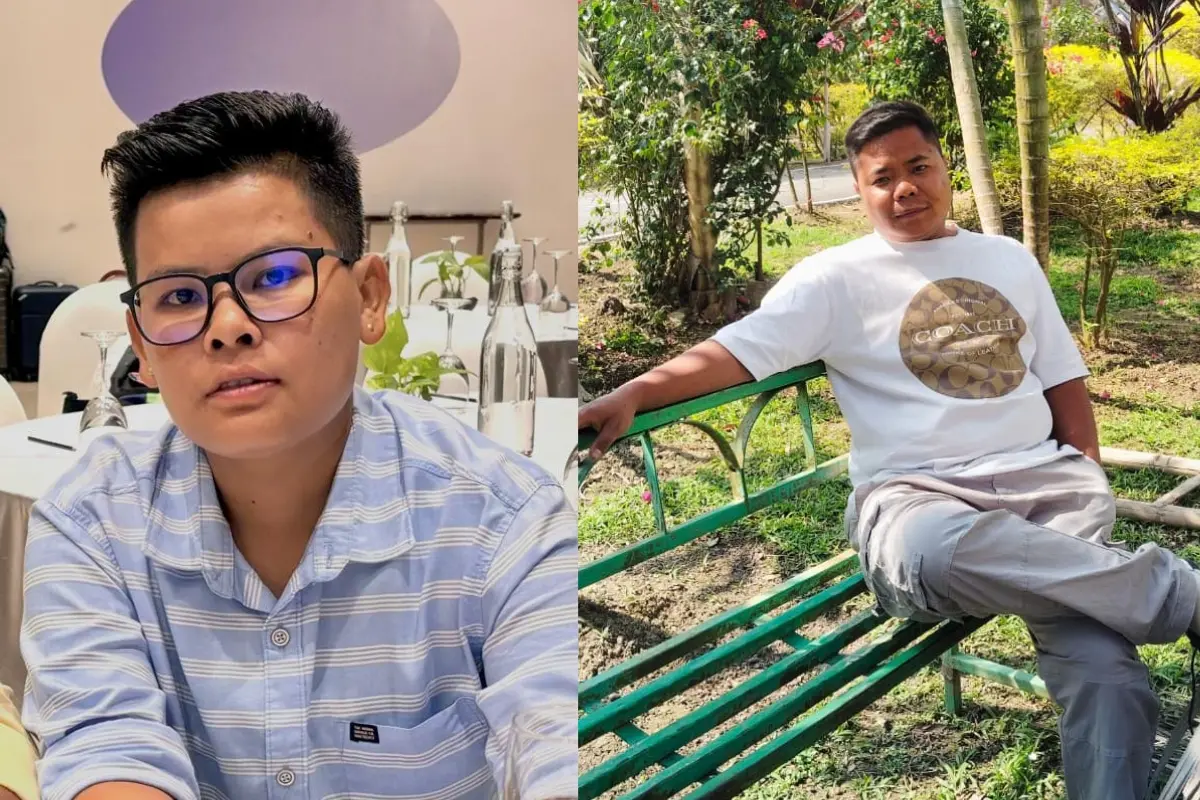
BD Khoisnam, now a 30-year-old trans man, recalls the moment.
“I remember my parents buying me a frock,” he says. “I got so angry that I ran off in the middle of the market. I just didn’t want to wear it.”
His memory returns now at a moment of renewed uncertainty. The new transgender law has triggered confusion and anxiety within the community, particularly over identity recognition and access to services, even as earlier protections stem from the NALSA v. Union of India ruling.
In Manipur, where visibility has grown in recent years but acceptance remains uneven, such policy shifts are felt sharply – filtered through family, custom, and local realities.
Hundreds of kilometres away in Kakching town, Yengkhom (a 29-year-old trans man) shares another narrative.
“I only knew that I didn’t want to wear that long dress,” he says. “In Manipur, once you reach Class 8, there are no more frocks or skirts—you are supposed to wear a long dress. I didn’t understand anything except that the thought of wearing it made me uneasy.”
For both Khoisnam and Yengkhom, these are among the earliest memories that have stayed with them.
Before they had words for identity, before they knew what being a trans man meant, there was already resistance.
“I have always known,” Yengkhom says. “I didn’t have the language – but I knew.”
Growing up without the words for it
In Manipur, awareness of transgender identities has historically been limited, particularly outside urban centres.
“If you ask me when I first knew, I really don’t know,” Khoisnam says. “There was no exposure.”
Understanding came later, and elsewhere. When he moved to Chandigarh for college, things began to shift.
“I started understanding myself slowly. Exposure to social media helped. Seeing others like me helped.”
A turning point came in 2016, when he attended an anniversary event of Empowering Trans Ability (ETA), an NGO working for the community in the state.
“That day, I saw so many people like me,” he says. “That’s when I began to understand the nuances—the names, the definitions, the community.”
Families that know – but don’t speak about it
In both their lives, family awareness existed in a quiet, unspoken form.
Khoisnam describes his home as conservative. His father, a policeman, remains distant.
“He’s an angry man. I don’t know if he will accept me.”
His mother and sisters, he says, care for him, but conversations about identity have never taken place.
“They know… but we’ve never talked about it. There was never that kind of emotional sharing in my family.”
Yengkhom’s experience is similar.
“By high school, my parents understood,” he says. “At first it was difficult – for them and for society. Living in a small town like Kakching, privacy is limited. Everybody knows everybody. You can’t really hide.”
Acceptance, in both cases, has not been a single moment, but an ongoing, uneven process.
Building lives, building community
Today, both men are building lives that extend beyond survival.
Khoisnam works with ETA, focusing on sensitisation and advocacy.
“We even train the police,” he says. “We talk about who we are and what we go through.”
The work includes awareness programmes, institutional engagement, and support for those seeking gender-affirming care or dealing with violence. It was disrupted during the 2023 conflict in Manipur but is slowly resuming.
“Things slowed down then,” he says. “But we’re getting back.”
Yengkhom, meanwhile, runs a small poultry farm.
“It helps me sustain myself. For a few years now, I have also been engaged in community work,” he says.
A state of contrasts
Both describe Manipur as a place of visible change – and clear limits.
“People from the community are living openly,” Khoisnam says. “Many are financially independent.”
Yengkhom points to similar trends.
“There are a lot of gay people in my town,” he says. “They run salons, businesses, even YouTube channels.”
There have also been moments of cultural inclusion.
“There was a time when traditional dance events were organised just for the gay community,” he recalls.
But that acceptance does not extend evenly.
“Society has adapted somewhat to the gay community,” Yengkhom says. “But trans is still new to them.”
Khoisnam adds, “In hill districts however, many trans people cannot come out. In some tribal communities, it is still seen as a sin.”
Even within families, acceptance can shift over time.
“Initially, parents may seem supportive,” he says. “Later, issues come – marriage, money, social pressure.”
Love, law, and intervention
Relationships, for trans men, often become sites of scrutiny.
“When a trans man elopes with a woman, police get involved,” Khoisnam says. “Even if it’s consensual.”
He describes situations where families intervene financially to separate couples.
Traditional norms further complicate matters.
“In marriages here, expenses usually come from the man’s side,” he explains. “Sometimes families spend on the wedding and later demand the money back.”
He pauses.
“Would that happen otherwise—or because we are trans?”
Policy gaps and rising anxiety
Recent legal changes have added another layer of uncertainty.
“The law does not focus on our identity,” Khoisnam says. “It goes against what we understood earlier.”
When news of the proposed amendments spread, confusion followed.
“It took us days to understand it ourselves,” he says. “Then more time to explain it to others in the community who panicked.”
“People were worried – about their documents, their status. Some doctors even told people to rush surgeries.”
For many, that urgency was unrealistic.
“We rely on government hospitals,” he says. “Private care needs long-term planning.”
Yengkhom sees the shift as a setback.
“It feels like we are going back to how difficult things were before,” he says.
“The new bill is shutting people in more. Many are not opening up because of fear.”
Healthcare access remains uneven.
“There are very few options,” he adds. “And not everyone can afford them.”
Naming identity, claiming space
Language offers one form of grounding.
In Manipuri, trans men are called Nupa maanba, and trans women Nupi maanbi.
“These terms matter,” Khoisnam says. “They give us space within our own culture. What the government should be doing is accommodating us for who we are, taking into account our regional context. Erasing identities and confining us to fixed categories under the new law divides us and isolates us.”
“We are here”
“Compared to many places, it’s not that hard to ‘come out’ here. Tribal communities are a different story,” Khoisnam says. “Many of us are visible. We are working, we are making a living, and we are part of society.”
Yengkhom puts it more simply.
“People in my town may take time to fully accept the trans community, but they will get there. Laws like these, however, take us many steps backward and encourage people’s fear” he says.
In Manipur, acceptance remains uneven—shaped by geography, family, and law.
But visibility, for now, remains its own form of insistence.
“We are here. We will be here,” they affirm.