Explained: Where is Saint Martin Island and why is Sheikh Hasina claiming conspiracy over it?
Former Bangladesh Prime Minister Sheikh Hasina is safely living in a secure location in India ever since she was forced to leave her country following widespread protests and violence. On Sunday (August 11) media reports emerged where Hasina levelled serious accusations, claiming that the United States was involved in removing her from power because they wanted control of Saint Martin's Island in the Bay of Bengal.
Bangladesh's Island Beyond Mainland
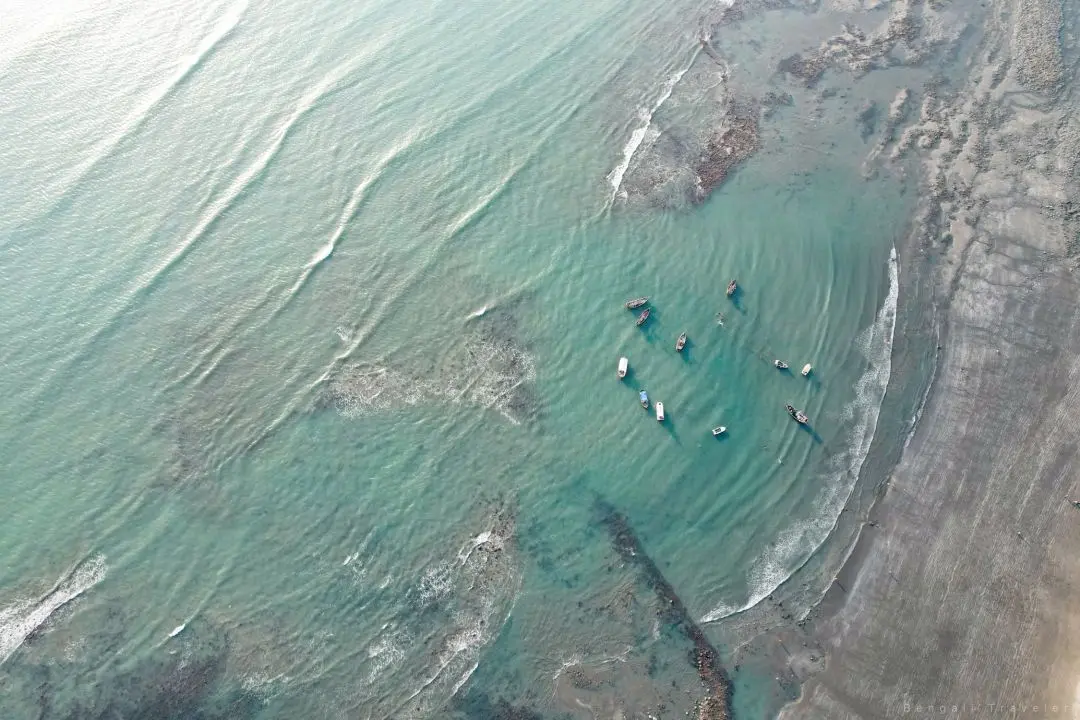
The strategic importance of Saint Martin’s Island -- known locally as 'Narikel Zinzira' (means 'Coconut Island' in Bengali) -- is crucial to uncovering the truth behind the recent turmoil that hit Bangladesh. It is located in the northeastern part of the Bay of Bengal, roughly 9 kilometres south of the tip of the Cox's Bazar-Teknaf peninsula.
Hasina's supporters allege that her rival, former prime minister Khaleda Zia had plans to 'sell off' the island to the US for its strategic interests in return for being reinstated in office.
However, the US has denied this allegation. While claiming that it has full respect for Bangladesh's sovereignty, the US has clarified that it had no plans, whatsoever, of interfering in the country's internal matters.
Cultural Origins of Saint Martin Island
According to Bangladesh Tourism Corporation, the island is named after a Christian missionary, named Martin. In 1890, fishermen began settling on the island, including Bengalis and people from the Rakhine community.
Over the years, it became primarily inhabited by Bengalis. Today, the island is one of Bangladesh’s most popular tourist spots
Historical Connection
Saint Martin’s Island was part of East Pakistan, which became Bangladesh in 1971. It has always been considered Bangladeshi territory
The island is just 9 km from the coast of Bangladesh, making it much closer to Bangladesh than Myanmar, which is further away to the east
The maritime boundary between Bangladesh and Myanmar was not clearly defined until recently. Through discussions and international decisions, Bangladesh secured its claim to the island within its exclusive economic zone as per international law.
Cultural, Economic and Administrative
The people on the island are mostly Bangladeshis and rely on Bangladesh for trade, resources and infrastructure, strengthening their connection to the country
Saint Martin's Island is part of Cox’s Bazar district in southeastern Bangladesh and it follows Bangladeshi laws and governance
The island is home to 3,700 people who mainly work in fishing, rice cultivation, coconut farming and seaweed gathering. They dry and export their products to Myanmar, making the island valuable for both tourism and trade.
It is a very small island, covering only 3 square kilometres, located in the northeastern part of the Bay of Bengal
Strategic Importance of the Island
The island has a significant strategic advantage. If a country were to establish a military base on Saint Martin's Island, it would be well-positioned near the Strait of Malacca, a crucial route heavily used by China for shipping
The location also allows for monitoring activities not just of China and Myanmar, but also of India. As China continues to assert its influence across the Indo-Pacific region, the island offers a valuable position to challenge Beijing’s presence
On the issue of energy security, the island’s closeness to possible offshore oil and gas reserves makes it an important spot for energy exploration and production
If any power other than Bangladesh, such as the US, gained control of Saint Martin’s Island, it could act as a checkpoint for monitoring Bangladesh’s local activities—including military, strategic and economic actions.
This control would prevent other regional powers from gaining influence in the area. It would also significantly impact China’s plans to use the ‘Belt and Road Initiative’ route through Myanmar to Bangladesh for strategic and economic benefits.