From Kerala to J&K: How climate change is redefining the monsoon in country
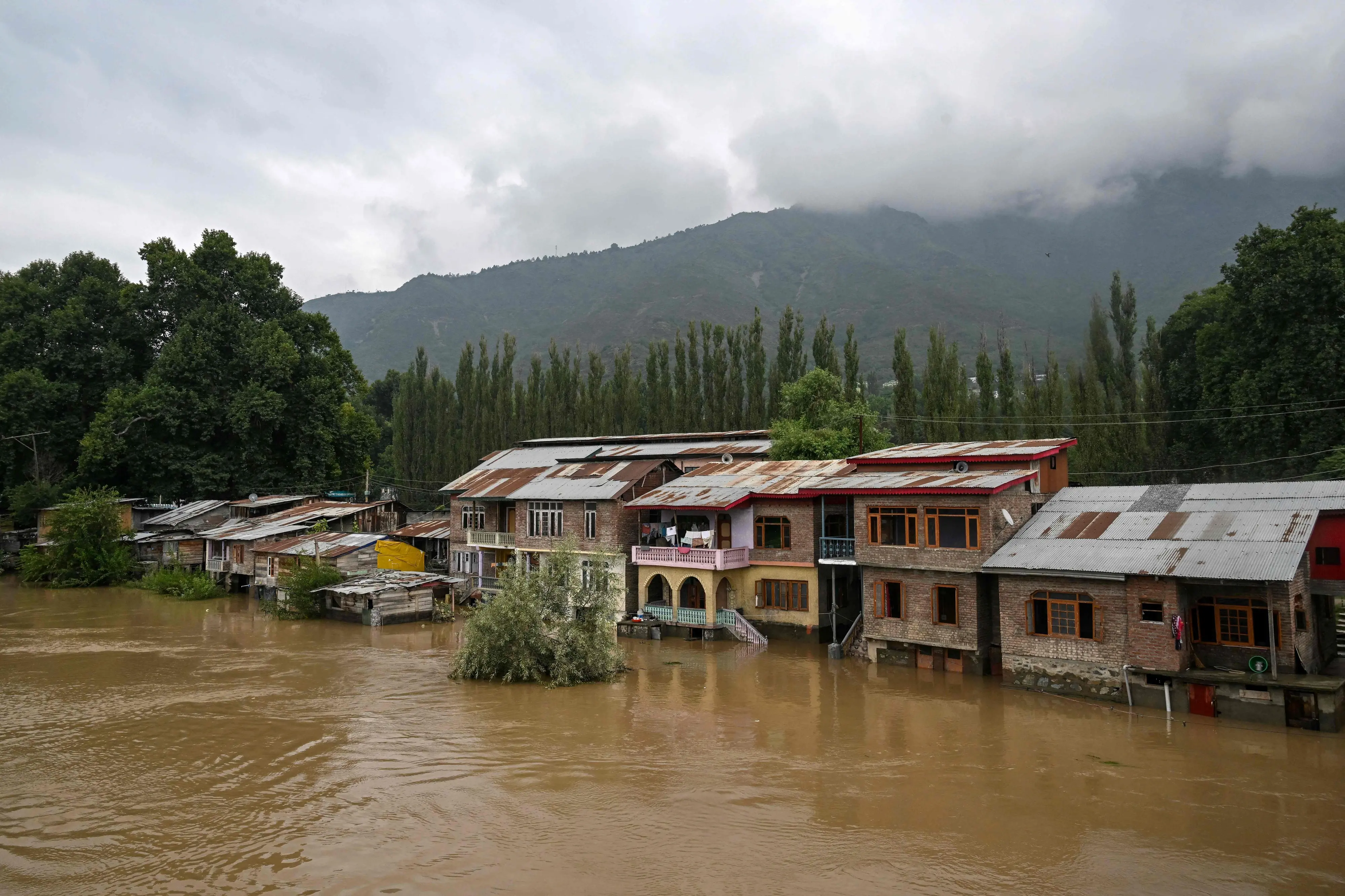
The monsoon, once the reliable lifeline of India’s agriculture and economy, is fast becoming one of the country’s biggest threats. From record-breaking rainfall in Jammu to unprecedented floods in Rajasthan, and now erratic patterns across Kerala, the weather has grown unpredictable on an alarming scale. Experts warn that the monsoon, historically steady and cyclical, is morphing into a relentless, chaotic force fueled by climate change.
In August 2025, Jammu recorded an astonishing 380 mm of rainfall in just 24 hours, breaking a century-old record from 1910. In Kishtwar district, cloudbursts and flash floods killed more than 65 people, injured hundreds, and left many missing. Meanwhile, Rajasthan logged its wettest July in nearly 70 years, with rainfall surging 77 per cent above normal.
“We are witnessing unusual rainfall patterns in unexpected regions like Rajasthan and Gujarat. In recent monsoon seasons, Rajasthan has received significantly more rainfall than usual. This indicates that climate change has impacted weather patterns across the country. However, it remains unclear whether these changes are temporary or part of a long-term shift,” said Neetha K Gopal, regional director of the India Meteorological Department (IMD).
Cloudbursts on the rise
Cloudbursts, sudden, highly localised deluges exceeding 10 cm of rain within a single hour, are no longer anomalies. Once rare phenomena, they are now occurring with alarming frequency across both North and South India, often triggering devastating flash floods and landslides in fragile regions such as the Himalayas and the Western Ghats.
“A cloudburst is highly unpredictable. It is wind-driven, associated with deep convective nimbus clouds, and can shift location depending on wind movement. Moreover, the exact rainfall volume from a single cloud cannot be forecast in advance. Precipitation often builds up slowly and then collapses into a sudden deluge,” explained Venu Nair, a senior meteorologist.
According to India Meteorological Department (IMD) data, the number of “very heavy” and “extremely heavy” rainfall days has surged over the past two decades. In fact, North India has just recorded its wettest monsoon since 2013, with 21 "extremely heavy" rain events logged by August 25 -- marking a 50% increase over last year’s count of 14.
This escalation stems from thermodynamic principles: warmer air holds more moisture, roughly 7% more for every 1°C rise in temperature, fueling more intense and unpredictable precipitation. When these concentrated bursts meet destabilised terrain or blocked drainage systems, the consequences are immediate and devastating.
The role of jet streams
India’s monsoon is also increasingly being shaped by global atmospheric dynamics. Subtropical jet streams, high-altitude winds that guide weather systems, are weakening as the Arctic warms nearly four times faster than the global average.
“When the Arctic experiences abnormal warming, the temperature contrast between the tropics and poles reduces. That weakens the jet streams and allows them to dip further south, sometimes into central or southern India. When these upper-level winds stall over a region, they can trigger prolonged heavy rainfall,” Nair said.
He pointed to atmospheric carbon dioxide concentrations as a driver of this instability.
“In 2013, CO₂ levels crossed 400 parts per million. Today they are at 425 ppm. That extra heat energy makes cloud systems more powerful and leads to adverse weather events,” he added.
Kerala: A case study in climate stress
Kerala has become one of the starkest examples of how climate change is rewriting the monsoon. Once marked by evenly distributed rainfall, the state has faced erratic and extreme weather in recent years, from the 2018 and 2019 floods to recurring landslides and the intense heatwaves of 2024 and 2025.
“Kerala didn’t even experience a proper winter season this year. In 2016, we had record heat. In 2017, Cyclone Ockhi changed how we looked at cyclones. In 2018 came the devastating floods, followed by flood-like conditions in 2019. Since then, landslides have occurred almost every year,” said Gopal.
While overall monsoon rainfall in Kerala has not drastically risen, IMD records show it has become highly uneven, with long dry spells broken by sudden bursts of heavy rain. This unevenness, experts warn, is increasing flood risk in the state’s steep terrain.
“The Arabian Sea is warming nearly twice as fast as the global average. Ocean warming, once largely limited to the upper 200 meters, has now been observed to penetrate to depths of up to 2,000 meters, storing vast amounts of additional heat energy that is later released into the atmosphere. This ocean heat uptake, combined with thermal expansion, is directly linked to increased atmospheric carbon dioxide levels… Furthermore, recent studies have flagged the Arabian Sea as a critical hotspot. Sea surface temperatures in the region are consistently rising, and in the broader Indian Ocean, warming has been occurring at nearly twice the global rate. Such warming enhances the potential for intense cyclones and extreme rainfall. Several hotspots were identified, including one near Kanyakumari. Studies here showed that the water level has risen by about 4.5 cm over the last decade,” Nair said.
Vanishing buffers
The Western Ghats, one of the world’s oldest mountain ranges, have historically shielded Kerala by intercepting monsoon winds. But degradation of these ranges, combined with Arabian Sea warming, now poses grave risks.
“The Western Ghats, one of the oldest mountain ranges in the world, have long played a crucial role in modulating Kerala’s climate and rainfall. However, both the atmosphere and the Arabian Sea, historically protective influences, are now showing signs of stress due to rapid warming and environmental degradation. If the integrity of the Western Ghats continues to be compromised, the consequences for Kerala could be severe,” Nair observed.
Geographically, Kerala lies on the windward side of the Southwest Monsoon, unlike Tamil Nadu, which falls on the leeward side. This means Kerala’s steep western slopes allow rain-bearing winds to ascend quickly, leading to intense precipitation, with excess water draining rapidly into the Arabian Sea. While this geography has historically provided resilience, it also makes Kerala highly vulnerable to extreme rainfall events.
The 2018 floods demonstrated this vulnerability. Even now, parts of the state remain waterlogged during heavy monsoon spells. If rainfall of the same intensity were to persist continuously for 24 hours or more, Kerala could face a flood crisis far exceeding the scale of 2018, given the combined pressures of weakened natural buffers, rapid urbanisation, and climate-driven extreme weather.
Human activity is making matters worse. Watershed areas, once natural shock absorbers during monsoons, are vanishing.
“In the past, numerous watershed areas, including ponds, rivers, and other natural water bodies, helped absorb and regulate excess rainfall. Today, rapid population growth and unplanned construction have led to the disappearance or degradation of many of these natural buffers,” Nair warned.
Restrictions on weather data
Even as extreme weather grows more frequent, access to real-time weather information has tightened. The IMD recently restricted public access to data from automatic weather stations, making it available only to disaster management authorities.
“The government imposed restrictions that weren’t there earlier. The system is still not accessible to the general public,” Gopal added.
Meteorologists argue that this lack of access undermines preparedness. “Communities today understand weather far better than before. If they had timely data, they could take proactive measures. Instead, they must now rely only on IMD updates once a calamity has already started, which limits early response,” Nair stated.