HAL's hidden crisis: Hard truths that chief Kota Ravi must confront
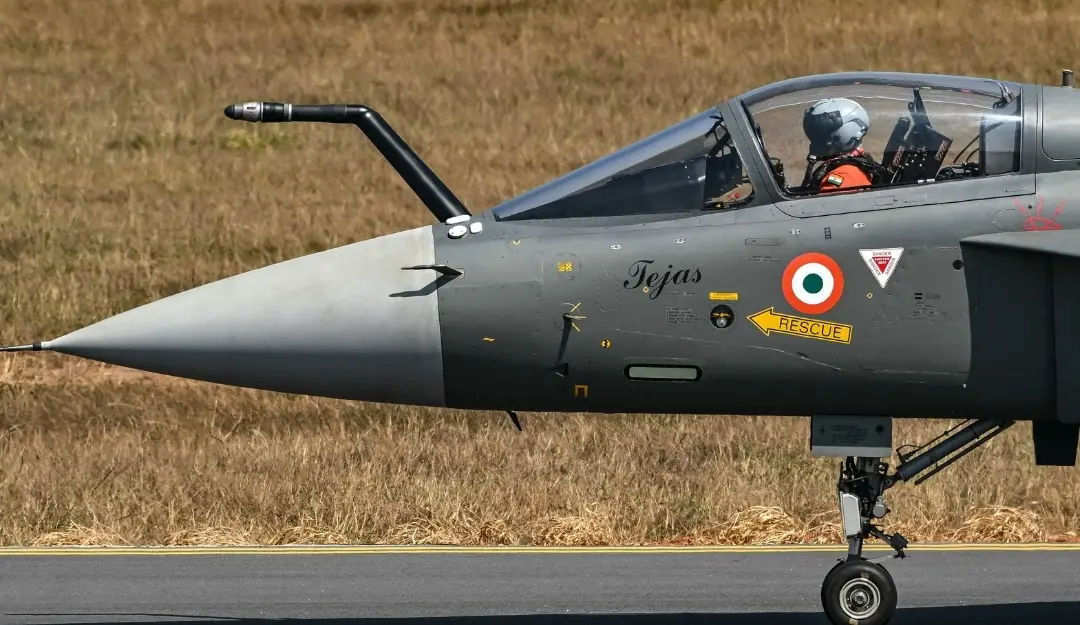
It is 8th May 2026, and Hindustan Aeronautics Limited (HAL) still has not formally handed over a single LCA Mk1A to the Indian Air Force. Five aircraft are reported as fully ready. Nine more sit on the apron, structurally complete and flight-tested, waiting for engines from General Electric. Six F404-IN20 engines have arrived. By the end of the year, HAL itself expects close to twenty ready airframes. Few aerospace companies in the world could carry such an inventory burden without a board-level reckoning over working capital, holding costs, and credibility with the customer.
The questions being asked on open platforms are no longer fringe. They are pointed, technical, and uncomfortable -- and HAL's continued silence is being read by many as quiet acknowledgement.
The reverse auction trap
A recurring criticism centres on the way the Government e-Marketplace (GeM) and the reverse auction model are being used inside HAL.
Consider a component for which the genuine market price is around ₹25 lakh. In a reverse auction, a vendor -- sometimes a small player desperate for the order -- keeps bidding down to ₹15 lakh.
Also Read: The biggest challenge before new HAL chief Kota Ravi
HAL "wins" the round on paper. But everyone in the room, vendor included, knows the part cannot be made to specification at that price. The order is awarded anyway.
The component never arrives, or arrives late, or arrives with quality issues that ripple straight into the assembly line. The optics of a successful reverse auction conceal a procurement failure that ultimately costs the IAF its squadrons.
The opposite distortion is just as troubling. Specifications in some RFQs appear narrowly tailored to favour a single pre-qualified supplier, even when that supplier is not the strongest on quality. The cause differs; the result -- schedule slippage and rework -- is the same.
The 180-day ghost tender
Then there is the practice of demanding bid validity of up to 180 days without committing to a clear evaluation date. Vendors quote in good faith. Six months later, the tender is finally opened, by which point steel, aluminium, electronics, and the rupee have all moved.
Also Read: Is India's procurement policy killing its aerospace future?
No serious supplier can hold the original price. The tender either lapses, is requoted, or limps forward into a contract neither side believes in. A simple audit by the new chairman, Kota Ravi of how many tenders are lying unopened past their original due dates would be revealing — and is long overdue. The 180-day window must go.
People, not just processes
Procurement is finally a people function. Teams that have remained in the same desks for five, ten, or more years inevitably develop comfortable equations with vendors.
Rotation is not a punishment; it is a hygiene measure that every mature defence manufacturer practises. Equally, promotions cannot continue to be driven by tenure or "it was his turn" logic.
Without a hard yardstick -- measurable on-time delivery, supplier quality scores, cost variance against budget -- the system rewards the wrong behaviours and quietly punishes the few who try to fix things.
The balance HAL is owed
In fairness, not every delay is of HAL's making. The GE F404-IN20 supply chain was disrupted globally, and HAL is one of many customers in a long queue.
Indigenous content above 64 per cent in the Mk1A, integration of the Uttam AESA radar, the Swayam Raksha Kavach EW suite, and weapons including Astra and ASRAAM are genuinely complex tasks.
The IAF's insistence on full ASQR compliance before acceptance is correct, even if it slows induction. HAL has also delivered steadily on the Dhruv, the LCH Prachand, and a record order book stretching into the 2030s. The Tejas line in Bengaluru and the new third line at Nashik are real achievements that should not be dismissed.
Also Read: A wake-up call for Hindustan Aeronautics Limited
But strengths do not absolve weaknesses. The IAF Chief himself has publicly said that almost no HAL programme has been completed on its original timeline — an extraordinary statement from a customer, and one that should haunt every floor of HAL Bhavan.
What Kota Ravi must do
Kota Ravi, who took charge on 1 May 2026 as HAL's 22nd Chairman and Managing Director, knows the company from the inside. He has been the "LCA man" for years and helped shape the very contracts now under scrutiny. That is both his advantage and his test.
The agenda almost writes itself: scrap blind L1 reverse auctions for safety-critical components and move to lifecycle-cost evaluation; cap bid validity at 60–90 days with a fixed opening date; commission an independent audit of unopened and lapsed tenders; rotate procurement officers who have spent more than five years in the same chair; tie promotions to delivery KPIs rather than seniority alone; and publish a quarterly delivery scorecard the IAF, the markets, and the public can read.
If these reforms come, HAL has a credible path to becoming the globally competitive aerospace enterprise Ravi spoke of on day one. If they do not, private competitors and joint ventures will keep eating into segments HAL once owned by default. Survival, in this market, will not be granted by legacy. It will have to be earned.
The author is a defence, aerospace & geopolitical analyst.