Climate's gendered toll: Why women bear the brunt yet hold key to resilience
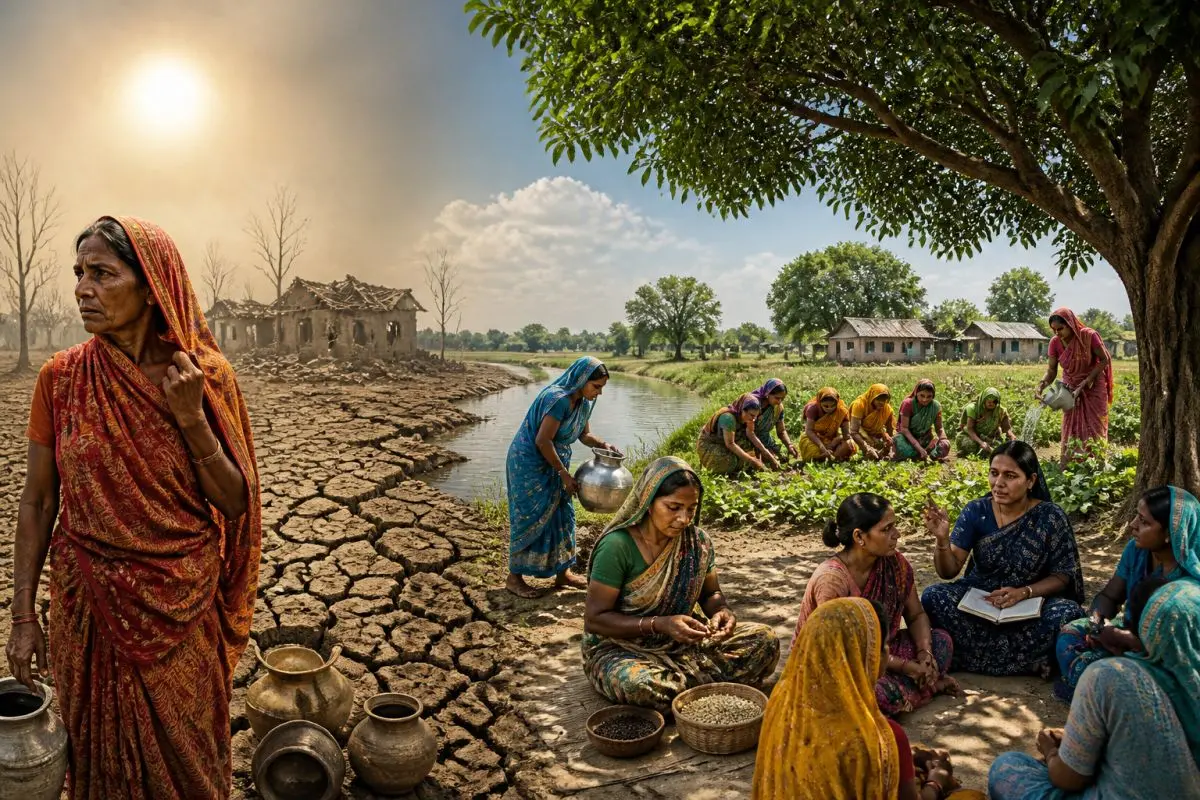
Climate change is one of the most significant global challenges of the twenty-first century, affecting populations unevenly across regions, social classes, and gender groups. Women are among the most vulnerable to climate-related risks because existing socio-economic inequalities often limit their access to resources, healthcare, education, land ownership, finance, and decision-making power. At the same time, women play a vital role in climate adaptation and community resilience through their knowledge, leadership, and management of household resources. Thus, climate change not only intensifies existing gender inequalities but also highlights the importance of women's participation in sustainable climate solutions.
Women's vulnerability to climate change is closely linked to structural inequalities and poverty. In many developing regions, women are primarily responsible for collecting water, fuel, and food for households. During droughts, floods, or resource shortages, these responsibilities become more difficult and time-consuming, increasing women's exposure to environmental stress and health risks.
Limited ownership of land and reduced access to credit, climate information, and agricultural technologies further weaken their adaptive capacity. As a result, women often face greater livelihood insecurity and economic hardship during climate shocks.
Also Read: What impact could El Nino have on India's seas, weather and fisheries?
Climate change also has serious implications for women’s physical and mental health. Rising temperatures and heatwaves expose women, especially agricultural workers, to heat stress and exhaustion. Climate-related disasters frequently disrupt healthcare systems, reducing access to maternal and reproductive health services. Food insecurity caused by crop failures and extreme weather events contributes to malnutrition among women and girls.
Research further indicates that climate stress can increase anxiety, depression, trauma, and eco-anxiety, particularly among women who bear caregiving responsibilities during disasters and displacement.
Livelihoods dependent on climate-sensitive sectors such as agriculture, fisheries, and forestry are particularly vulnerable to environmental changes. Women working in these sectors often experience declining productivity and reduced income due to erratic rainfall, droughts, and floods.
Economic instability may force migration, yet women frequently face mobility restrictions due to caregiving roles, cultural norms, and safety concerns. Those displaced by climate events are at greater risk of exploitation, gender-based violence, and loss of social support systems.
Climate shocks also increase unpaid labour burdens, as women spend additional time securing water, food, and caring for family members. Despite these challenges, women contribute significantly to climate adaptation and resilience. At the household level, women often manage water conservation, food security, and energy use, helping families cope with environmental stress. Women also strengthen community resilience through social networks, mutual support, and collective action during crises.
Also Read: Once cold and steady, now erratic and dry: What is happening in the Nilgiris?
Indigenous and experiential knowledge held by women regarding local ecosystems, seed preservation, and disaster preparedness can improve adaptation strategies and sustainable resource management. However, structural barriers such as unequal access to resources and underrepresentation in governance limit women’s ability to fully participate in climate decision-making processes.
Empirical studies confirm that climate vulnerability is strongly gendered. Research conducted in Bangladesh found higher livelihood vulnerability among women (LVI = 0.550) than men (LVI = 0.484), especially in relation to food security, sanitation, and health.
Similarly, studies from Eastern Ethiopia revealed that women smallholder farmers experience greater climate vulnerability due to unequal access to adaptation resources and information.
Evidence from Southern India also demonstrated that female-headed households were more vulnerable following the 2018 Kerala floods. Furthermore, systematic reviews indicate that climate-related stressors contribute to pregnancy complications, mental health disorders, and displacement-related trauma among women.
Gender-responsive climate policies are therefore essential for achieving climate justice and sustainable development. Policies should integrate women's perspectives into adaptation planning, strengthen access to education, finance, healthcare, and climate information, and promote women's leadership in environmental governance.
Also Read: The unseen crisis: Climate change is erasing Himalayan villages
Greater investment in gender-sensitive research and long-term data collection is also necessary to understand the evolving impacts of climate change on women across different regions and communities.
In conclusion, women are both disproportionately vulnerable to climate change and central to building climate resilience. Recognizing women not only as victims but also as active agents of adaptation is essential for inclusive and effective climate action. Sustainable climate solutions can only succeed when gender equality and environmental justice are addressed together.
The author is founding director of New Delhi-based Ecoveda Climate LLP