
New Delhi: A new study suggests that jumping exercises may play a crucial role in preventing cartilage damage and enhancing bone strength in astronauts during prolonged space missions. The research, conducted on mice, highlights the potential benefits of jump training for maintaining joint health in conditions of reduced movement, such as space travel.
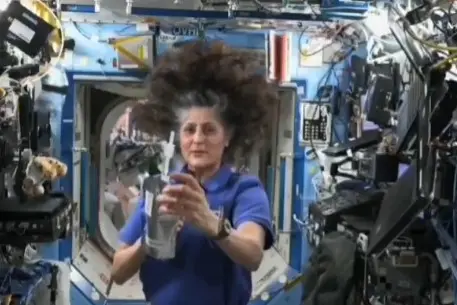
The findings come amid ongoing concerns regarding the health of astronauts, including Indian-origin NASA astronaut Sunita Williams, who has been stranded in space since June last year. Williams and her colleague, Butch Willmore, remain aboard the International Space Station (ISS) due to technical difficulties with Boeing’s Starliner spacecraft, which transported them there.
The impact of space travel on cartilage
Recent experiments by the European Space Agency (ESA) have provided evidence of cartilage degradation in astronauts who spend extended periods aboard the ISS. Reduced movement in space can lead to cartilage thinning and cellular clustering—both early signs of arthritis.
Cartilage plays a critical role in joint function, acting as a cushion between bones to minimise friction and ensure pain-free movement. However, cartilage heals slowly and lacks the regenerative capacity of other tissues, making its deterioration a significant concern for astronauts undertaking long-duration missions.
Jumping exercises to counteract cartilage breakdown
The study, published in the journal npj Microgravity, found that engaging in jumping exercises significantly improved knee cartilage health in mice. Researchers from Johns Hopkins University in the US conducted experiments that involved jump training three times a week, which resulted in thicker and healthier cartilage with a normal cellular structure.
“Since the next step in human exploration of space is going to Mars and spending long periods of time in permanent bases on the Moon, cartilage damage is a really major issue that space agencies need to address despite how very poorly understood it is,” said Marco Chiaberge, an astrophysicist at Johns Hopkins University, the Space Telescope Science Institute, and the ESA.
“The positive effect we saw in these mice is huge, and the magnitude of it was unexpected. They can basically make their cartilage thicker if they jump. Maybe astronauts could use similar training before their flight as a preventive measure,” he added.
Key findings of the study
The study observed that a nine-week period of reduced movement in mice led to a 14 percent reduction in cartilage thickness. However, mice that underwent jump training showed remarkable improvements:
- A 26 percent increase in cartilage thickness compared to the control group.
- A 110 percent thicker cartilage compared to the reduced activity group.
- A 15 percent increase in bone strength.
These findings indicate that jumping exercises could be a potential countermeasure to mitigate cartilage degradation and bone weakening in astronauts.
Future implications for human spaceflight
While further research is required to determine whether similar benefits apply to humans, these findings offer promising insights into protecting cartilage and bone health in space. With long-term missions to Mars and the establishment of lunar bases on the horizon, space agencies may need to incorporate jump training into astronaut preparation to safeguard musculoskeletal health.
IANS
Published: 13 Feb 2025, 08:32 pm IST
Related Topics
Disclaimer: Kindly avoid objectionable, derogatory, unlawful and lewd comments, while responding to reports. Such comments are punishable under cyber laws. Please keep away from personal attacks. The opinions expressed here are the personal opinions of readers and not that of Mathrubhumi.
