
This small, toothed predator, with large eyes and a shark-like snout, represents a unique branch in whale evolution, linking to today's baleen whales
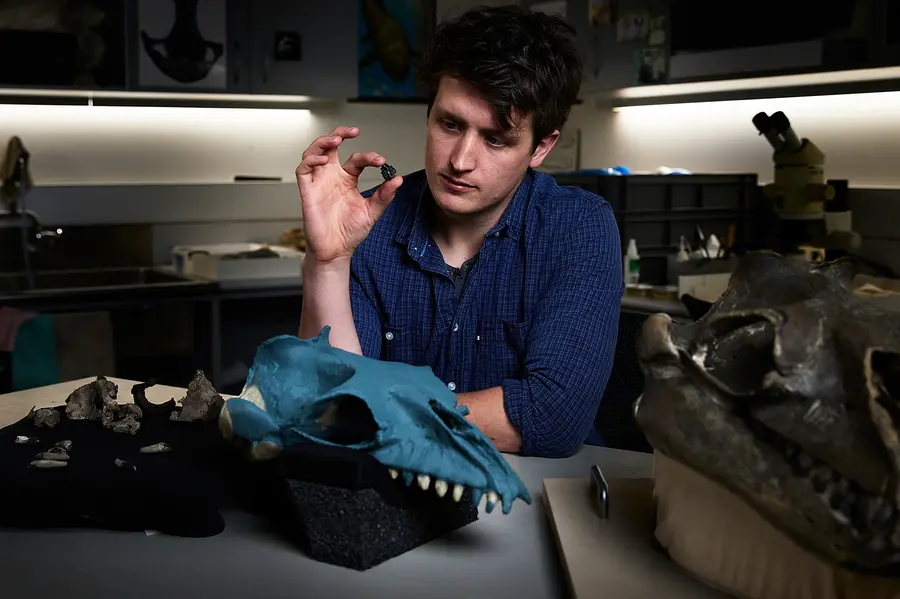
In a rare and fascinating find, palaeontologists have identified a brand-new species of prehistoric whale, thanks to a fossil unearthed on an Australian beach. The creature, named Janjucetus dullardi, lived around 25 million years ago and is believed to hold vital clues to the evolution of whales.
This unusual whale ancestor was nothing like the gentle giants we know today. It was small enough to fit in a single bed, with bulging eyes the size of tennis balls, a shark-like snout and sharp, menacing teeth. Scientists believe it was a fierce hunter despite its size.
Why is it so unique?
Erich Fitzgerald, senior curator of vertebrate palaeontology at Museums Victoria Research Institute and one of the study’s authors, described the animal as deceptively cute. He explained that while it might have looked like a strange mix of a whale, a seal and a Pokémon, it was in fact a species all of its own.
The fossil was found along Victoria’s coast at Jan Juc Beach in 2019, an area already known for yielding unusual whale specimens. The partial skull, which included ear bones and teeth, is considered an astonishing find, as complete skeletal remains are extremely rare.
Where does it fit in whale evolution?
Janjucetus dullardi belongs to a little-known group called mammalodontids, early whales that lived only during the Oligocene Epoch, around 34 to 23 million years ago. This period marks the halfway point in whale history.
Researchers estimate the species could have grown up to 3 metres (10 feet) long. Although it is part of the evolutionary branch that eventually led to today’s baleen whales such as humpbacks, blues and minkes, it looked very different from modern whales. Fitzgerald noted that they may have had tiny leg-like stumps, although this remains unconfirmed due to the incomplete skeleton.
Who found it and how?
The fossil was discovered by Ross Dullard, a school principal and amateur fossil hunter. He spotted something black sticking out of a cliff during a low-tide search at Jan Juc Beach. When he poked it, a tooth came loose. Recognising it was unlikely to belong to a dog or seal, he photographed it and sent the images to Museums Victoria. Fitzgerald immediately suspected it was a new species.
It has taken six years to confirm the find. This is the first mammalodontid identified in Australia since 2006 and only the third ever recorded in the country. Fossils detailed enough to confirm a species are rare, as erosion, scavengers and ocean currents often destroy whale remains before they can be preserved.
According to Fitzgerald, only a small fraction of whales that have ever lived become fossils. The discovery of Janjucetus dullardi provides valuable information about how early whales lived, hunted and adapted to their environment. It could also shed light on how ancient whales coped with warmer oceans, offering insights into how today’s marine life might respond to climate change.
After the species was officially confirmed, Dullard said it had been the highlight of his life. For years, his friends and family had heard nothing else from him about the find. He now plans to celebrate with a fossil-themed party, complete with cetacean games and whale-shaped jellies.
(With agency inputs)
Published: 15 Aug 2025, 08:35 pm IST
Related Topics
Disclaimer: Kindly avoid objectionable, derogatory, unlawful and lewd comments, while responding to reports. Such comments are punishable under cyber laws. Please keep away from personal attacks. The opinions expressed here are the personal opinions of readers and not that of Mathrubhumi.
