
This discovery implies a more complex evolutionary picture, where multiple hominin groups coexisted and potentially interbred, reshaping our understanding of human origins.
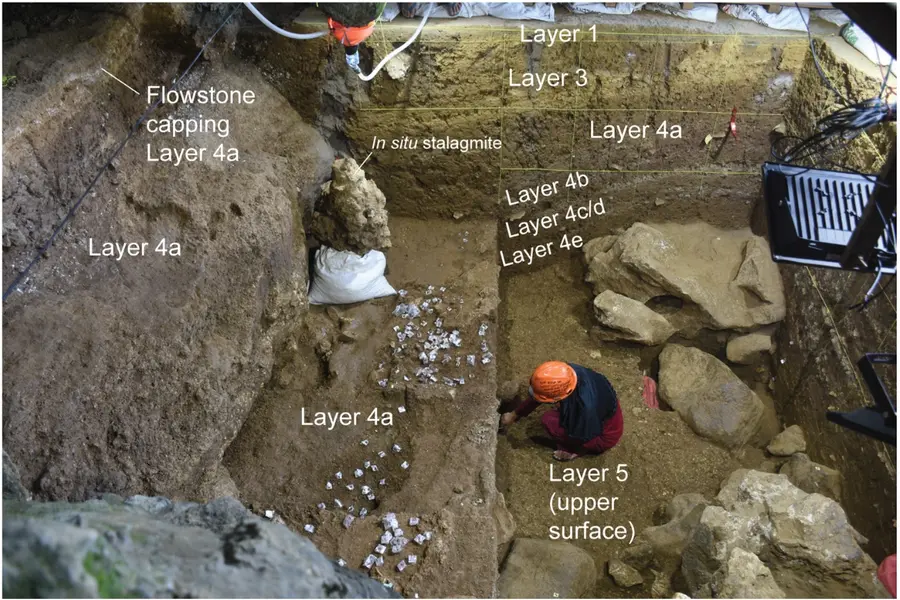
Archaeologists have unearthed 2,00,000-year-old evidence at the Leang Bulu Bettue site in Sulawesi, Indonesia, revealing that an ancient human-like species lived alongside early humans for millennia. The discovery, published in the journal PLoS ONE, provides a transformative look at human evolution in Southeast Asia, suggesting a prehistoric world far more crowded than previously understood.
A Complex Evolution
The findings challenge the long-held "replacement theory," which suggested that Homo sapiens rapidly displaced earlier populations. Instead, the data indicate a branching and interconnected path of development. Scientists now believe that early modern humans shared landscapes and resources with archaic hominins, including the small-bodied Homo floresiensis, often nicknamed the "Hobbit," and other unidentified "ghost lineages."
Technological Parallels
Excavations at the site revealed advanced stone tools that demonstrate sophisticated cognitive abilities. Researchers noted striking similarities between the tools of different species, suggesting a period of shared knowledge or parallel technological development. These artefacts provide a detailed record of prehistoric human activity, indicating that these now-extinct relatives survived until at least 2,00,000 years ago, overlapping significantly with the spread of early modern humans.
Genetic Implications
The discovery coincides with ongoing genetic studies confirming that modern humans carry DNA from Neanderthals and Denisovans. This new archaeological evidence suggests that additional, unknown species likely played a role in shaping the modern human genome. Experts are now calling for a renewed examination of fossil collections in Asian museums, as remains previously labelled as Homo erectus may belong to these distinct, long-surviving groups.
Future Research
The breakthrough has triggered plans for further excavations in remote regions of Indonesia and the Philippines. Researchers aim to recover better-preserved fossils and ancient DNA to clarify the ancestral links between these ancient human relatives and modern humanity. This discovery highlights how the "Handy Man" era and subsequent migrations created a diverse mosaic of species that defined early life in Asia.
Published: 16 Jan 2026, 04:45 pm IST
Related Topics
Disclaimer: Kindly avoid objectionable, derogatory, unlawful and lewd comments, while responding to reports. Such comments are punishable under cyber laws. Please keep away from personal attacks. The opinions expressed here are the personal opinions of readers and not that of Mathrubhumi.
