
Scientists from ARIES and international institutes have reconstructed a century of the Sun’s polar magnetic field using Kodaikanal Observatory’s data, improving solar storm prediction accuracy.
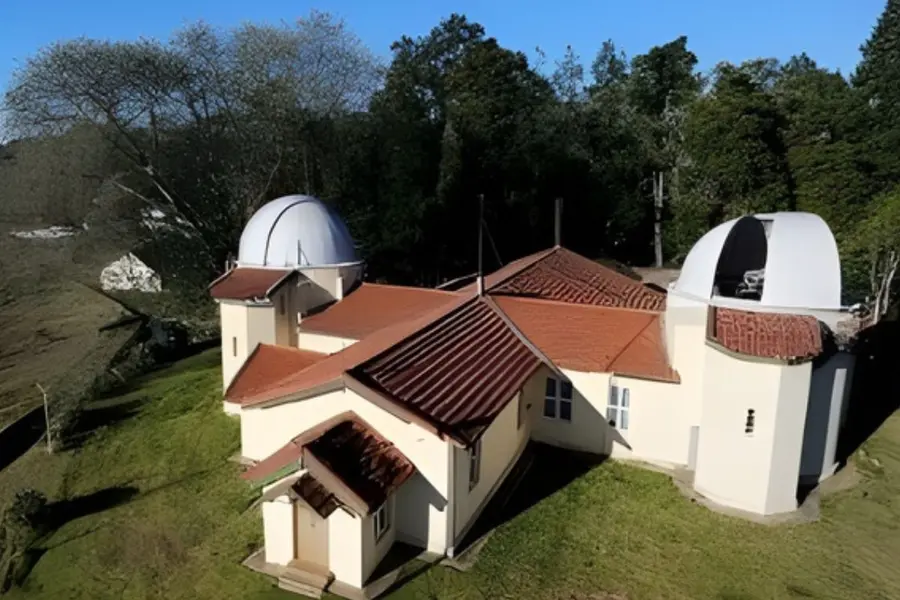
New Delhi: Researchers from the Aryabhatta Research Institute of Observational Sciences (ARIES) have developed a new method to reconstruct the Sun’s polar magnetic activity over the past 100 years by analysing historic solar images from the Kodaikanal Solar Observatory (KoSO), the government said on Wednesday.
The study, led by Dibya Kirti Mishra of ARIES, involved scientists from the Indian Institute of Space Science and Technology, the Southwest Research Institute in the US, the Max Planck Institute for Solar System Research in Germany, and Italy’s INAF Osservatorio Astronomico di Roma. Together, they estimated the Sun’s polar magnetic field across the last century.
“Understanding the Sun’s magnetic behaviour helps scientists predict solar storms, which can damage satellites, disrupt GPS, and even knock out power grids,” the Ministry of Science and Technology said.
The Ministry noted that the KoSO archive, with more than a century of observations now digitised, serves as a vast data source suitable for AI and machine learning applications. By pairing this historical dataset with recent observations from Italy’s Rome-PSPT facility, the research team applied advanced feature-detection algorithms to identify tiny bright structures near the Sun’s poles, known as the polar network, which were then used to estimate the solar polar field.
Researchers reported that the polar network acts as a strong “proxy” for the Sun’s polar magnetic field strength. Using this reconstructed dataset, they were also able to estimate the strength of the ongoing Solar Cycle 25.
KoSO began observing the Sun in the Ca II K wavelength in 1904. This wavelength captures activity in the chromosphere, where bright patches called plages and network features form due to magnetic disturbances, key indicators of solar magnetism for more than a century.
The Kodaikanal Solar Observatory in Bengaluru is an autonomous institute under the Department of Science and Technology (DST). The complete dataset, including the reconstructed polar field and the Polar Network Index (PNI) series, is available to the public via GitHub and Zenodo.
IANS
Published: 19 Nov 2025, 08:23 pm IST
Related Topics
Disclaimer: Kindly avoid objectionable, derogatory, unlawful and lewd comments, while responding to reports. Such comments are punishable under cyber laws. Please keep away from personal attacks. The opinions expressed here are the personal opinions of readers and not that of Mathrubhumi.
