
Indian scientists uncover Kashmir Valley’s transformation from a warm, humid paradise to its current Mediterranean climate, revealing tectonic forces’ impact.
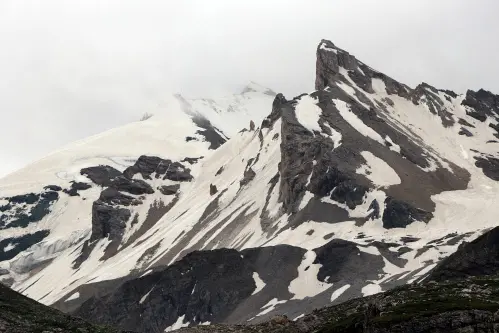
A groundbreaking study by Indian scientists has revealed that the Kashmir Valley, known today for its cool, Mediterranean-type climate, was once a warm, humid subtropical paradise.
This dramatic shift in ancient climate has been "resurrected" through an in-depth analysis of fossilized leaves and the profound impact of mountain-building forces.
The investigation, conducted by a team of researchers from the Birbal Sahni Institute of Palaeosciences (BSIP) in Lucknow, an autonomous institute under the Department of Science and Technology (DST), focused on the rich fossil leaf collection from the Karewa sediments of the Kashmir Valley.
These specimens, curated by the late Prof Birbal Sahni and Dr GS Puri, showed remarkable diversity, with many resembling subtropical plant species that are no longer found in the region's current temperate environment.
Tectonic uplift transformed climate
Intrigued by the striking mismatch between past and present vegetation, BSIP researchers Dr Harshita Bhatia, Dr Reyaz Ahmad Dar, and Dr Gaurav Srivastava embarked on a scientific investigation into the climatic and tectonic history of the Kashmir Valley using modern palaeobotanical methodologies.
Their findings linked this dramatic climatic transformation directly to the tectonic uplift of the Pir Panjal Range.
This sub-Himalayan mountain range gradually rose over millennia, effectively blocking the Indian summer monsoon from reaching the valley. By cutting off this crucial water supply, the rising mountains dried out the once-lush forests, transforming the region's climate from subtropical to Mediterranean.
Unlocking Earth's secrets through fossil leaves
To reconstruct Kashmir's ancient environment, the scientists employed CLAMP (Climate Leaf Analysis Multivariate Program), examining the shape, size, and margins of fossil leaves to determine past temperature and rainfall patterns.
They cross-referenced these fossil plants with their modern relatives using the "coexistence approach" to estimate climate ranges, creating a detailed snapshot of a Kashmir Valley rich with warmth and rain before the mountains intervened.
Published in the journal Palaeogeography, Palaeoclimatology, Palaeoecology, this study is not merely a journey into the past but also offers critical insights into Earth's systems' responses to change, providing a "window into our climate future."
Understanding how tectonic forces shaped climate millions of years ago helps scientists build better models to predict how ecosystems might adapt or collapse amidst modern climate shifts. This research is also vital for conserving fragile mountain regions like the Himalayas, which are highly sensitive to environmental change.
Published: 11 Jul 2025, 02:19 pm IST
Disclaimer: Kindly avoid objectionable, derogatory, unlawful and lewd comments, while responding to reports. Such comments are punishable under cyber laws. Please keep away from personal attacks. The opinions expressed here are the personal opinions of readers and not that of Mathrubhumi.
