
The rocket successfully launched afterwards, carrying the 6,100-kg BlueBird Block-2 satellite into Low Earth Orbit.
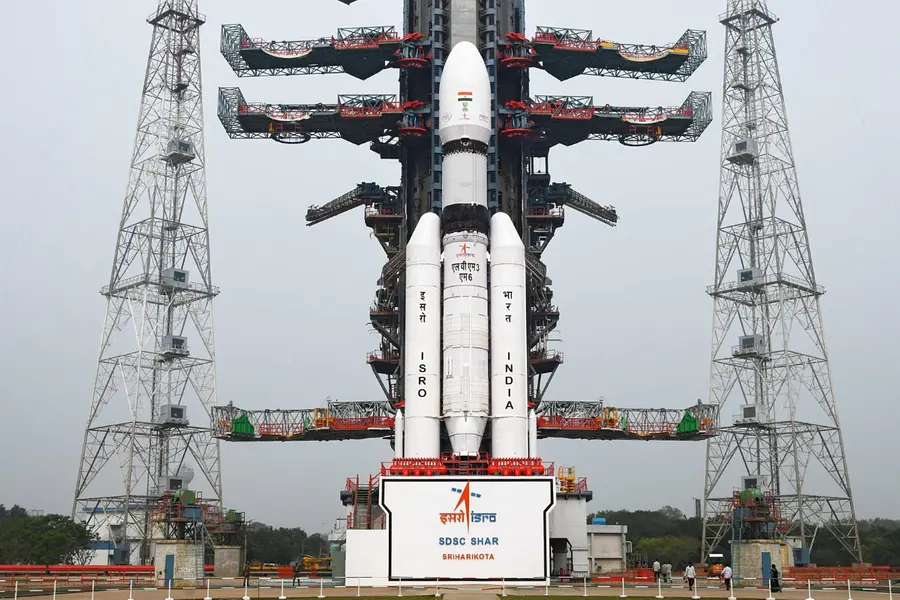
Sriharikota: The Indian Space Research Organisation (ISRO) delayed its high-stakes LVM3-M6 rocket launch by exactly 90 seconds Wednesday morning, shifting liftoff from 8:54 AM to 8:55:30 AM IST. The dramatic decision? A looming collision risk with space debris hurtling through orbit.
Mission controllers at the Satish Dhawan Space Centre detected the threat during final countdown preparations. Real-time analysis revealed a close-approach hazard along the rocket's ascent path, prompting the swift adjustment to ensure safety. The 43.5 metre tall rocket, supported by two S200 solid boosters, lifted off majestically at the rescheduled time from the second launch pad at this spaceport, situated about 135 km east of Chennai.
Debris Dodge: A Growing Orbital Menace
This isn't ISRO's first brush with space junk. The agency grappled with over 53,000 close-approach alerts in 2024 alone, executing 11 collision avoidance manoeuvres, per its Indian Space Situational Assessment Report. Recent precedents include a 2-minute, 15-second delay for the PSLV-C60/SPADEX mission.
The 43.5-meter "Bahubali" rocket, now cleared for ascent, will hurtle the 6,100-kg BlueBird Block-2 satellite into a 600-km Low Earth Orbit roughly 15 minutes post-liftoff. Orbit insertion demands pinpoint precision amid a sky clogged with debris.
Record-Breaking Commercial Mission
The launch represents a milestone for ISRO's commercial space program, conducted under an agreement between NewSpace India Limited, ISRO's commercial arm, and AST SpaceMobile. The satellite surpasses the previous LVM3 record set by the CMS-03 communication satellite, which weighed 4,400 kilograms when launched on November 2.
BlueBird Block-2 features a massive 223-square-meter phased-array antenna, making it the largest commercial communications satellite deployed in Low Earth Orbit. The satellite is designed to provide high-speed 4G and 5G cellular broadband directly to standard smartphones without specialised hardware, enabling voice calls, video streaming, and data services in remote and underserved regions.
AST SpaceMobile previously launched five BlueBird satellites in September 2024, which currently provide coverage across parts of the United States and select other regions. The company has partnered with more than 50 mobile operators worldwide to expand its space-based cellular network.
Published: 24 Dec 2025, 09:45 am IST
Related Topics
Disclaimer: Kindly avoid objectionable, derogatory, unlawful and lewd comments, while responding to reports. Such comments are punishable under cyber laws. Please keep away from personal attacks. The opinions expressed here are the personal opinions of readers and not that of Mathrubhumi.
