
See Hormuz Island`s stunning red sea! Learn the natural science behind Iran`s `blood rain` phenomenon. Harmless iron oxide creates a breathtaking spectacle. Click to discover!
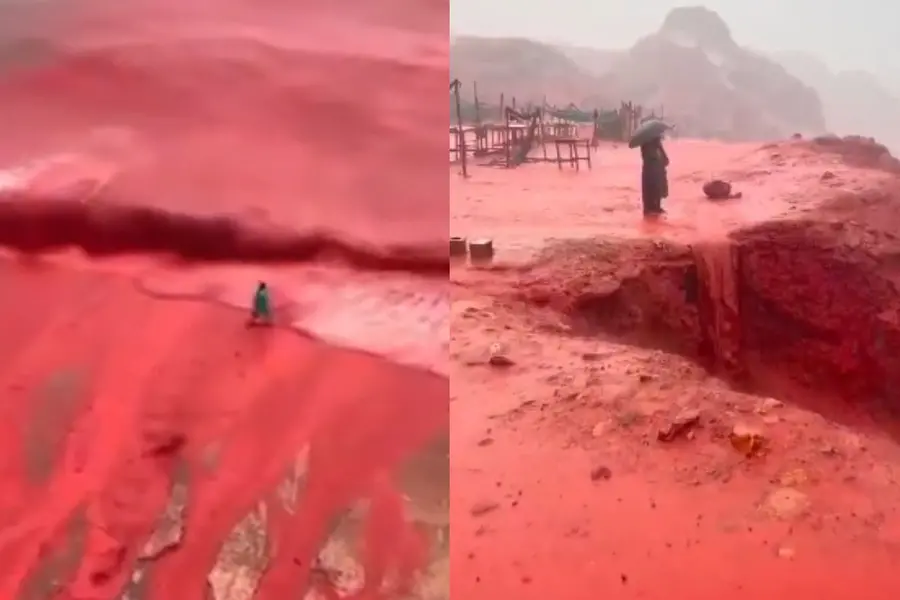
A dramatic natural spectacle has transformed Iran’s Hormuz Island into a vivid sea of red, capturing global attention and sparking viral comparisons to “blood rain.” Following heavy rainfall, the beaches and shallow waters of the Persian Gulf island appeared crimson, creating an otherworldly scene that circulated widely on social media.
While the striking visuals may appear ominous, scientists confirm the phenomenon is entirely natural and harmless.
What is the science behind it?
Hormuz Island is famed for its colourful landscape and mineral-rich soil, earning it the nickname the “Rainbow Island of the Persian Gulf.” Its hills and coastline contain high concentrations of iron oxide, particularly hematite, which gives the soil its distinctive red hue.
When rainwater seeps through the island’s iron-rich terrain, it dissolves and carries iron oxide particles to the coast. As these minerals reach the sand and shallow waters, they stain the beaches and seawater in deep shades of red. The process is intensified in areas where erosion is more active.
Hematite, the mineral responsible for the colouration, is also behind the red surface of Mars. When exposed to moisture, hematite oxidises quickly, creating the vivid crimson tones. Experts say that this runoff does not indicate pollution or ecological harm, and the red tint fades naturally as the mineral disperses.
Is it dangerous?
The sudden transformation prompted a flurry of reactions online, with some likening it to biblical blood rain or apocalyptic imagery. Environmental scientists and geologists, however, caution that the phenomenon is simply the result of Hormuz’s unique geology interacting with rainfall.
“This is a visually stunning example of natural mineral runoff,” said a geologist familiar with the region. There’s nothing hazardous about it; it’s just iron oxide showing its colours.
Hormuz Island continues to be a draw for both tourists and scientists, who marvel at its kaleidoscopic soil and geological diversity. While the blood-red waters may provoke awe or even alarm at first glance, they are a temporary, natural spectacle, illustrating how ordinary environmental processes can produce extraordinary visual effects.
Published: 18 Dec 2025, 10:06 am IST
Related Topics
Disclaimer: Kindly avoid objectionable, derogatory, unlawful and lewd comments, while responding to reports. Such comments are punishable under cyber laws. Please keep away from personal attacks. The opinions expressed here are the personal opinions of readers and not that of Mathrubhumi.
