
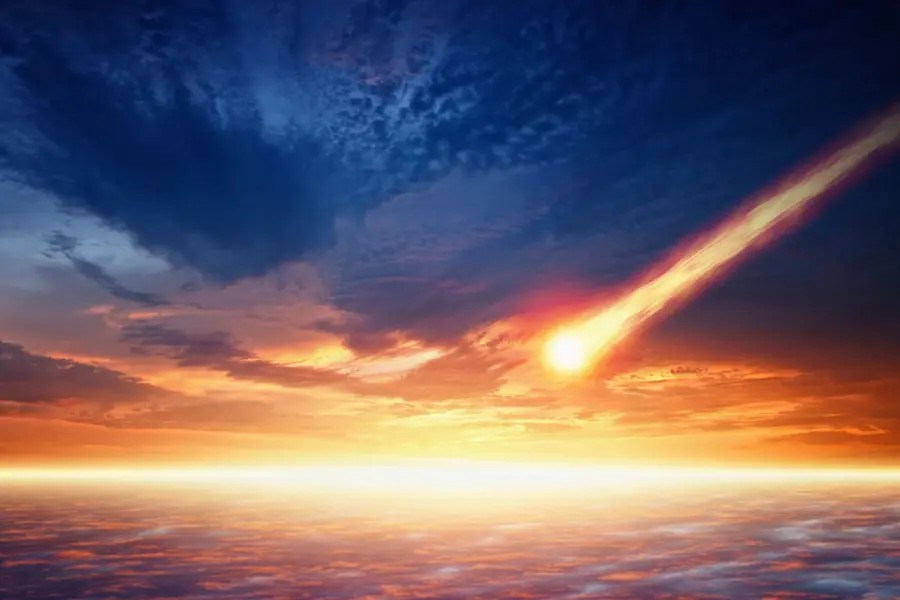
NASA has issued an alert regarding asteroid 2019 VU5, a near-Earth object that will come dangerously close to our planet today. At approximately 140 feet wide, half the size of a football field or the size of a giant blue whale, the asteroid is expected to pass Earth at 02:42 am IST (21:12 UTC), on November 15. While the asteroid will not collide with Earth, its proximity raises concerns about the potential risks space objects pose.
How close will 2019 VU5 get?
Travelling at a staggering speed of 83,934 kilometres per hour, 2019 VU5 belongs to the Apollo group of asteroids, which brings its orbit close to Earth’s path around the Sun. NASA has calculated its closest approach at 995,510 kilometres — about 13 times the distance to the Moon. While this might seem like a considerable gap, it remains within a zone where space rocks can still cause significant damage if they were to collide with our planet.
Monitoring threats
NASA’s Planetary Defense Program is responsible for keeping track of potentially hazardous asteroids. Using a network of observatories, telescopes, and radars, NASA continuously monitors near-Earth objects (NEOs) like 2019 VU5. Through these high-tech systems, scientists can predict the orbits of such asteroids and assess any potential risk to Earth, ensuring that the planet remains safeguarded from space-related threats.
Potential impact
If 2019 VU5 were to strike Earth, the consequences would be catastrophic. The energy released by such an impact would be equivalent to multiple nuclear bomb explosions, capable of annihilating entire regions. Fortunately, NASA assures that the asteroid’s trajectory poses no immediate danger. However, its close approach serves as a reminder of the threat posed by space debris.
Published: 14 Nov 2024, 12:25 pm IST
Disclaimer: Kindly avoid objectionable, derogatory, unlawful and lewd comments, while responding to reports. Such comments are punishable under cyber laws. Please keep away from personal attacks. The opinions expressed here are the personal opinions of readers and not that of Mathrubhumi.
