
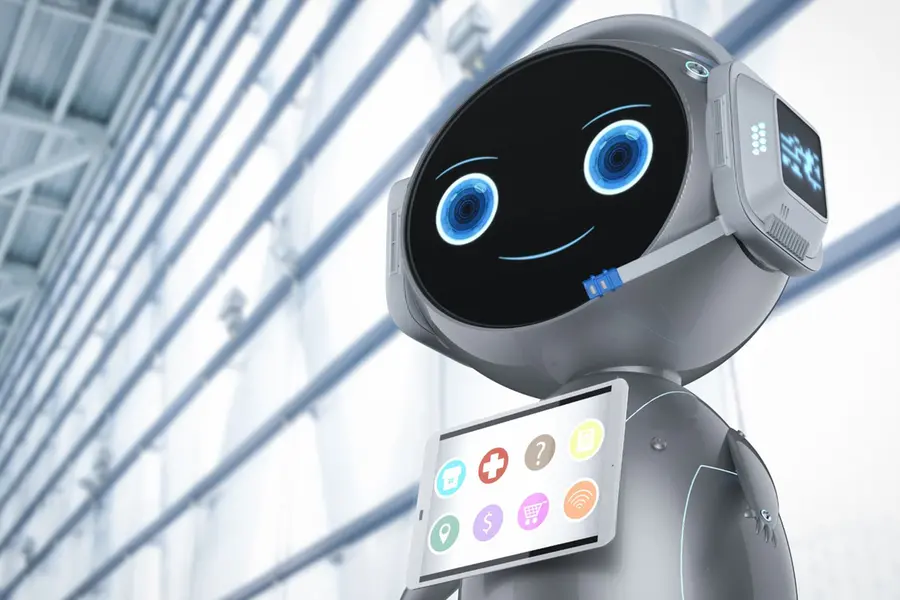
magine robots understanding your emotions just by touching your skin. This futuristic idea might soon become a reality, thanks to a recent study published in the journal IEEE Access. Researchers have discovered that measuring how skin conducts electricity could help robots gauge human feelings more accurately.
How does it work?
The technique relies on skin conductance, which measures how well your skin conducts electricity. This property changes depending on sweat secretion and nerve activity, both of which are closely tied to emotional states. Scientists believe this method could overcome the shortcomings of traditional emotion-detection technologies like facial recognition and speech analysis, which often fail in poor audio-visual conditions.
"Skin conductance offers a potential workaround, providing a non-invasive way to capture emotion in real time," the researchers explained.
The study and its findings
To test their theory, researchers studied 33 participants by showing them emotionally charged videos while measuring their skin conductance. They noticed unique patterns for different emotions. For instance:
- Fear triggered the longest-lasting responses, which the scientists believe is an evolutionary survival mechanism.
- Emotions related to family bonding, a mix of happiness and sadness, showed slower responses.
- Humour caused quick but short-lived reactions.
"To date, few studies have examined how the dynamics of skin conductance responses differ among emotions, despite high responsiveness being a key feature of skin conductance," the scientists highlighted.
What does this mean for the future?
While the method isn’t perfect, researchers are optimistic about its potential. They suggest combining skin conductance with other physiological measures, like heart rate and brain activity, to make emotion detection even more accurate.
"There is a growing demand for techniques to estimate individuals' subjective experiences based on their physiological signals to provide them with emotionally evocative services," the study noted.
This breakthrough could lead to robots that not only interact with humans but also empathise with them. By reading subtle physiological cues, future machines could understand and respond to emotions in a way that feels more human.
The scientists concluded: "The results of this study are expected to contribute to the development of technologies that can be used to accurately estimate emotions when combined with other physiological signals."
Published: 22 Dec 2024, 02:16 pm IST
Related Topics
Disclaimer: Kindly avoid objectionable, derogatory, unlawful and lewd comments, while responding to reports. Such comments are punishable under cyber laws. Please keep away from personal attacks. The opinions expressed here are the personal opinions of readers and not that of Mathrubhumi.
