
This discovery strengthens theories that characters like RDR2's time-traveling Sinclair are connected to GTA 5's Epsilon Program, hinting at a shared, time-spanning universe!
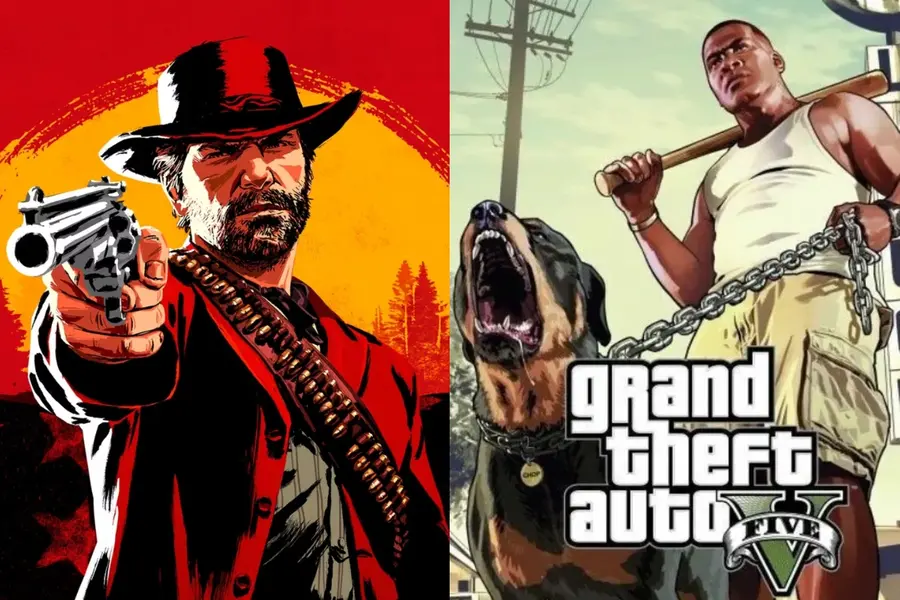
An exhaustive investigation by the Rockstar Games "mystery hunting" community has yielded a breakthrough discovery, establishing a direct technical and narrative bridge between Red Dead Redemption 2 (1899) and Grand Theft Auto 5 (2013). The discovery, centred on a series of timed "spiderdream" assets, appears to be the most significant piece of the Mount Chiliad puzzle found in over a decade.
The "Spiderdream" Asset Discovery
The breakthrough began with the identification of invisible spider webs found on telegraph poles throughout the Red Dead Redemption 2 map. Data miners confirmed these assets, labelled "spiderdreams," utilise a specific, proprietary rendering shader.
Crucially, this shader is identical to the one used for the mysterious webs found under the Mount Chiliad cable car station in Grand Theft Auto 5. In both games, these assets follow a strict temporal trigger, appearing only between 1:00 AM and 2:00 AM in-game time.
The Geographic Cypher
The community, led by researchers on the r/RedDeadMysteries platform, has mapped the web locations across the West Elizabeth and New Hanover territories. The findings include:
- Geometric Alignment: When the eight primary telegraph pole locations are connected on the world map, they form a perfect silhouette of a spider.
- The "N" Node: The centre of this geometric pattern leads to a ninth web in a tree near the Cornwall Kerosene & Tar factory, marked with a distinctive "N" and a cross-like symbol.
- Inscribed Clues: Players found that shooting specific poles reveals hidden carvings in the wood, such as "W +++++" and a Guitar Icon, serving as a "treasure hunt" style trail.
Strengthening the Shared Universe
This discovery provides a physical link to complement long-standing lore connections. Experts point to Francis Sinclair, the RDR2 NPC and time traveller whose birthmark and "Epsilon Blue" attire suggest he is Kraff, the deity of the Epsilon Program cult found in GTA 5.
While Rockstar Games has not officially commented on the "spiderdream" assets, the synchronisation of these timed events suggests a deliberate "meta-narrative" that spans centuries of the games' fictional timeline.
Published: 22 Jan 2026, 08:20 pm IST
Related Topics
Disclaimer: Kindly avoid objectionable, derogatory, unlawful and lewd comments, while responding to reports. Such comments are punishable under cyber laws. Please keep away from personal attacks. The opinions expressed here are the personal opinions of readers and not that of Mathrubhumi.
