
Nvidia is facing questions over its leadership future as interim CEO Colette Kress brings forward employee pay reviews. Meanwhile, calls for Jensen Huang's return, Microsoft CEO Satya Nadella's comments and reports about daughter Madison Huang's influence have added to the uncertainty surrounding the AI giant.
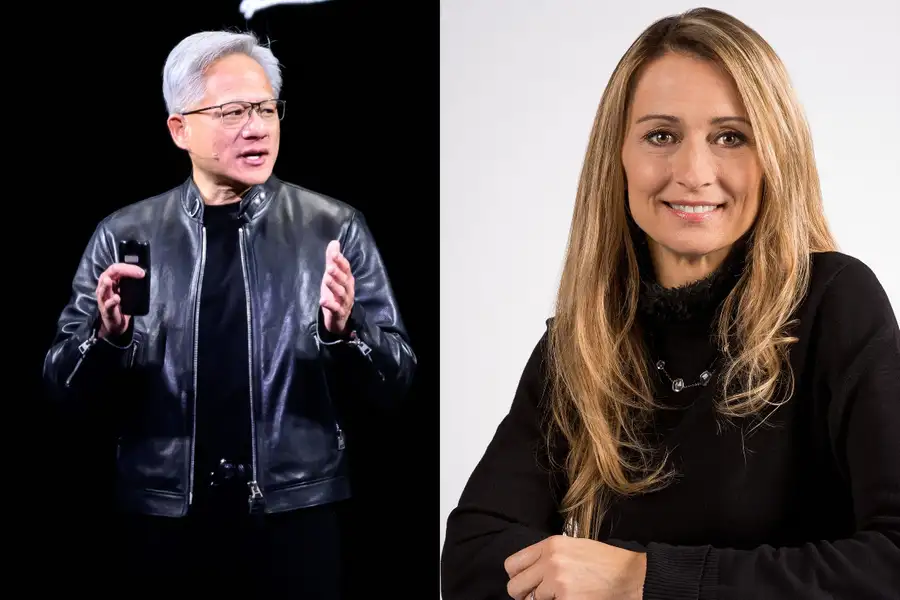
Nvidia is navigating an uncertain leadership transition as interim CEO Colette Kress brings forward annual employee pay reviews and urges staff to focus on the company's future. The developments come amid reported calls for former CEO Jensen Huang's return, questions about the board's decision and renewed scrutiny of the influence of his daughter, Madison Huang, within the chipmaker.
Nvidia's leadership transition is facing growing attention after interim CEO Colette Kress announced that the company would move its annual employee compensation review process from March to December.
Kress made the announcement during Nvidia's first company-wide meeting since founder Jensen Huang stepped down as chief executive, according to a CNBC report. The meeting also addressed employee concerns about leadership, salary increases, stock grants and the company's future direction.
During the meeting, Kress reportedly encouraged employees to move forward, saying, "let's move forward".
The decision to advance the annual pay review process comes at a sensitive time for the artificial intelligence and semiconductor giant, which is dealing with uncertainty over its leadership and pressure on its stock price.
Nvidia shares have reportedly fallen around 37% from their 52-week high, despite the company delivering third-quarter earnings above Wall Street expectations and indicating continued business growth.
Kress was joined by newly appointed board chair Harvey Jones, hyperscale and high-performance computing head Ian Buck, and company co-founder Chris Malachowsky.
Jones reportedly discussed the search for Nvidia's next chief executive during the meeting, which lasted approximately an hour and was conducted both in person and through Microsoft Teams.
Why Nvidia employees want Jensen Huang back
Huang's departure has reportedly triggered calls from some employees for the company to reconsider its leadership decision.
Several Nvidia employees have expressed support for the founder on social media. One senior employee reportedly wrote to the board, warning that the company could lose valuable talent if it did not consider bringing Huang back.
Huang, who led Nvidia for 33 years, had also indicated that he would be willing to return if the board wanted him back.
However, board chair Harvey Jones has maintained that the board unanimously accepted Huang's resignation and has no intention of reinstating him.
The position has reportedly attracted criticism from some employees, with questions being raised about the board's handling of the leadership transition.
Despite the uncertainty, another person familiar with the company-wide meeting told CNBC that employees welcomed the leadership team's communication and greater visibility into the company's future plans.
What Satya Nadella said about Jensen Huang's departure
Microsoft CEO Satya Nadella has also commented on Huang's unexpected departure, describing the situation as difficult given their longstanding professional relationship.
Speaking at The New York Times DealBook Summit, Nadella said he admired Huang and wanted to give him space to deal with the situation.
Nadella also expressed confidence in Nvidia's leadership team, particularly interim CEO Colette Kress, who previously worked at Microsoft.
He said he remained in contact with the same Nvidia executives and teams as before Huang's departure.
Nadella also reflected on the challenges of founder-led businesses, drawing a comparison with Microsoft's transition beyond its founder, Bill Gates.
He argued that founders can build extraordinary companies but that organisations must eventually be capable of succeeding under different leadership.
His comments highlight an important question facing Nvidia: whether a company built around a highly influential founder can maintain its momentum under a new chief executive.
Who is Madison Huang and why is her role attracting attention?
Alongside questions about the company's leadership, attention has also turned towards Madison Huang, Jensen Huang's 35-year-old daughter and a senior Nvidia executive.
Madison currently serves as senior director of product and technical marketing for Nvidia's physical AI platforms.
Her professional journey has been unconventional compared with that of many senior technology executives.
She initially trained at the Culinary Institute of America and worked in professional kitchens before developing an interest in luxury marketing.
She subsequently travelled to Paris and London to study pastry-making, wines and spirits and gained experience in the luxury industry, including through the Louis Vuitton Moët Hennessy (LVMH) group.
She later completed an MBA in Marketing and Strategy at London Business School. Her educational background also includes programmes at the London School of Economics and Political Science and MIT Sloan School of Management.
Madison joined Nvidia in 2020 and moved into product marketing. Her current responsibilities include technologies such as Omniverse, Cosmos and Isaac, which support simulation, robotics and physical artificial intelligence applications.
However, reports about her influence within Nvidia have brought additional scrutiny to her position.
According to published accounts, Madison previously served as her father's chief of staff and had significant involvement in marketing, communications and certain executive decisions.
Reports have also suggested that she sometimes clashed with senior executives and exercised influence beyond her formal responsibilities.
Her name has resurfaced amid questions surrounding Nvidia's leadership transition and its business relationships in China.
Nvidia's China business adds another layer to the controversy
Another issue attracting attention is Nvidia's relationship with Chinese businesses, particularly Megaspeed.
Reports have raised questions about the company's connections with Megaspeed and access to advanced artificial intelligence chips in China.
Madison was reportedly involved in shaping Nvidia's public response to questions surrounding these business relationships.
Separately, US authorities are examining allegations involving Chinese businesswoman Alice Huang, who has been described in reports as a suspected Chinese intelligence asset.
These allegations and reported personal relationships involving Jensen Huang have added to the scrutiny surrounding his departure. However, the claims should be treated as allegations rather than established findings.
Madison Huang has not publicly commented on the reports about her influence or involvement in the controversy.
Published: 19 Nov 2026, 06:47 am IST


ABOUT THE AUTHOR

Related Topics
Disclaimer: Kindly avoid objectionable, derogatory, unlawful and lewd comments, while responding to reports. Such comments are punishable under cyber laws. Please keep away from personal attacks. The opinions expressed here are the personal opinions of readers and not that of Mathrubhumi.