
Apple has raised the iPhone 17 price in India to ₹99,900 after the iPhone 18 launch. Here’s why memory costs and AI demand could be behind the surprise hike.
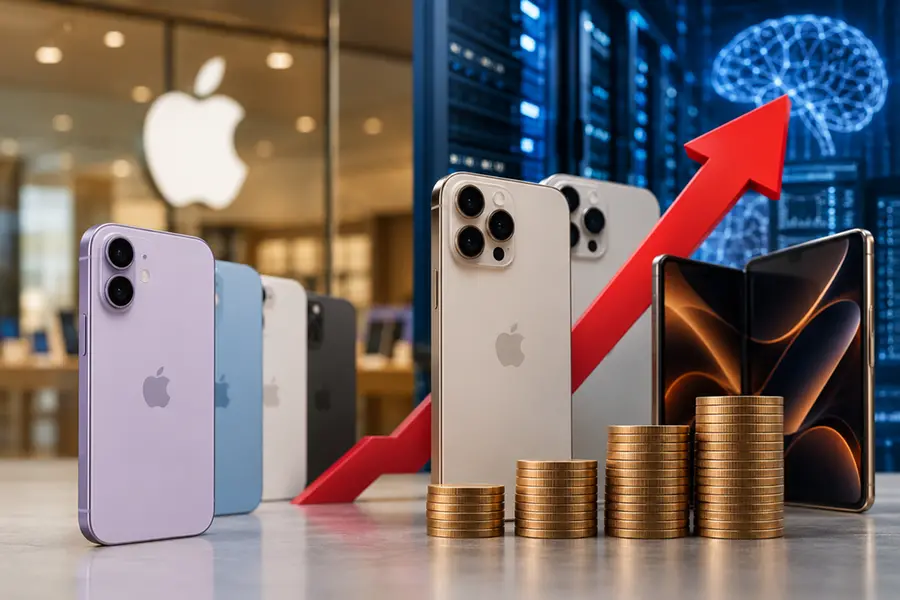
Apple has turned the usual iPhone upgrade cycle on its head in India.
After unveiling the iPhone 18 Pro, iPhone 18 Pro Max and its first foldable iPhone, Apple has raised the official price of several older iPhone models instead of making them cheaper. The biggest surprise for many buyers is the iPhone 17, which now starts at ₹99,900 in India, up from ₹82,900 earlier.
That is a ₹17,000 jump for the 256GB model. The 512GB version has also become significantly more expensive, rising from ₹1,02,900 to ₹1,24,900. Apple's India store now lists the iPhone 17 from ₹99,900.
The move raises an obvious question: Why did Apple make an older iPhone more expensive just as its newer generation arrived?
The iPhone price rule has been flipped
For years, Apple's September launch followed a familiar pattern.
A new generation would arrive, older models would remain in the lineup and their official prices would generally become more attractive.
That gave buyers another reason to wait for the annual launch before purchasing an older iPhone. This year, however, Apple has broken that pattern.
The iPhone 17 has become costlier even though it is no longer the newest premium iPhone in Apple's lineup.
The current India pricing looks like this:
- iPhone 17 256GB: ₹99,900, up from ₹82,900
- iPhone 17 512GB: ₹1,24,900, up from ₹1,02,900
- iPhone 17e 256GB: ₹79,900, up from ₹64,900
- iPhone 17e 512GB: ₹1,04,900, up from ₹84,900
- iPhone 16 128GB: ₹89,900, up from ₹69,900
- iPhone Air 256GB: ₹1,49,900, up from ₹1,19,900
The iPhone Air's 1TB variant has seen an even more dramatic increase, rising to ₹2,24,900.
So, this is not simply an iPhone 17 price adjustment. Apple has changed the pricing of multiple existing models across its India portfolio.
The real reason: memory costs are soaring
The key explanation is not a new feature or a hardware upgrade.
Apple has pointed to rising memory and storage chip costs, with the broader semiconductor market facing pressure from surging demand linked to artificial intelligence and data centres.
This is where the iPhone 17 price hike becomes part of a much bigger technology story.
AI companies and cloud providers are building enormous data centres that require huge quantities of advanced memory.
That demand is putting pressure on the global supply of memory components, including chips used in everyday consumer electronics.
As demand rises and supply remains constrained, manufacturers have to pay more for memory and storage. And those costs eventually have to go somewhere.
For smartphone makers, that can mean absorbing lower margins, changing specifications or passing at least part of the increase on to consumers.
Apple has chosen the last option for its latest India price revision.
The strange AI connection behind your iPhone bill
There is an irony at the heart of Apple's latest move.
The artificial intelligence boom is driving demand for increasingly powerful computing infrastructure.
But the same boom is also making some consumer technology more expensive.
The global memory shortage has already been described as a major threat to consumer electronics prices, with AI data-centre demand competing with smartphones, laptops and other devices for memory supply.
The Financial Times has reported that the resulting shortage is reversing the long-running trend of increasingly powerful electronics becoming cheaper.
That means the impact of AI is no longer limited to chatbots, image generators or data centres. It can now show up on the price tag of a smartphone.
Why India is taking a particularly big hit
The price increase is especially significant for Indian buyers.
Reuters reported that Apple's latest Indian price increases are among its steepest globally.
The base iPhone 17 has risen by almost 21 per cent in India, reaching ₹99,900. In comparison, the corresponding US price increased by a considerably smaller amount.
India has become an increasingly important manufacturing and sales hub for Apple, with a large share of iPhones now assembled in the country.
But local manufacturing does not completely shield Indian consumers from global component costs.
Import duties on components and India's 18 per cent goods and services tax also contribute to the final price of Apple devices sold in the country, Reuters reported.
The result is a situation that may surprise Indian consumers: even as Apple expands its manufacturing footprint in India, its phones can still become significantly more expensive here.
And where is the regular iPhone 18?
There is another unusual part of this year's iPhone cycle.
Apple has launched the iPhone 18 Pro and iPhone 18 Pro Max, but the standard iPhone 18 was not part of the September launch.
Instead, reports indicate that Apple is splitting its traditional iPhone release schedule, with the standard iPhone 18 expected to arrive later, potentially in spring 2027.
The September launch therefore focused on Apple's more expensive models, including the new iPhone Duo foldable.
In India, the iPhone 18 Pro starts at ₹1,64,900, while the iPhone 18 Pro Max starts at ₹1,79,900. Apple's first foldable, the iPhone Duo, is listed at ₹2,99,900.
That makes the price hike on the iPhone 17 even more interesting.
A phone that consumers might normally consider the 'smart' cheaper alternative after a new launch has instead moved closer to the premium end of Apple's pricing ladder.
What does this mean for Indian buyers?
For someone planning to buy an iPhone during the festive season, the calculation has changed.
The iPhone 17 is still a capable premium smartphone, but its official price advantage has narrowed significantly.
A buyer who was waiting for the iPhone 18 launch, hoping to pick up an iPhone 17 at a lower official price has effectively seen the opposite happen.
And there is no guarantee that the pressure on memory costs will disappear quickly.
If AI infrastructure continues consuming large quantities of memory and storage components, other smartphone and electronics manufacturers could also face similar cost pressures.
That makes Apple's latest move more than just an iPhone pricing story.
It could be an early glimpse of how the AI boom is reshaping the economics of everyday consumer technology.
For now, though, Indian iPhone buyers are left with one particularly uncomfortable surprise: the iPhone 17 they expected to become cheaper after the iPhone 18 launch now costs ₹99,900 instead.
Published: 10 Sept 2026, 04:57 pm IST
ABOUT THE AUTHOR

Related Topics
Disclaimer: Kindly avoid objectionable, derogatory, unlawful and lewd comments, while responding to reports. Such comments are punishable under cyber laws. Please keep away from personal attacks. The opinions expressed here are the personal opinions of readers and not that of Mathrubhumi.