
India's naval strength received a major boost as three indigenous warships — INS Dunagiri, INS Sanshodhak and INS Agray, were commissioned into the Indian Navy.
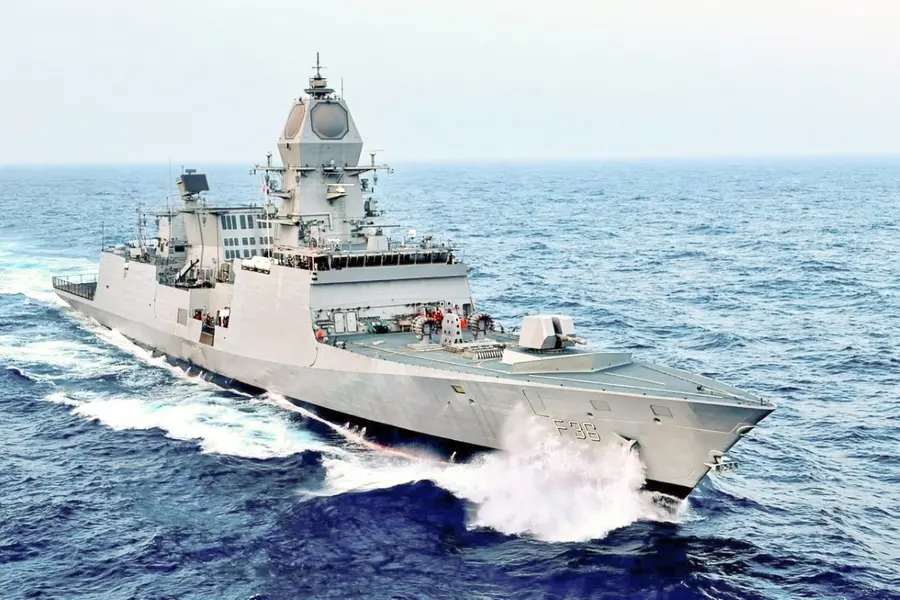
Three indigenously built warships formally joined the Indian Navy on Sunday, marking another milestone in India's drive towards defence self-reliance and strengthening the country's maritime capabilities.
Commissioning the stealth guided missile frigate INS Dunagiri, survey vessel INS Sanshodhak and anti-submarine warfare shallow water craft INS Agray in Kolkata, Prime Minister Narendra Modi said a nation can speak of peace only when it possesses the strength to safeguard its interests.
The induction of the three vessels, all constructed by Garden Reach Shipbuilders and Engineers (GRSE), comes as India expands its naval footprint amid growing strategic competition in the Indian Ocean region and increasing emphasis on maritime security.
Addressing the gathering, Modi underlined that maritime power is no longer confined to defence alone but is closely linked to economic growth, trade, connectivity and access to critical resources.
"India understands the importance of maritime strength and is preparing itself accordingly," he said, noting that global communication networks, trade routes and critical mineral resources are increasingly tied to the seas.
The Prime Minister described the commissioning as another major step in the country's Atmanirbhar Bharat mission, highlighting that the warships were designed and built domestically using Indian expertise, technology and industrial capabilities.
INS Dunagiri, an advanced stealth-guided missile frigate, contains nearly 75 per cent indigenous content, while INS Sanshodhak and INS Agray have more than 80 per cent indigenous components. The three vessels were delivered together by GRSE on March 30.
Referring to the commissioning of the indigenous aircraft carrier INS Vikrant, Modi said India has moved beyond being merely a buyer of defence equipment and is steadily establishing itself as a manufacturer of advanced military platforms.
"We want to be builders, not just buyers," he said.
The Prime Minister stressed that shipbuilding has emerged as a major employment-generating sector, creating opportunities across industries ranging from steel and electronics to specialised engineering and manufacturing. According to him, more than 200 micro, small and medium enterprises contributed to the construction of the three naval vessels.
He also highlighted the government's focus on strengthening the maritime ecosystem through investments in shipbuilding, port modernisation and logistics infrastructure. Modi said substantial financial support has been earmarked to accelerate growth in the sector and enhance India's maritime competitiveness.
Pointing to the country's growing defence exports, he said India has transformed from one of the world's largest importers of military equipment into an emerging exporter. Defence exports, he noted, have increased significantly over the past decade and now reach more than 80 countries.
While describing the progress as encouraging, Modi said the journey towards achieving greater defence manufacturing capability and maritime strength is still underway.
The Prime Minister also acknowledged West Bengal's longstanding contribution to India's maritime and shipbuilding sectors, saying the state possesses the skilled workforce and industrial base needed to support future growth.
Indian Navy Chief Admiral Krishna Swaminathan, who was present at the ceremony, said INS Dunagiri was completed in significantly less time than the previous frigate in the same class, reflecting improvements in domestic shipbuilding efficiency. He also praised the growing role of Indian shipyards in strengthening the Navy's capabilities.
With IANS Inputs
Published: 21 Jun 2026, 12:59 pm IST
Related Topics
Disclaimer: Kindly avoid objectionable, derogatory, unlawful and lewd comments, while responding to reports. Such comments are punishable under cyber laws. Please keep away from personal attacks. The opinions expressed here are the personal opinions of readers and not that of Mathrubhumi.
