
Google’s Willow quantum chip achieves a verifiable quantum advantage, running a new algorithm 13,000 times faster than leading supercomputers, a milestone for real-world quantum applications.
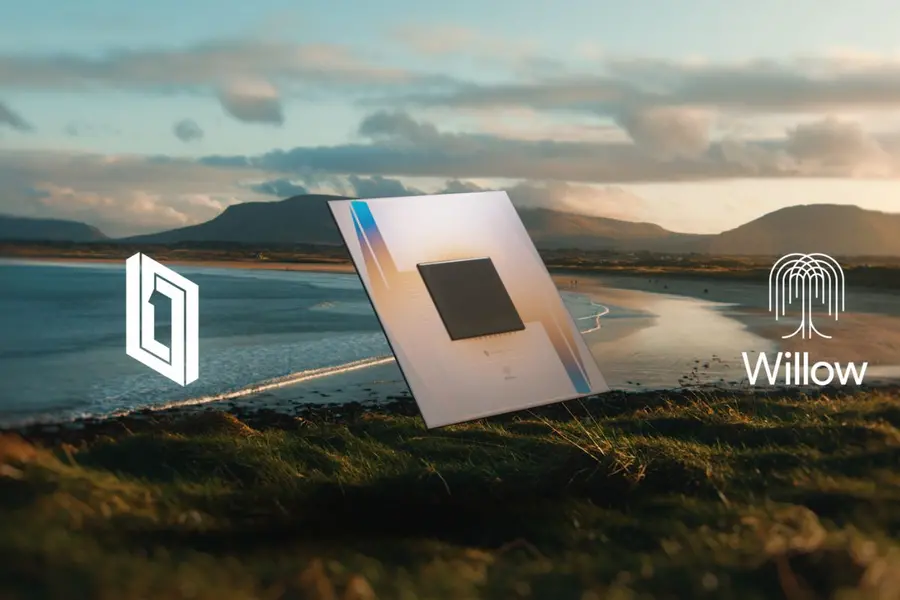
New Delhi: Google has announced a major milestone in quantum computing, revealing that its Willow quantum chip has achieved a verifiable quantum advantage, executing a new algorithm 13,000 times faster than one of the world’s most powerful supercomputers.
The breakthrough, dubbed Quantum Echoes, represents a leap forward in practical quantum computing, offering potential applications in drug discovery and materials science.
In a post on X, Google CEO Sundar Pichai shared the news, writing:
“Our Willow chip has achieved the first-ever verifiable quantum advantage. Willow ran the algorithm - which we’ve named Quantum Echoes - 13,000x faster than the best classical algorithm on one of the world's fastest supercomputers. This new algorithm can explain interactions between atoms in a molecule using nuclear magnetic resonance, paving the path towards potential future uses in drug discovery and materials science. And the result is verifiable, meaning its outcome can be repeated by other quantum computers or confirmed by experiments. This breakthrough is a significant step toward the first real-world application of quantum computing, and we're excited to see where it leads.”
He added that the algorithm can “explain interactions between atoms in a molecule using nuclear magnetic resonance,” a key step towards real-world uses of quantum computing. “The result is verifiable, meaning its outcome can be repeated by other quantum computers or confirmed by experiments,” Pichai noted.
Tesla CEO Elon Musk responded to Pichai’s post, saying, “Congrats. Looks like quantum computing is becoming relevant.”
Why Google’s Willow breakthrough matters
The Willow chip’s success marks the first time a quantum computer has performed a complex, verifiable calculation faster than any classical supercomputer, a feat researchers are calling a “verifiable quantum advantage.”
Using the advanced algorithm Quantum Echoes (also known as OTOC, or out-of-order time correlator), scientists were able to study how information spreads within quantum systems, such as molecules, magnets, and even black holes.
Crucially, the results were verifiable and repeatable, meaning other quantum systems can independently reproduce them, an essential benchmark for proving quantum supremacy in practical, scientific applications.
Google said the experiment, published in Nature, brings the world closer to real-world quantum computing, laying the foundation for breakthroughs across multiple scientific fields.
Published: 24 Oct 2025, 08:10 am IST
Disclaimer: Kindly avoid objectionable, derogatory, unlawful and lewd comments, while responding to reports. Such comments are punishable under cyber laws. Please keep away from personal attacks. The opinions expressed here are the personal opinions of readers and not that of Mathrubhumi.
