
Apple is the latest major organisation to face a technology outage in the US. With flights grounded, banking services disrupted and a classified NSA network reportedly offline, a series of unrelated failures has raised fresh questions about the reliability of America's digital infrastructure.
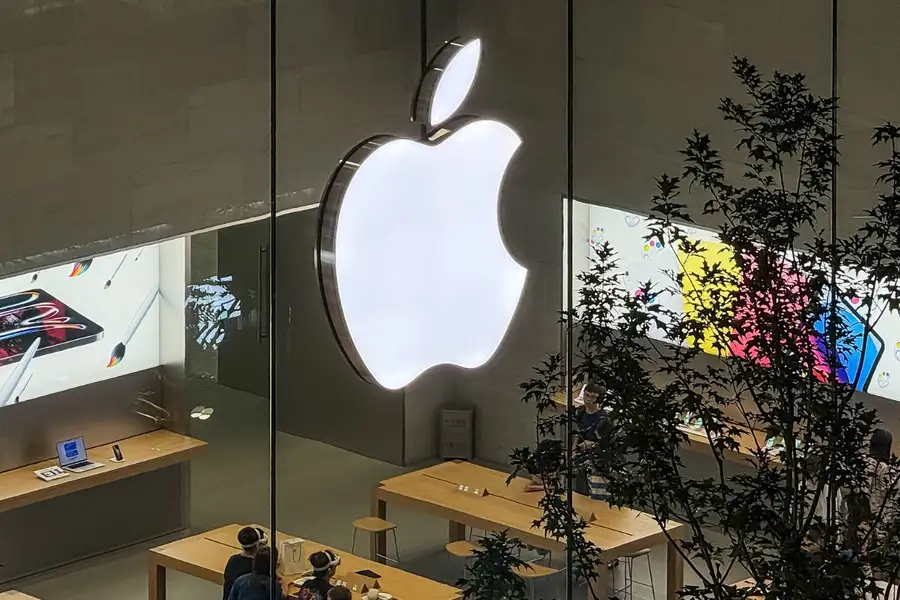
Apple's latest service outage has added to an unusual week of technology disruptions in the United States, with airlines, banks, Microsoft services and even a classified NSA communications network reporting technical failures. Although companies and officials have ruled out cyberattacks in several incidents, the disruptions have exposed how heavily everyday services and critical infrastructure depend on digital systems.
Thousands of Apple users faced difficulties accessing essential services on Tuesday after an internal system update triggered disruptions across the company's ecosystem. The outage affected services including iCloud, Apple Pay, the App Store, Apple Music and Apple Support, leaving some customers unable to sign in to their accounts or complete transactions.
Apple confirmed that an internal update had caused the disruption and said the incident was not related to a cyberattack. The company also said several services had been restored, while engineers continued working to bring the remaining systems back online.
However, Apple's problems were only the latest in a series of technology disruptions reported across the United States over the past week.
From flight departures and banking services to workplace communications and classified government networks, the incidents have highlighted the operational risks associated with dependence on complex digital infrastructure.
1. Apple outage affects payments, iCloud and device access
Apple's service disruption began affecting users on Tuesday morning, with complaints increasing around noon Eastern Time, according to Downdetector.
The company's system status page listed problems with iCloud accounts and sign-ins, the App Store, Apple Music and AppleCare on Device. Apple also reported disruptions affecting Apple Business, Apple School Manager and Schoolwork.
Users reported being signed out of their Apple accounts and encountering difficulties signing back in. Others experienced problems downloading applications, accessing cloud-stored files, streaming music and using Apple Pay.
The disruption reportedly extended to Apple's physical retail operations, where employees faced difficulties accessing certain internal systems, processing purchases and handling customer-support requests.
Developers also reported problems accessing backend services, including App Store Connect.
Apple later confirmed that an internal update had caused the outages.
"Many of our systems are back up and running after an internal update caused some outages this morning. We're working to get the remaining systems online as soon as possible," an Apple spokesperson said.
The company ruled out a cyberattack as the cause.
2. Microsoft's Outlook disruption affected workplaces
Microsoft experienced a major outage on November 12, affecting services including Outlook, Teams and Copilot.
The disruption affected users across more than 70 countries and territories, according to outage reports cited in the supplied coverage.
Workplaces, including hospitals, schools and police organisations, reported difficulties accessing essential communication and productivity tools.
Microsoft subsequently apologised and confirmed that services had been restored. The company also said the incident was not related to a cyberattack or AI agents.
3. FAA ground stop disrupted US air travel
A router installation malfunction triggered a nationwide ground stop ordered by the Federal Aviation Administration (FAA) on Friday.
The technical failure overwhelmed an ageing air traffic control communications system, disrupting communications and radar feeds at 17 of the country's 22 en route air traffic control centres.
The resulting disruption halted flight departures for approximately four hours.
According to FlightAware figures cited in the supplied report, nearly 25,000 flights were delayed and more than 9,000 cancelled on Friday. The disruption continued into Saturday, with more than 4,000 additional cancellations reported.
The FAA is investigating whether defective equipment or an installation or configuration error caused the malfunction.
The incident highlighted the operational challenges associated with maintaining critical aviation infrastructure.
4. Chase banking customers report account access problems
On Monday, customers of several major US banks reported difficulties accessing online banking services.
JPMorgan Chase confirmed that it had experienced a temporary technical problem involving a software bug in an on-premises hardware system.
The bank clarified that the incident was not related to a cyberattack.
The disruption raised concerns about the accessibility of digital banking services, particularly when customers depend on online platforms to check balances, transfer money and manage financial transactions.
5. United Airlines faces technology failure
United Airlines experienced a separate technical disruption on Monday that temporarily halted flight departures across the United States.
The outage delayed approximately 600 flights and lasted around an hour and 40 minutes.
The airline said the problem had been resolved and clarified that flights already in progress and United Express operations were not affected.
Although the company did not publicly disclose the precise technical cause, pilots reportedly told air traffic controllers that the disruption involved a programme used to calculate an aircraft's final weight.
United said there was no indication that the incident was cybersecurity-related.
6. Classified NSA communications network reportedly goes down
One of the more significant incidents involved NSANet, a highly classified communications network used by the National Security Agency.
According to CNN, six people familiar with the matter said the network had gone offline on Tuesday.
NSANet enables NSA personnel to communicate and exchange classified information. The disruption prompted the agency to introduce staggered arrival times for employees while it assessed the situation.
However, officials indicated that alternative secure communications systems remained available.
A current and a former US official told CNN that the incident would not prevent the government from sending urgent intelligence to President Donald Trump, who was travelling in Asia.
The disruption also reportedly did not affect intelligence-sharing arrangements among the Five Eyes alliance, comprising the United States, United Kingdom, Australia, Canada and New Zealand.
White House spokesperson Lauren Bis said there was no evidence of a cyberattack behind the incident.
7. FBI warns about AI-assisted cyberattacks
While officials have not established a connection between the reported outages, the FBI has separately warned about the growing use of artificial intelligence in cyberattacks.
According to the supplied report, the bureau issued an advisory about ARTEX, an AI-powered penetration-testing framework allegedly being exploited by hackers.
The tool can automate several stages of cyberattacks, including identifying network vulnerabilities, exploiting security weaknesses and attempting to gain privileged access.
The FBI said the tool had been used against organisations across sectors including financial services, government, healthcare, energy, technology and telecommunications.
Its capabilities have raised concerns about how AI could reduce the time and technical expertise required to carry out sophisticated cyber operations.
However, the warning does not establish any connection between ARTEX and the recent outages affecting American companies and government systems.
America's technology problem is bigger than a series of outages
The latest disruptions raise a question that extends beyond individual companies: how resilient are the systems on which modern American life depends?
1. Different failures, but a common vulnerability
The reported incidents involve different technologies and organisations. Apple's internal update, the FAA's router malfunction, Chase's software bug and Microsoft's service disruption have not been linked by investigators or officials.
Yet they demonstrate how a technical failure within one organisation can affect thousands or even millions of users.
2. Digital convenience has created operational dependence
Banking, air travel, communication, retail and government operations increasingly rely on interconnected digital platforms.
When these systems stop working, the consequences can extend beyond inconvenience. Customers may struggle to access financial services, passengers may face delays and employees may lose access to essential workplace tools.
3. America's ageing infrastructure adds another challenge
The FAA incident has drawn attention to the condition of critical infrastructure.
The failure involving a router installation overwhelmed an air traffic control system described by Transportation Secretary Sean Duffy as ageing.
This raises questions about investment in maintenance, modernisation and backup systems, particularly in sectors where technical failures can have widespread consequences.
4. Cybersecurity concerns remain even without evidence of attacks
Companies and officials have said there is no evidence linking the reported outages to cyberattacks.
However, the separate FBI warning about AI-assisted cyber operations demonstrates why cybersecurity remains an important concern.
Technical failures and malicious attacks are different threats, but both can disrupt essential services. Organisations therefore need systems capable of detecting problems, containing disruptions and restoring operations quickly.
5. The importance of backup infrastructure
The reported availability of alternative secure communications systems during the NSA disruption illustrates why redundancy matters.
Critical services cannot depend entirely on a single network, server or communication channel. Backup infrastructure and recovery planning are essential to maintaining operations when primary systems fail.
What happens next?
The immediate priority for the affected organisations is restoring services and identifying the technical causes of their respective disruptions.
For Apple, that means resolving the problems associated with its internal update. For the FAA, the investigation into the router malfunction could have implications for wider air traffic control modernisation.
The broader challenge is ensuring that increasingly connected digital systems can withstand technical failures without triggering widespread disruption.
The incidents do not establish a coordinated attack against American infrastructure. But they demonstrate that even without hackers, failures within critical technology systems can have consequences across multiple sectors.
Published: 18 Nov 2026, 06:40 am IST


ABOUT THE AUTHOR

Disclaimer: Kindly avoid objectionable, derogatory, unlawful and lewd comments, while responding to reports. Such comments are punishable under cyber laws. Please keep away from personal attacks. The opinions expressed here are the personal opinions of readers and not that of Mathrubhumi.