
Although supported by team management, his continued participation hinges on whether future regulatory changes truly restore the sport to a "flat-out" racing experience.
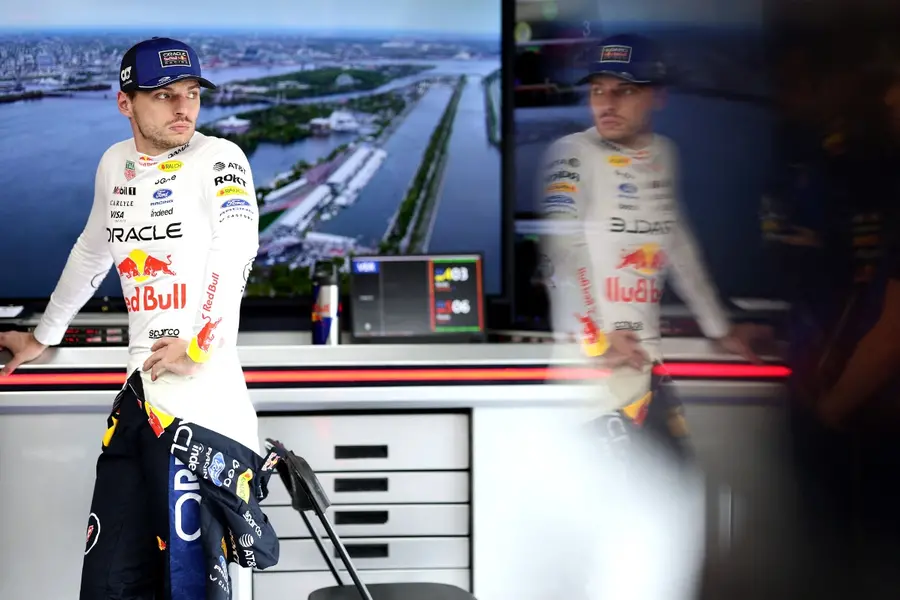
Montreal: Four-time world champion Max Verstappen cast fresh doubt on his Formula One future Saturday after qualifying sixth for the Canadian Grand Prix, stating that the current operational realities of the sport are becoming mentally unsustainable.
The Dutch driver had previously revealed in late March that he was contemplating a departure from the grid at the conclusion of the current season. His frustrations stem primarily from the 2026 power unit regulations, which he argues compel drivers to adopt an unnatural driving style to maximise single-lap performance.
While Verstappen possesses a contract with Red Bull Racing that extends through the 2028 season, he expressed severe reservations regarding his immediate future following Saturday’s session at the Circuit Gilles Villeneuve.
"If it stays like this, it's going to be a long year next year that I don't want," Verstappen said. "It's just mentally not doable for me to stay like this. It's really not."
When questioned whether he would consider taking a temporary sabbatical during the 2027 season and returning in 2028 once revised technical frameworks are implemented, Verstappen dismissed the alternative.
"No. There's a lot of other fun things out there," he replied.
ALSO READ: Toto Wolff snaps at Antonelli over radio moaning against Russell
Regulatory Debates and Regulatory Tweaks
The Governing body, the FIA, announced last week that an agreement in principle had been achieved with competing teams for the 2027 season. The proposed modification would shift the power unit configuration from its current near 50-50 equilibrium between internal combustion and electrical power to a 60-40 distribution, effectively reducing the necessity for extensive electrical energy management.
On Thursday, prior to the start of the Montreal race weekend, Verstappen noted that the proposal enhanced the probability of his continuation in the sport next year, calling it exactly what Formula One "needs."
"I just want a good product in Formula 1, and that [the proposed changes] will for sure improve the product," Verstappen remarked Thursday. "What I said before with the changes, hopefully that will happen next year, that will already help a lot. I've always said it doesn't matter if I had a good car or not, it's just a product, and I think the product will improve like that, so naturally I think then the enjoyment will go up as well."
ALSO READ: Max Verstappen calls for major 2027 F1 rule changes
The FIA has already enacted incremental regulatory revisions this season following the fourth round of the championship in Miami, a development that garnered positive feedback across the grid. However, while structural adjustments for 2027 have been broadly approved, specific technical granularities remain unfinalized as negotiations continue among the sport's verified power unit manufacturers: Mercedes, Ferrari, Red Bull-Ford, Audi, and Honda.
The ongoing deliberations introduce the possibility that any formal implementation could be deferred by an additional calendar year, or that the resulting modifications may prove insufficient to retain Verstappen's services.
Outside Interests and Team Backing
Verstappen's scepticism regarding the 2026 engine blueprint dates back to 2023, and his sustained public critiques earlier this season have received substantial backing from his peers on the grid.
Concurrently, the 28-year-old driver has been accelerating his competitive engagements away from grand prix racing. He participated in the Nurburgring 24 Hours last weekend and has logged six additional visits to the iconic Nordschleife circuit in Germany over the preceding 12 months.
Red Bull Team Principal Laurent Mekies defended his driver's outspoken nature, emphasising that listening to driver feedback remains vital for the long-term health of the sport.
"Max cares about the sport, and the reason why he's so vocal is because he genuinely cares about Formula 1 being the pinnacle of motorsport," Mekies said. "He wants to see, I'm sure, as most of you, flat-out qualifying. He wants to see the fastest drivers being able to push as hard as they want in the corners without losing any lap time due to that. And he has been listened to. There has been a fantastic openness from the stakeholders, from the FIA, from F1, from all the teams to say, 'Yeah, we need to do something about it'."
With inputs from Sky Sports
Published: 24 May 2026, 12:15 pm IST
Disclaimer: Kindly avoid objectionable, derogatory, unlawful and lewd comments, while responding to reports. Such comments are punishable under cyber laws. Please keep away from personal attacks. The opinions expressed here are the personal opinions of readers and not that of Mathrubhumi.
