
The former chief coach guided India's women's hockey team to its historic 2002 Commonwealth Games gold medal in Manchester.
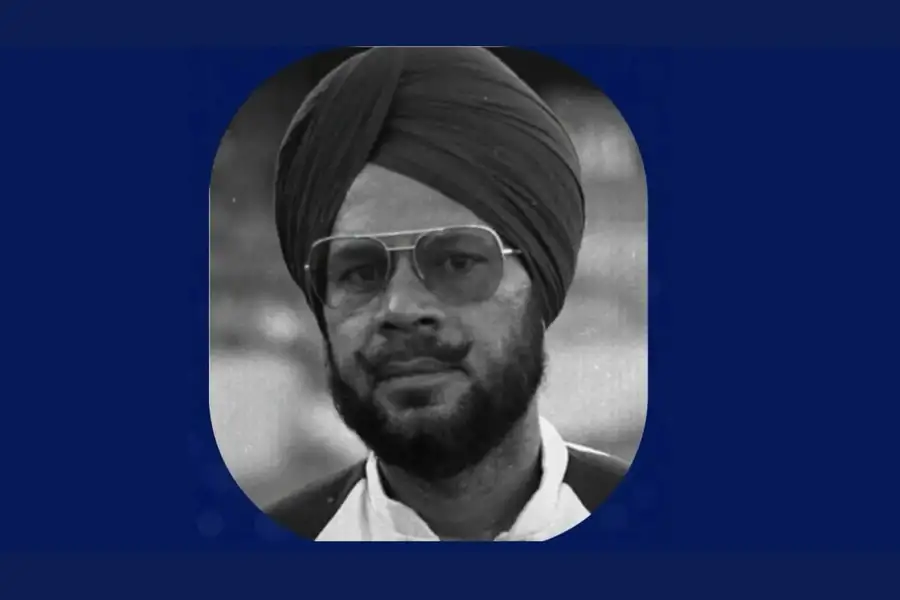
Long before the story of an underdog Indian women's hockey team became a Bollywood blockbuster, Gurdial Singh Bhangu was helping script one of the most memorable chapters in the country's sporting history.
The former chief coach of the Indian women's hockey team, who guided the side to its historic gold medal at the 2002 Commonwealth Games, died in Surrey, Canada, at 86.
Bhangu's contribution to Indian hockey remains closely tied to the dramatic final against hosts England in Manchester, where India clinched a 3-2 victory and its maiden Commonwealth Games gold in women's hockey.
The match went to extra time and was settled by Mamta Kharab's memorable golden goal.
However, behind that defining moment was a tactical instruction from Bhangu that would prove crucial to India's triumph.
Knowing a penalty-corner sequence could continue after the final hooter, Bhangu told his players not to stop until the move was complete.
During extra time, India earned a penalty corner just as the hooter sounded. While the English defenders relaxed for a moment, the Indians kept attacking. Kharab capitalised on a rebound and found the net.
Although officials initially disallowed the goal, they later overturned the decision, confirming India's historic victory.
The triumph later inspired the 2007 Shah Rukh Khan-starrer ‘Chak De! India’, bringing the women's team's remarkable achievement to a wider audience. While the fictional coach Kabir Khan was inspired by former India goalkeeper Mir Ranjan Negi, Bhangu was the chief coach who guided the real team to glory in Manchester.
Born in Lyallpur (now Faisalabad), Pakistan, Bhangu grew up in Ambala and played hockey at the university level.
He subsequently trained at the National Institute of Sports in Patiala, where he learnt under hockey legend Dhyan Chand and Olympic gold medallist Balkishan Singh.
His coaching career also took him beyond India. Between 1972 and 1976, he served as chief coach of Nigeria's women's hockey team, helping the side qualify for its first Women's Hockey World Cup in 1976.
Bhangu took charge of the Indian women's team in 1998, following its 12th-place finish at the Women's Hockey World Cup.
Under his guidance, India won silver at the Asian Games in Bangkok that year, setting the stage for its historic Commonwealth Games triumph four years later.
In recognition of his contribution to Indian sport, Bhangu received the Dronacharya Award in 2000, becoming the first hockey coach to receive the prestigious honour.
Hockey India mourned his death, remembering him as the chief coach of the country's 2002 Commonwealth Games gold-medal-winning women's team. The federation extended its condolences to his family and loved ones.
Published: 08 Nov 2026, 08:56 am IST


ABOUT THE AUTHOR

Related Topics
Disclaimer: Kindly avoid objectionable, derogatory, unlawful and lewd comments, while responding to reports. Such comments are punishable under cyber laws. Please keep away from personal attacks. The opinions expressed here are the personal opinions of readers and not that of Mathrubhumi.