
The 2026 World Cup will not only crown a new champion, it could also rewrite the record books. From Lionel Messi and Kylian Mbappé chasing Miroslav Klose’s all‑time scoring mark to Cristiano Ronaldo’s bid for a sixth‑straight scoring tournament and Didier Deschamps’ push to become the most successful World Cup manager, almost every match in North America comes with a milestone attached.
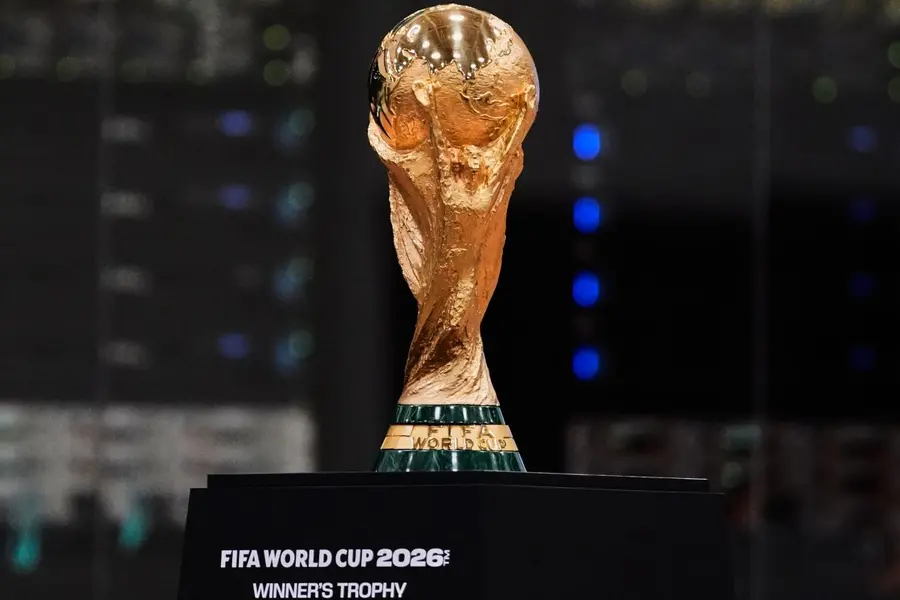
Lionel Messi, Kylian Mbappé and a cast of veteran stars are set to turn the 2026 World Cup into the most statistics‑obsessed tournament in history, with a cluster of long‑standing records suddenly within reach. From all‑time goal tallies and age milestones to coaching landmarks and even the sheer number of matches played, almost every match in North America could double as a chapter in the record books.
Germany's Miroslav Klose has topped the World Cup scoring charts since 2014, when his 16th goal against Brazil pushed him past Ronaldo Nazário. In 2026, that mark finally looks vulnerable: Lionel Messi arrives with 13 goals from five editions, while Kylian Mbappé, astonishingly, already has 12 from just two tournaments and 14 games, tying Pelé’s career World Cup haul.
Messi needs four goals to move clear of Klose, and Mbappé is just five away from setting a new outright record, a realistic target given his scoring rate at Russia 2018 and Qatar 2022.
Behind them lurk a group of outsiders. Harry Kane, England's all‑time leading scorer, has eight World Cup goals and would need nine more to go past Klose, a huge ask but not mathematically impossible in an expanded 104‑match tournament.
Also Read: FIFA 2026: Jordan, Qatar, Iraq and Saudi Arabia eye World Cup breakthrough
Cristiano Ronaldo also sits on eight, level with Kane, Neymar and Diego Maradona, but at 41 and in what is likely to be his final World Cup, his realistic aim is less about catching Klose and more about adding a final flourish to an extraordinary international career.
Penalties are a subplot of their own. Messi and Kane currently share the record for most goals from the spot at World Cups, with four penalty goals each when shoot‑outs are excluded. They are tied with a historic trio -- Rob Rensenbrink, Gabriel Batistuta and Eusebio -- so even a single successful penalty in 2026 would give one of the modern stars the record outright.
Age, longevity and the Ronaldo–Messi farewell
No World Cup has ever gathered this many legends at such advanced stages of their careers. Ronaldo, now 41, is poised to become the first man to score in six separate World Cups and could also target two age‑based records: oldest goalscorer in a knockout game and oldest goalscorer in a final.
The knockout‑round mark is currently held by his former Portugal team‑mate Pepe, who scored against Switzerland in 2022 at 39, and that could fall if Ronaldo finds the net in the latter rounds.
Ronaldo and Messi are also set to become the first players ever to appear at six World Cups, surpassing the five‑tournament benchmark previously shared with four other greats.
Also Read: World Cup evolution: How football’s biggest tournament transformed over a century
Messi already owns the record for most World Cup appearances, with 26 matches, and is almost certain to extend it if Argentina progress beyond the group stage; Ronaldo, on 22 games, could theoretically overtake him only if Portugal go deeper than the defending champions and Messi's tournament ends early.
The 2026 edition may also bring a different kind of record: the most players aged 40 or above to feature in a single World Cup.
Only seven men over 40 have ever played at the tournament, but this time a whole generation of veterans is in contention -- Ronaldo and Germany's Manuel Neuer (both 40+), Bosnia and Herzegovina striker Edin Džeko, Scotland goalkeeper Craig Gordon (43), Croatia's Luka Modrić, Uruguay's Fernando Muslera and Mexico's Guillermo Ochoa. If even two of them get on the pitch, a new benchmark for over‑40 participation will be set.
Creators, not just finishers
Scoring is not the only way to leave a mark. The all‑time record for most assists at World Cups is held by Fritz Walter of West Germany, whose nine goals created have stood as a quiet monument to playmaking since the 1950s.
Messi begins 2026 just one short of that tally, on eight assists, level with fellow Argentinian icon Diego Maradona, and is well placed to move clear as the tournament’s most prolific provider.
That potential assists record adds another layer to Messi’s World Cup legacy. Having already lifted the trophy in 2022 and dominated that tournament statistically, overtaking Walter would underline his status not just as a scorer chasing Klose, but as the most complete attacking influence the competition has seen.
Deschamps and the managers' race
On the touchline, France coach Didier Deschamps is on the brink of rewriting history of his own. The Frenchman has already guided Les Bleus to 14 World Cup wins as a manager across 2014, 2018 and 2022, a run that includes one title and one runners‑up finish. The all‑time record is 16 victories, set by West Germany legend Helmut Schön between 1966 and 1978, and Deschamps needs only three wins in North America to surpass it.
Also Read: A little Brazil in Palakkad’s Nenmara; Fan’s house turns heads every World Cup
Given France's status as one of the tournament favourites and Mbappé's form, it would take a catastrophic group‑stage exit to prevent Deschamps from becoming the most successful World Cup manager in terms of matches won. If France reach even the quarter‑finals, his name will sit alone at the top of the coaching record books.
Records shaped by an expanded World Cup
Some of the records in play are structural rather than individual. The 2022 World Cup in Qatar set a new mark for total goals scored, with 172 across 64 matches at an average of 2.69 per game.
In 2026, the tournament expands from 32 to 48 teams and from 64 to 104 matches, creating an unprecedented platform for attacking numbers.
If teams maintain the same scoring rate of 2.69 goals per match, the World Cup would end with around 280 goals, shattering the existing record.
Even a comparatively modest average of 1.66 goals per game would be enough to surpass Qatar's tally, meaning that barring a surprisingly defensive tournament, a new high‑water mark for scoring is almost guaranteed.
A generational World Cup of milestones
This World Cup will also swell the "five‑tournament club" and perhaps create a "six‑tournament elite". Alongside Messi and Ronaldo's historic sixth appearances, Germany goalkeeper Manuel Neuer, Croatia's Luka Modrić and Japan's Yuto Nagatomo are in line to join the small group of players who have featured at five World Cups. Their presence emphasises how modern sports science and conditioning are extending careers at the very highest level.
For fans, all of this turns the 2026 World Cup into something more than a battle for the trophy. Every match involving Argentina, France, Portugal or England will carry a parallel narrative: can Messi or Mbappé finally catch Klose; can Kane or Ronaldo climb the all‑time lists; can Deschamps step beyond Schön; and how many veterans in their 40s can still shape games on the grandest stage.
With so many records in play, the tournament in North America is poised to be remembered not only for its champion, but for the statistical lines it erases, redraws and creates for future generations to chase.
Published: 08 Jun 2026, 12:11 pm IST
Disclaimer: Kindly avoid objectionable, derogatory, unlawful and lewd comments, while responding to reports. Such comments are punishable under cyber laws. Please keep away from personal attacks. The opinions expressed here are the personal opinions of readers and not that of Mathrubhumi.
