
Spain also completed 845 passes to Argentina's 433, reflecting their dominance in possession and control throughout the contest.
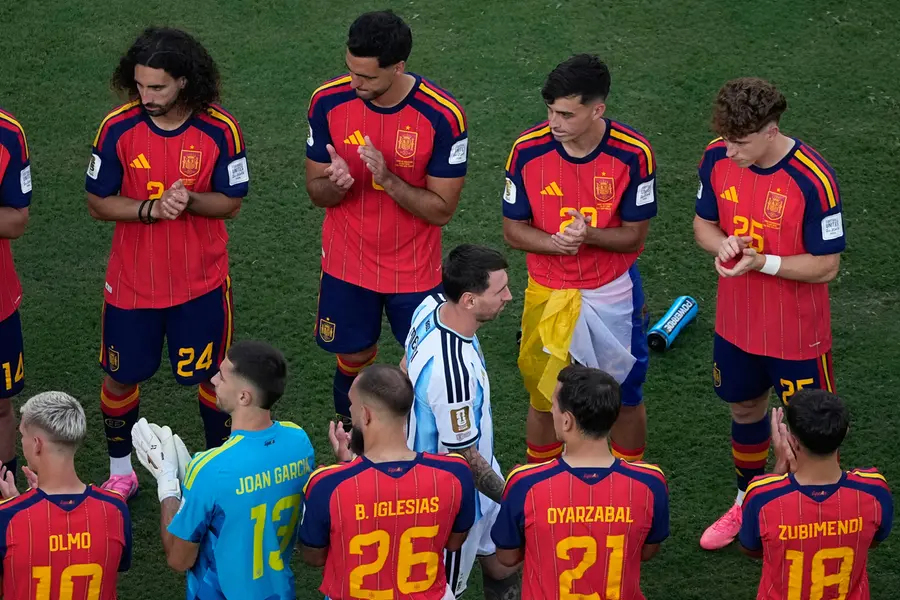
Spain's triumph in the FIFA World Cup 2026 final was not built on a moment of brilliance alone. It was the product of a meticulously executed tactical plan that neutralised Lionel Messi, overwhelmed Argentina's midfield and exposed the defending champions' growing dependence on their 39-year-old captain.
By the end of Sunday's 1-0 extra-time victory, Messi had been reduced to a peripheral figure, a rare sight during a tournament in which he had scored eight goals and inspired Argentina's run to the final.
The numbers illustrated Spain's success. Messi managed just 54 touches in 120 minutes, failed to create a single chance for a teammate and did not register his only shot until the 117th minute.
Spain coach Luis de la Fuente made no secret of his team's approach.
"The first idea was to keep Messi at bay," he said.
La Roja executed that plan with relentless discipline. Every time Messi received possession, Spain quickly crowded him with multiple defenders, denying him the space to turn or accelerate. Unlike earlier rounds, when he drifted into pockets between the lines, the Argentina captain rarely found room to dictate the tempo.
Spain's coordinated pressing also cut off the supply from midfield. Rodri controlled the centre of the pitch while Spain's high press prevented Argentina from building attacks from the back. The defending champions repeatedly struggled to play through Spain's lines, particularly down the left flank, forcing them into hurried clearances and misplaced passes.
Unable to match Spain's dominance in possession, Argentina instead attempted to disrupt the rhythm of the match with an aggressive, physical approach.
Early fouls and repeated challenges slowed the contest and prevented Spain from finding sustained fluency, but the European champions refused to lose their composure. Rather than retaliate, they remained patient, trusting their possession-based system until openings eventually appeared.
Argentina's frustrations increasingly boiled over. Leandro Paredes was booked after a needless challenge on Rodri following an earlier confrontation, while Enzo Fernández received a yellow card for dissent before collecting a second booking late in normal time for a reckless foul that reduced Argentina to 10 men.
With the numerical advantage, Spain intensified the pressure.
Just 37 seconds into the second period of extra time, substitute Ferran Torres finally broke through, firing beyond Emiliano Martinez to deliver Spain's second FIFA World Cup title and first since 2010.
The final also exposed the physical toll Argentina's demanding route to the final had taken.
Having already endured two previous extra-time matches, Lionel Scaloni's squad looked increasingly fatigued. Injuries to first-choice central defenders Lisandro Martínez and Cristian Romero further disrupted Argentina's ability to play out from defence, depriving Messi of quality service from deep.
Spain exploited every weakness. Rodri dictated possession, the midfield consistently outplayed Enzo Fernández and Alexis Mac Allister, and Messi was left isolated for long periods with little support around him.
Despite his remarkable tournament, age and circumstance finally caught up with the Argentine captain.
After dazzling throughout the competition with eight goals, Messi could not overcome Spain's relentless pressing or their numerical superiority after Fernández's dismissal. Argentina continued to look for moments of magic from their captain, but Spain's defensive structure ensured those moments never arrived.
The statistics underlined the extent of Spain's superiority.
La Roja outshot Argentina 20-2, the second-largest shot differential in a men's World Cup final since detailed records began in 1966, according to Opta. Only West Germany's 23-1 advantage over Argentina in the 1990 final was greater.
Spain also completed 845 passes to Argentina's 433, reflecting their dominance in possession and control throughout the contest.
The victory extended Spain's unbeaten run to 38 matches, a new record for the longest unbeaten streak by a men's national team. They conceded just one goal in eight matches during the tournament while scoring 14, completing one of the most dominant World Cup campaigns in recent history.
Argentina coach Lionel Scaloni reserved special praise for his captain despite the defeat.
"I hope that everyone feels proud of him, of what he’s achieved because he’s the best football player ever stepping foot on a pitch," Scaloni said.
Whether Sunday marked Messi's final appearance in an Argentina shirt remains unknown.
Published: 20 Jul 2026, 07:24 am IST
Related Topics
Disclaimer: Kindly avoid objectionable, derogatory, unlawful and lewd comments, while responding to reports. Such comments are punishable under cyber laws. Please keep away from personal attacks. The opinions expressed here are the personal opinions of readers and not that of Mathrubhumi.
