
Experts believe India must focus on long-term structural reform rather than searching for quick solutions if it hopes to emerge as a credible footballing nation by 2034.
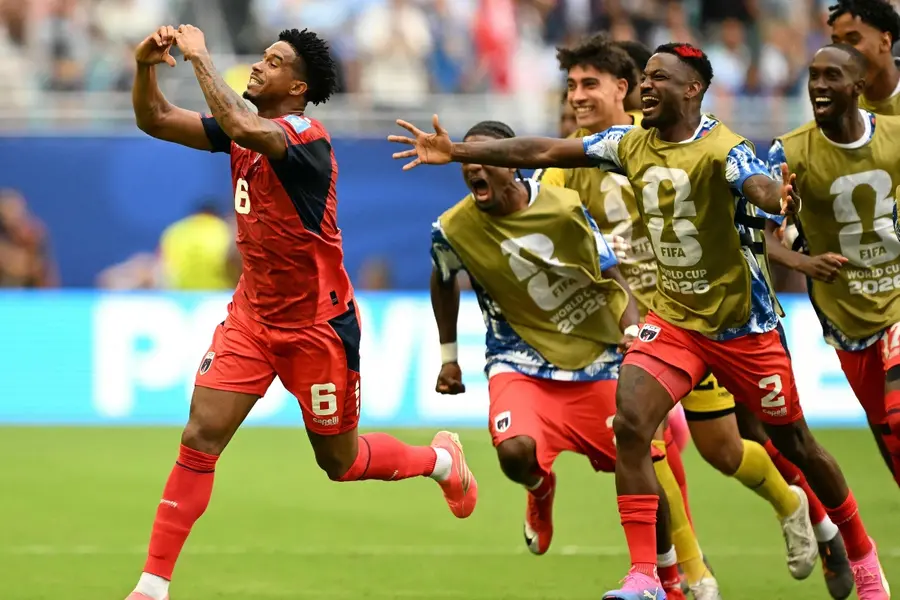
The 2026 FIFA World Cup has come to an end. While Spain celebrates and Argentina reflects on its campaign, India's football community is once again left wondering what it will take for the Blue Tigers to compete on the biggest stage.
As India continues to struggle even to qualify consistently for major continental tournaments, the remarkable rise of the small African island nation of Cape Verde has highlighted what a clear long-term strategy can achieve.
Cape Verde, an archipelago off Africa's west coast with a population of around 500,000, became the smallest nation to reach the World Cup Round of 32.
Their campaign was no accident. The side held eventual champions Spain to a draw before pushing Lionel Messi's Argentina into extra time in the knockout stage, eventually losing 3-2 in a closely fought contest.
The foundation of that success lies in a well-defined diaspora model. Although the country is only slightly larger than Goa, Cape Verde has strengthened its national team by identifying and recruiting players with local roots who compete across Europe's leading leagues.
One defender was famously discovered through a LinkedIn message. The approach has enabled Cape Verde to field a squad featuring players with experience in the top divisions of Portugal, Spain and the Netherlands, allowing the team to compete with far larger footballing nations. India, meanwhile, has long been reluctant to tap into its own football diaspora. Several high-profile players of Indian origin have previously expressed a willingness to represent the Blue Tigers, with some even offering to give up their foreign passports. Yet, the system remained largely closed. Although the All India Football Federation (AIFF) has recently initiated discussions on allowing Overseas Citizens of India (OCI) to represent the national team, progress has been slow compared with the proactive scouting model that propelled Cape Verde onto the world stage.
India must overcome structural barriers
The challenges extend well beyond the diaspora debate. India's domestic football ecosystem continues to grapple with structural shortcomings, while the gap with the world's leading nations keeps widening. The country's FIFA ranking has fallen to 139, a sharp decline from the double-digit positions it achieved decades ago.
The domestic structure continues to face several challenges. Club commitments often take priority over the national side, making it difficult for coaches to assemble a settled squad. Independent clubs are not always obliged to release players outside designated international windows, limiting preparation time.
The shortage of competitive football is another concern. Indian professionals typically play around 30 matches each year, well below the more than 50 games commonly played by footballers in stronger footballing nations.
Talent identification also remains a significant obstacle. Rather than operating an extensive scouting network across districts and rural areas, the existing system largely depends on young players travelling to major cities for selection trials.
Long-term reforms central to 2034 ambitions
Experts believe India must focus on long-term structural reform rather than searching for quick solutions if it hopes to emerge as a credible footballing nation by 2034.
They argue that a coordinated national approach involving schools, corporate sponsors and government-backed infrastructure is essential. While there is growing interest in expanding the player pool through footballers of Indian origin, that alone will not transform the national team.
A predictable domestic calendar, year-round youth competitions and administrative stability are equally important. As the 2026 World Cup concludes, Cape Verde's journey underlines that sustained success depends less on a country's size or population than on the strength and unity of its football system.
Published: 21 Jul 2026, 04:20 pm IST
Disclaimer: Kindly avoid objectionable, derogatory, unlawful and lewd comments, while responding to reports. Such comments are punishable under cyber laws. Please keep away from personal attacks. The opinions expressed here are the personal opinions of readers and not that of Mathrubhumi.
