
The reliance on wide circulation was reduced, replaced by sharper, more vertical passing through Bruno Guimarães, who increasingly acted as the team’s main connector.
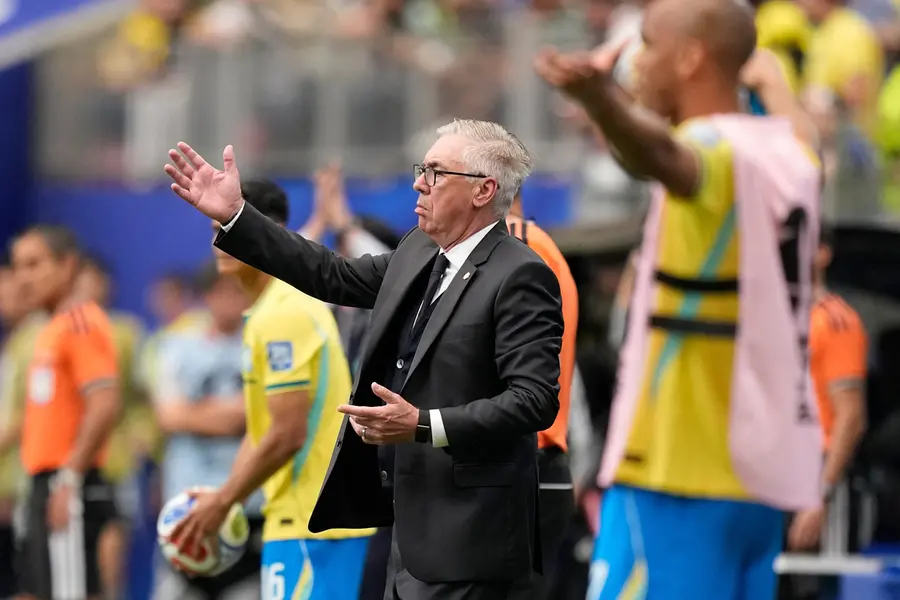
Carlo Ancelotti’s Brazil did not simply outplay Japan in their 2-1 FIFA World Cup 2026 Round of 16 win, they gradually re-engineered the game.
What began as a possession-heavy but blunt performance evolved into a structured, high-tempo siege, shaped by tactical corrections, positional tweaks, and perfectly timed substitutions.
In the first half, Brazil’s dominance of the ball masked a deeper problem: predictability. Their circulation was too slow and too horizontal, allowing Japan to stay compact in a disciplined mid-block without being forced into uncomfortable decisions. Even worse for Brazil, their attacking structure left space behind the ball, and Japan exploited that imbalance when Kaishu Sano punished a transition moment following a defensive error. It was a warning sign that Brazil’s control was not yet secure control.
Also read | Wanted & unwanted: Casemiro sets two unique World Cup records against Japan
After the break, Ancelotti’s response was immediate and multi-layered. The tempo of Brazil’s play increased, but more importantly, their positioning changed. Midfielders and forwards began occupying more aggressive pockets between the lines, ensuring Japan could no longer defend in a settled shape. This shift turned possession into penetration rather than patience.
A central adjustment involved Casemiro’s role. Instead of sitting exclusively as a shield, he began stepping into attacking zones, especially during sustained pressure phases. This not only added aerial threat but also created an extra body inside the box during crosses and second-ball situations. His equaliser reflected that structural change rather than a one-off moment of inspiration.
At the same time, Brazil altered their attacking routes. The reliance on wide circulation reduced, replaced by sharper, more vertical passing through Bruno Guimarães, who increasingly acted as the team’s main connector. By attacking the half-spaces more directly, Brazil were finally able to disrupt Japan’s compact defensive shell and create higher-quality entries into dangerous areas.
The introduction of Endrick and Gabriel Martinelli added another dimension entirely: pace behind the defence. Their presence stretched Japan vertically, forcing the back line deeper and opening space between midfield and defence. Martinelli’s late winner was the clearest expression of this shift—less a counterattack, more the result of sustained positional collapse under pressure.
Defensively, Brazil also became more controlled. The spacing between midfield and back line tightened, reducing the transitional gaps that had previously allowed Japan to break forward. That adjustment ensured Japan were pushed further back, limiting their ability to threaten beyond isolated moments.
By the closing stages, the match had effectively shifted into one-directional pressure. Brazil’s attacking units operated in sync, midfield arriving late, full-backs supporting width, forwards attacking depth simultaneously, creating constant strain on Japan’s defensive structure. The decisive goal came from that accumulated pressure, with Guimarães finding Martinelli in the box for the 96th-minute finish.
Ultimately, Ancelotti’s impact was defined not by a single change, but by layered intervention: speeding up circulation, restructuring midfield roles for greater penetration, and introducing direct runners to stretch the game vertically. The result was a controlled tactical escalation that turned inefficiency into dominance at the exact moment it mattered most.
Published: 30 Jun 2026, 01:46 am IST
Related Topics
Disclaimer: Kindly avoid objectionable, derogatory, unlawful and lewd comments, while responding to reports. Such comments are punishable under cyber laws. Please keep away from personal attacks. The opinions expressed here are the personal opinions of readers and not that of Mathrubhumi.
