
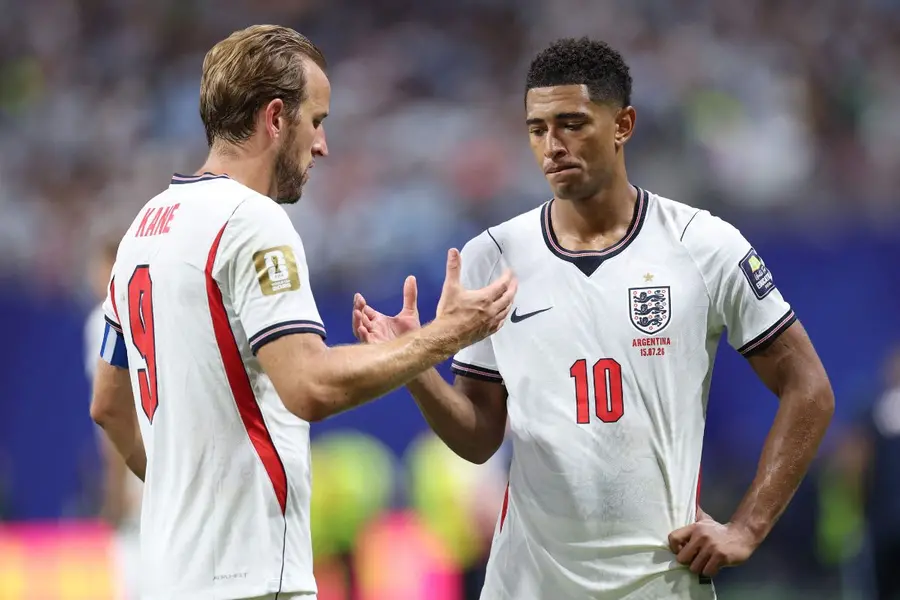
Captain Harry Kane is the grandson of Irish immigrants, while Jude Bellingham has Kenyan and Irish family roots.
The FIFA World Cup has long been viewed as an occasion that unites people behind a shared national cause. Although England's youthful and talented squad fell short of reaching the final, their campaign has highlighted something that extends well beyond football.
The team presented a modern image of England that differs significantly from traditional cultural portrayals often associated with nostalgia and a narrow definition of Englishness. In doing so, it has also challenged recent debates surrounding national identity, ethnicity and belonging.
Under German head coach Thomas Tuchel, England's 26-man squad included 20 players who were eligible to represent another country through FIFA's heritage rules, which allow players to play for the nation of their parents' or grandparents' birth. Those alternative affiliations—including Jamaica, Nigeria, Ghana, Ireland and Kenya—reflect Britain's historical ties with former colonies and migration patterns, echoing the observation of Sri Lankan writer A. Sivanandan: "They are here, because you were there."
Despite the team's diverse backgrounds, England's performances attracted widespread public support. Record television audiences followed their progress, while celebrations by supporters dominated social media throughout the tournament.
The squad also reflected England's multicultural identity. Captain Harry Kane is the grandson of Irish immigrants, while Jude Bellingham has Kenyan and Irish family roots. Their prominence comes at a time when political debates over nationality, immigration and identity have become increasingly prominent.
Englishness and Britishness
Research has consistently found that people from ethnic minority backgrounds are more likely to identify as British than English. For many, Britishness is viewed as a more inclusive civic identity, whereas Englishness has often been perceived as being more closely linked to ethnicity.
Conversely, people with more right-leaning political views are generally more likely to describe themselves as English rather than British.
These contrasting perspectives reflect broader ideas about national belonging. Some groups are widely regarded as more authentically belonging to the nation than others, giving them greater influence over debates about identity, culture and national priorities.
This sense of belonging is closely connected to ideas of entitlement, where perceptions of who belongs most can shape beliefs about who deserves greater access to social, economic and cultural opportunities.
Although such tensions are not new, they have intensified in recent years due to widening inequality, weakening public institutions and the growth of nativist politics, which prioritise the interests of people born in a country over those of immigrants.
Rethinking England's identity
England may nevertheless have an opportunity to redefine its national identity. Surveys suggest that ethnic minorities in Scotland and Wales are more likely to identify as Scottish or Welsh, partly because those identities have developed in contrast to England's dominant position within the UK.
Questions surrounding England's constitutional identity—including debates over English governance and regional representation—remain unresolved. Greater devolution to England's regions, alongside stronger English cultural institutions, could help foster a more inclusive sense of belonging.
Ultimately, England may need to develop a more contemporary understanding of its national story—one that looks beyond nostalgia and embraces the country's diversity.
While England did not lift the World Cup trophy, the team nevertheless offered a visible example of a more inclusive and representative vision of the nation. (The Conversation)
Published: 16 Jul 2026, 11:58 am IST
Disclaimer: Kindly avoid objectionable, derogatory, unlawful and lewd comments, while responding to reports. Such comments are punishable under cyber laws. Please keep away from personal attacks. The opinions expressed here are the personal opinions of readers and not that of Mathrubhumi.
