
As per reports, the board wants both senior batters to understand precisely how they fit into the vision Gambhir and Agarkar.
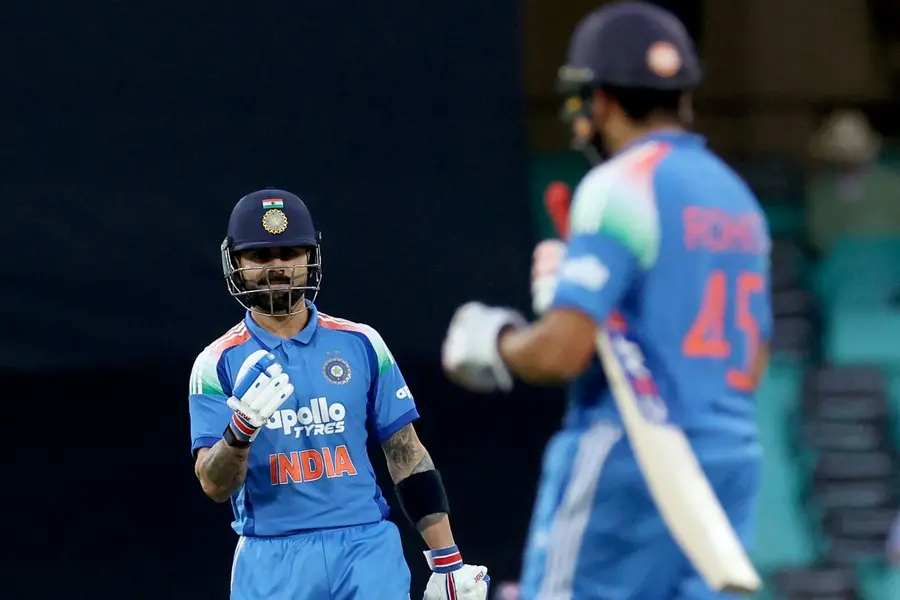
Despite various concerns, India’s cricketing board still believes that both Rohit and Kohli remain integral to the ODI structure. Officials emphasise that they are not merely senior figures fighting for their own positions; rather, they are expected to anchor the batting unit in a way that eases the pressure on the emerging players around them. Their experience, temperament and ability to shape chases and big totals are considered invaluable assets.
Alongside respect for their past achievements, however, lies a concern rooted in pure cricketing logic: rhythm. With both Rohit and Kohli now effectively playing only one international format, their comeback into the ODI side often follows lengthy breaks. The recent series in Australia has been cited internally as evidence. Though both scored in the final match, insiders have noted that the series had already slipped away by then, that the decisive advantage in the third ODI had been created by the bowlers, and that the two senior batters had looked distinctly rusty in the opening games. The underlying fear within the board is that India cannot afford such slow starts in every series, especially with the global tournament cycle in mind.
The Board of Control for Cricket in India (BCCI) is preparing for what could be one of its most consequential internal discussions in recent years, with the future of Rohit Sharma and Virat Kohli in India’s one-day set-up set to take centre stage. According to a report in The Times of India, board officials, head coach Gautam Gambhir and chief selector Ajit Agarkar are expected to gather in Ahmedabad after the third ODI to lay out a long-term plan leading up to the 2027 World Cup.
Rohit Sharma’s batting approach is also expected to feature prominently in the discussions. India still view him as the enforcer at the top of the order—an aggressive presence who seizes control of the innings from the outset. This approach was central to his success during the Champions Trophy era. During the Australia ODIs, however, the management observed that he took more balls than usual to settle and appeared reluctant to take risks early on. The expectation moving forward is clear: Rohit must continue to embody the fearless, tempo-setting role that has long defined him.
For the moment, attention remains on the South Africa series, which serves as the immediate venue for Rohit and Kohli to find form and rhythm. Yet many within the board acknowledge that the forthcoming meeting may prove even more decisive than India’s on-field performances. What emerges from Ahmedabad could shape not only the careers of India’s two modern giants but also the trajectory of the country’s ODI cricket in the years leading to the next World Cup.
Reports have also emerged that Rohit Sharma has already been privately advised to focus on his “fitness and performance”, while steering clear of responding to speculation about his long-term future. The message, it seems, is intended to remove distractions and encourage the captain to concentrate exclusively on his cricket.
Another factor under scrutiny is the amount of cricket the pair play outside international commitments. The board is likely to request that they participate in the Vijay Hazare Trophy next month. This domestic involvement would act as preparation for a home limited-overs series against New Zealand, followed by a three-match ODI tour of England in July—India’s next big 50-over challenge.
The intention behind this meeting is straightforward: to establish complete clarity around the roles of India’s two most influential modern-day cricketers. Sources quoted by TOI have emphasised that players of Rohit and Kohli’s stature “cannot be left operating in uncertainty”, and that the management must clearly define its expectations. The board wants both senior batters to understand precisely how they fit into the vision Gambhir and Agarkar are constructing for the next four-year cycle.
The conversation, insiders suggest, will be frank. The aim is not to diminish their roles but to ensure that both players, as well as the selectors and coaching staff, share a clear and aligned understanding of what lies ahead. India’s ODI future continues to be built on the foundation laid by Rohit Sharma and Virat Kohli; the question now is how long this partnership can continue at the highest level—and under what terms. (With inputs from Agencies)
Published: 29 Nov 2025, 12:59 pm IST
Disclaimer: Kindly avoid objectionable, derogatory, unlawful and lewd comments, while responding to reports. Such comments are punishable under cyber laws. Please keep away from personal attacks. The opinions expressed here are the personal opinions of readers and not that of Mathrubhumi.
