
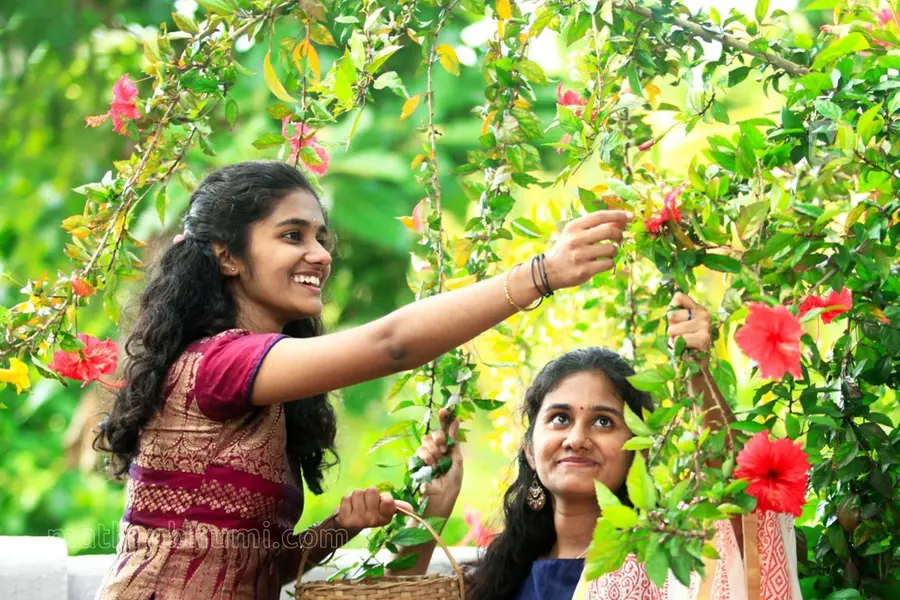
Kerala is all set to celebrate another Onam which is also known as the festival of flowers. Keralites celebrate this 10-day festival by making beautiful ‘Pookalam’ floral carpets. Nowadays, Malayalis have been making ‘pookkalam’ with flowers brought from other states like Andhra Pradesh and Tamil Nadu. Kerala’s local flowers like Thumbapoo, Chembarathi, Krishnakireedam and many other varieties have gone missing from our surroundings giving entry to the flowers from other states.
Earlier, that means during the childhood of our grandparents, only our native flowers found a place in the floral carpets from Atham to Thiruvonam. But now, we depend on the market for flowers as modernisation brought changes in the celebration by opening doors to business.
Let’s take a look at some of the popular native flowers which got disappeared from our Onam celebrations:
Thumbapoo
The tiny flowers in white colour have great significance in Onam celebrations. Thumbapoo was an essential part of Pookalam. In some places, a leaf of tulsi (holy basil) and flowers of thumba ( Leucas aspera or Ceylon slitwort) flowers are placed at the centre of the pookkalam as a traditional practice. Earlier, only Thumba flowers were used for making pookkalam on Atham, which marks the first day of Onam festivities. It is also used for decorating Thrikkakarappan, the idol which represents Mahabali.
Thumba plant is a popular herb and it is also used as a remedy for snake bites and scorpion stings.
Mukkutti
Mukkutti, the yellow small flowers were a major part of the Pookkalam as one among the flowers called ‘Dasapushpangal’. This plant which is grown as a shrub on our premises is connected with the traditional life of Kerala from Karkidakam to Onam festivities. This plant is also a herb which has antibacterial properties as per Ayurveda.
Tulsi
Tulsi was an unavoidable part of Onapookalam. The tiny leaves and its flowers were used by the old generation to make attractive pookalm in 10 days. It is widely used for puja and worshipped as a goddess. Tulsi is used with flowers for worshipping 'Thrikkakarappan' during Thiruvonam.
Chembarathi
Chembarathi (hibiscus) is one of the few flowers which still finds a place in pookalam. Though it is widely seen in red colour, there are many varieties in different colours including pink, yellow and so on. Nowadays, this plant is widely cultivated as the flowers are edible.
Thechi
Thechi (Jungle geranium) flower is widely seen in Kerala. These flowers are used for pujas in Hindu temples. In many temples including Guruvayur Sri Krishna temple, devotees offer Thechi Garland as it is considered highly meritorious.
Sankupushpam
The blue flower is commonly known as butterfly pea flower. It was used as an ornamental plant and it looked amazing on floral carpets as tiny butterflies. Like other native plants, it also has medicinal properties. As per Ayurveda, it helps to relieve throat and eye infections and cure skin and urinary diseases.
Krishnakireedam
Krishnakireedam or Hanuman Kireedam, the red tiny flowers in the shape of a crown have different names in different places. This ornamental plant is grown as a shrub largely found in the villages during the Onam season. According to senior citizens, it will take at least 6 months for the flowers to bloom completely. Apart from Pookkalam, Krishnakireedam is used for decorating the idol of Thrikkakrappan, an integral part of Onam celebrations.
Kolambi
The yellow flowers were widely used for Pookkalam as its plant is an evergreen one.
Mandaram
The beautiful white flowers with large petals ruled the pookalam once. Everyone loved its beauty and aroma and preferred to cultivate in it their garden.
Aripoovu
Aripoovu, is found as a bouquet of tiny flowers in different colours. Its plant is also grown as a shrub and is largely found between thickets. Aripoovu is also called as Kongini flower.
Kakkapoovu
The blue-coloured flowers are often found in the villages, especially in hilly areas. Kakkappoovu (Utricularia reticulata) will allure all as it grows as bunches of flowers.
These flowers have disappeared from Onapookkalam now. The young generation can’t identify these flowers as only flowers available in the markets have stolen the place of the native flowers. These flowers are not only linked with our culture but also identify the rich biodiversity of Kerala.
Published: 29 Aug 2022, 04:47 pm IST
Related Topics
Disclaimer: Kindly avoid objectionable, derogatory, unlawful and lewd comments, while responding to reports. Such comments are punishable under cyber laws. Please keep away from personal attacks. The opinions expressed here are the personal opinions of readers and not that of Mathrubhumi.
