

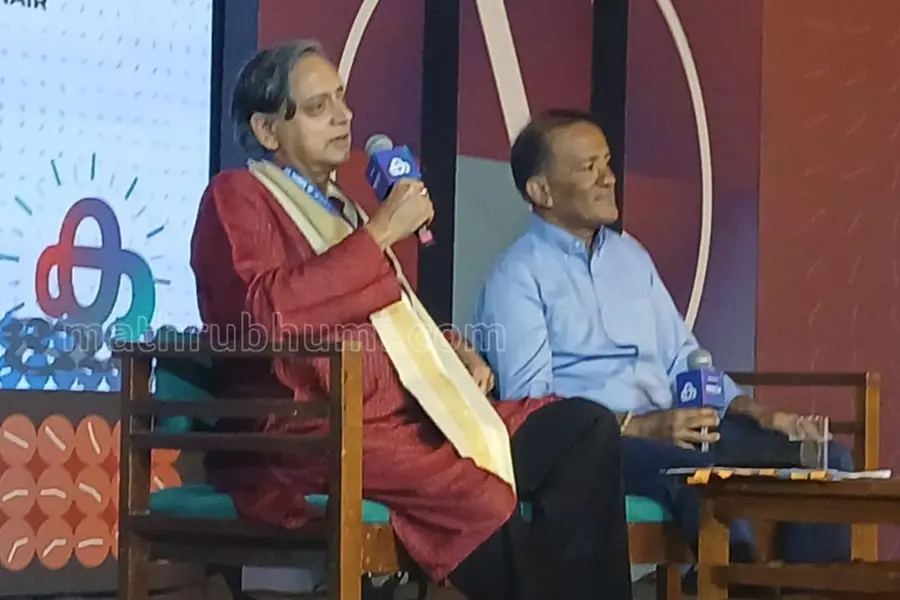
A lively debate unfolded at the ongoing Mathrubhumi International Festival of Letters (MBIFL) 2025 with Congress MP Shashi Tharoor and Chandran Nair, founder and CEO of the think tank Global Institute For Tomorrow offering vastly different perspectives on China’s relationship with India. What began as a discussion on BRICS and the evolving post-Western world order quickly turned into an intriguing clash of ideas, particularly regarding China’s intentions towards India.
Nair, ever the optimist, argued that China was eager to improve relations with India. He spoke of subtle shifts in their approach and the potential for collaboration. Tharoor, however, was unconvinced.
While acknowledging the undeniable rise of China’s economic might, Tharoor made it clear that there was much more at stake than just GDP numbers. For him, it wasn’t about competing with China on the global stage -- it was about the everyday realities of life in India and the unspoken challenges the country faced from its neighbour.
“We have three square meals a day, decent jobs, healthcare clinics within three kilometres, and schools for our children. I’m happy with all that," Tharoor reflected on India’s progress. "But China taught me that wasn’t enough. They started flexing their muscles, violating agreements, and making moves that I could no longer ignore. I would be a fool not to recognise that China’s intentions are far from friendly."
The conversation took a more intense turn when Tharoor addressed what he saw as China’s consistent unfriendliness towards India. From the ongoing border tensions to its support for terrorism on Indian soil, Tharoor didn’t mince his words. "China has been unfriendly to us consistently. They’ve killed Indians in large numbers. There is nothing good I can see when it comes to Chinese policies and ambitions,” he stated firmly, his frustration evident.
Nair, however, did not back down. He suggested that the Chinese had shown no disagreement with the idea of improving relations and were keen to address past grievances. But Tharoor was not convinced. “Chandran, you tell them this next time. If they can show real goodwill, at least by fulfilling three of these five demands, then I’ll believe they mean well,” Tharoor shot back, offering a challenge that was as pointed as it was pragmatic.
The five demands Tharoor laid out were simple yet profound. They include:
1) Stop denying Indian citizens from Kashmir and Arunachal Pradesh Chinese visas on Indian passports.
2) Eliminate the non-tariff barriers that block Indian businesses from entering the Chinese market.
3) Take tangible steps to settle the long-standing border disputes.
4) Stop obstructing India’s entry into the Nuclear Suppliers Group.
5) Support India's bid for a permanent seat on the UN Security Council.
"If China is serious about peace, they need to show it in real, meaningful ways," Tharoor emphasised.
The conversation ended with a sense of unresolved tension. For Nair, there remained a glimmer of hope that China could indeed change its approach. For Tharoor, the stakes were too high to be naive.
As he said, "If they can comply with at least three of these five demands, I’d believe they mean well. But until then, I remain on guard."
Published: 08 Feb 2025, 02:41 pm IST
ABOUT THE AUTHOR
Related Topics
Disclaimer: Kindly avoid objectionable, derogatory, unlawful and lewd comments, while responding to reports. Such comments are punishable under cyber laws. Please keep away from personal attacks. The opinions expressed here are the personal opinions of readers and not that of Mathrubhumi.