
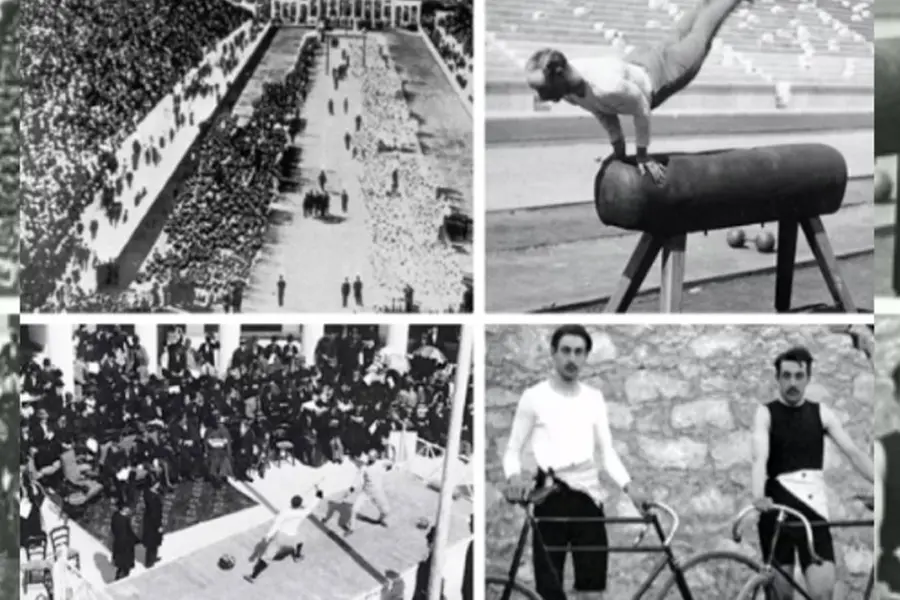
The Paris 2024 Olympics, scheduled from July 26 to August 11, 2024, stand as a testament to the enduring legacy of the Games, tracing their origins over two millennia ago to ancient Greece. Born in 776 BC, the ancient Olympics were dedicated to Zeus, combining athletic prowess with cultural celebrations in music, poetry, and theater. This tradition persisted until 393 AD when the Roman Emperor Theodosius I banned the Games, marking a hiatus that would last for centuries.
The Revival of the Olympics
The revival of the Olympics began to take shape in the late 19th century amid growing global interest in reviving international sporting events. This movement found its champion in Baron Pierre de Coubertin, who convened the first Olympic Congress in Paris, setting the stage for the rebirth of the Games. His vision culminated in the inaugural modern Olympics in Athens in 1896, bringing together 241 athletes from 14 nations for the Games of the I Olympiad. This historic event rekindled the spirit of international competition, showcasing sports such as athletics, cycling, swimming, and gymnastics.
1896, The Athens Olympic Games
The Athens 1896 Games marked a significant milestone, drawing packed stadiums and enthusiastic crowds, particularly for the marathon, a race that would become emblematic of the Olympic spirit. As the Games evolved, so did their inclusivity. The Paris 1900 Olympics notably saw the participation of women for the first time, with British tennis player Charlotte Cooper emerging as the first female Olympic champion. Amidst nearly a thousand athletes, 22 women competed across sports like tennis, sailing, croquet, equestrian events, and golf, laying a foundation for gender equality in the Olympics.
From its modest beginnings in Athens, the Olympic movement grew exponentially, expanding in scale and diversity. Key milestones punctuate its history: the introduction of new sports and events, the increasing participation of athletes from around the world, and the continual push towards equality and inclusivity.
India @Olympics
India, a stalwart in the Olympic arena, embarked on its journey in 1900 with a solitary participant. A century of noteworthy achievements commenced with the Antwerp Games in 1920, marking India's official debut with a contingent that would go on to carve out a legacy in Olympic history. Paris 1924 witnessed India's entry into tennis competition, while the subsequent Amsterdam 1928 Olympics heralded a golden era for Indian hockey. Led by the legendary Dhyan Chand, India clinched its maiden Olympic gold, an achievement that set the stage for unprecedented dominance in the sport.
The 1930s and 40s solidified India's reputation as a hockey powerhouse, securing three consecutive Olympic gold medals in Amsterdam 1928, Los Angeles 1932, and Berlin 1936. Post-independence, India's presence at the Olympics expanded, notably at the London 1948 Games where it fielded its largest contingent yet. The Indian hockey team continued its illustrious run, capturing its fourth Olympic gold and introducing new stars like Balbir Singh Sr.
India's Olympic narrative diversified with historic individual achievements. Wrestler KD Jadhav etched his name in history at the Helsinki 1952 Olympics by clinching India's first individual Olympic medal, a bronze. Subsequent editions saw varied successes, including the hockey team's bronze at Mexico City 1968 and Munich 1972, marking deviations from its traditional gold-winning streak.
The turn of the millennium heralded a new era of Indian Olympic achievements. Tennis ace Leander Paes secured India's first individual Olympic medal in 1996, followed by weightlifter Karnam Malleswari's bronze in 2000, becoming India's first woman to achieve this feat. The Beijing 2008 Olympics marked a watershed moment with shooter Abhinav Bindra clinching India's maiden individual gold medal in the 10m Air Rifle event, signaling a shift towards broader sporting excellence.
India’s rise at 2012 London Olympics
India's performance at subsequent Olympics continued to capture headlines. The 2012 London Games witnessed Saina Nehwal becoming India's inaugural badminton Olympic medalist, while athletes like Sushil Kumar, Gagan Narang, Vijay Kumar, Mary Kom, and Yogeshwar Dutt contributed to India's highest medal tally at that time. Rio 2016 saw PV Sindhu and Sakshi Malik making history as India's sole medalists, all medals notably being won by female athletes for the first time.
Tokyo 2020

Tokyo 2020 proved historic for India, breaking a 41-year medal drought in hockey with a bronze for the men's team, alongside achievements in athletics where Neeraj Chopra clinched India's first track-and-field gold in javelin throw.
India’s hopes in Paris
Looking ahead to the Paris 2024 Olympics, India prepares its largest-ever contingent of 117 athletes across 16 sports disciplines, comprising 70 men and 47 women. With ambitions set high, these athletes aim to compete in 69 events with an eye on securing 95 medals. Bolstered by significant governmental support, totaling over 470 crore rupees, India's athletes are poised to leave an indelible mark on the global sporting stage.
As the countdown to Paris 2024 begins, the Olympic Games continue to serve as a beacon of unity, athleticism, and cultural exchange, embodying the enduring spirit of competition that transcends borders and generations. (With inputs from PIB)
Published: 25 Jul 2024, 10:56 am IST
Related Topics
Disclaimer: Kindly avoid objectionable, derogatory, unlawful and lewd comments, while responding to reports. Such comments are punishable under cyber laws. Please keep away from personal attacks. The opinions expressed here are the personal opinions of readers and not that of Mathrubhumi.