
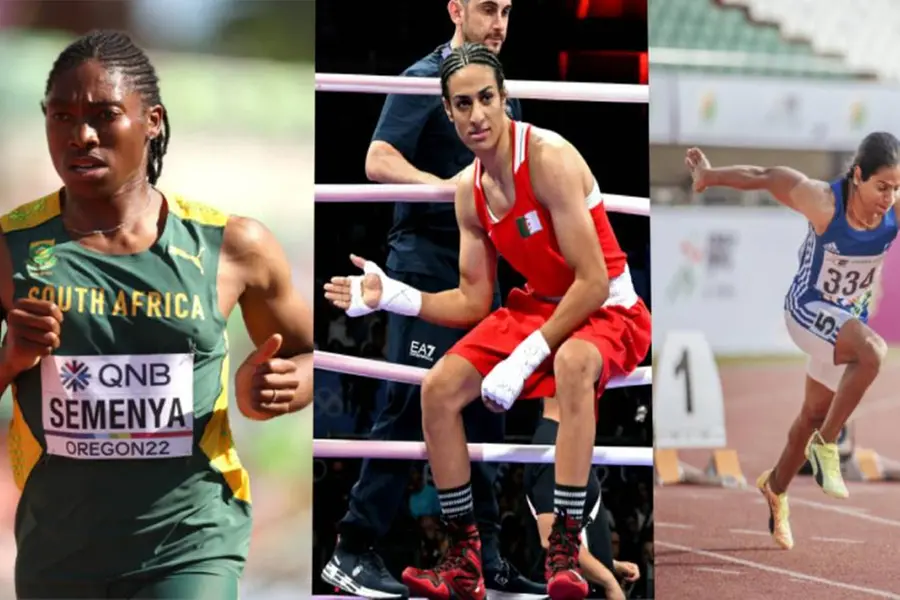
Paris: Algerian boxer Imane Khelif's triumphant exit from the ring in tears following a commanding victory this past weekend has sparked a fierce debate over gender misconceptions and racial discrimination. Khelif, who faced days of malicious comments and unfounded accusations about her gender after her initial fight against an Italian opponent who withdrew moments into their bout, has become a focal point in the ongoing controversy surrounding gender regulations in sports.
The backlash against Khelif, as articulated by Algerian fan Adel Mohammed, underscores broader racial dynamics at play. "It’s because she’s African, because she’s Algerian," Mohammed lamented, attributing the hateful comments to racism perpetuated by predominantly white individuals. This sentiment resonates with historians and anthropologists who argue that female athletes of colour endure disproportionate scrutiny and discrimination, particularly concerning sex testing and false allegations of being male or transgender.

Payoshni Mitra, director of the Center for Sport and Human Rights, highlights the global impact of sex testing on women from the Global South or developing countries. She criticises the Eurocentric approach of international sporting federations, which she argues fails to embrace diversity in sex and gender identity. Mitra's work with female athletes across Asia and Africa underscores the systemic biases that marginalise non-Western ideals of femininity.
The case of South African runner Caster Semenya, sidelined for 11 months in 2009 due to track and field regulations on testosterone levels, serves as a poignant example. Semenya, who identifies as female and has a medical condition causing naturally high testosterone, has faced legal battles challenging the requirement to suppress her testosterone levels to compete. Critics argue that such rules unfairly target women of colour who do not conform to Western standards of femininity.
Medical anthropologist Danyal Kade Doyle Griffiths criticises the double standards in sports regulations, contrasting the treatment of athletes like Semenya with that of male athletes who possess advantageous biological traits like height or arm span without facing disqualification. Indian sprinter Dutee Chand's ordeal, including exclusion from the 2014 Commonwealth Games and subsequent legal battles against testosterone limits, further illustrates the intersectional challenges faced by women of colour in sports.
The historical roots of racism and gender stereotypes against Black women in sports are deeply ingrained. Cheryl Cooky, a professor at Purdue University, explains how these stereotypes portray Black women as overly masculine or intimidating, contrasting sharply with white, Westernised standards of femininity. These biases extend beyond athletics, manifesting in public figures like tennis star Serena Williams and basketball player Brittney Griner, both subjected to false accusations questioning their gender.
In Khelif's case, controversy erupted when the International Boxing Association (IBA) barred her from the 2023 world championships, citing unspecified eligibility tests and elevated testosterone levels. The lack of transparency from the Russian-dominated body, which clashed frequently with the International Olympic Committee (IOC), further muddied the waters. IOC spokesman Mark Adams criticised the flawed process surrounding Khelif's case, emphasising her consistent identification as female throughout her life and athletic career.
The IOC's 2021 principles on gender and sex inclusion aimed to create a fair and respectful environment for athletes while addressing complex issues of identity and competition. However, advocates like Mitra stress the importance of upholding these principles amid ongoing controversies and public scrutiny.
Throughout the turmoil, Khelif has found staunch support from her fellow Algerians, who have rallied behind her in defiance of the hateful comments. Algerian athlete Zahra Tatar, competing in hammer throwing, lauded Khelif's resilience and expressed solidarity in hopes of her achieving Olympic gold.
Imane Khelif's journey exemplifies the intersection of race, gender, and sports regulations in a global context. Her experience underscores the urgent need for equitable treatment of athletes of all backgrounds, challenging entrenched biases and promoting inclusivity in sports governance. As Khelif continues her quest for Olympic glory, her resilience serves as a powerful testament to the enduring struggle for dignity and fairness in international athletics. AP
Published: 05 Aug 2024, 12:21 pm IST
Disclaimer: Kindly avoid objectionable, derogatory, unlawful and lewd comments, while responding to reports. Such comments are punishable under cyber laws. Please keep away from personal attacks. The opinions expressed here are the personal opinions of readers and not that of Mathrubhumi.