
Zohran Mamdani, a 34-year-old state lawmaker and democratic socialist, has been elected as New York City’s first Muslim and youngest mayor in over a century
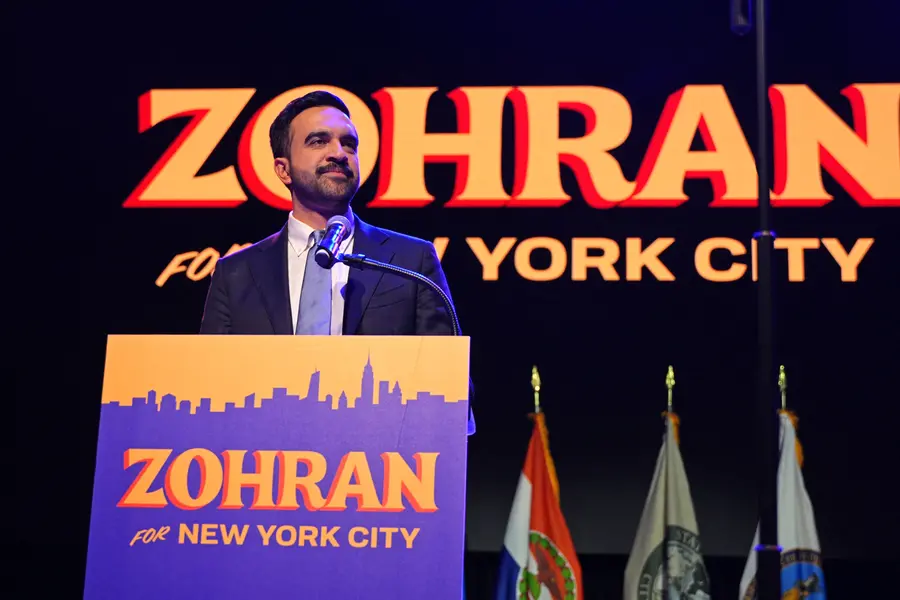
New York: In a landmark victory, Zohran Mamdani has been elected as the 111th mayor of New York City, defeating former governor Andrew Cuomo and Republican candidate Curtis Sliwa. With more than 50% of the vote, Mamdani’s campaign — rooted in affordability, inclusion, and progressive reform — resonated across boroughs, from Brooklyn’s gentrified areas to the immigrant communities of Queens.
Mamdani’s win represents one of the most significant political upsets in modern New York history. Born in Uganda to Indian parents, he will become the city’s first Muslim and first South Asian mayor, as well as the youngest since the 19th century.
According to multiple news reports, during his victory speech for the Zohran Mamdani election as mayor of New York City, he addressed Donald Trump directly, saying: “Trump, since I know you’re watching. Four words for you — turn the volume up.”
Delivering his victory speech in Brooklyn, Mamdani declared, “Tonight, against all odds, we have grasped it. The future is in our hands,” as supporters chanted his name. He vowed to create a city that works for “line cooks, delivery workers and taxi drivers” — groups he said had been marginalised by New York’s soaring costs.
The new mayor’s platform includes free public buses, rent freezes, expanded childcare, and higher taxes for the wealthy. He also promised to reform the NYPD and restore public trust in governance. However, his ambitious agenda faces obstacles, including financial constraints from the state government and opposition from business leaders and President Donald Trump, who labelled him “my little communist mayor.”
Cuomo, running as an independent after losing to Mamdani in the Democratic primary, conceded late Tuesday, acknowledging that “tonight was their night.” The race had turned increasingly bitter, with allegations of Islamophobia and antisemitism dominating the final weeks.
Addressing supporters after his landmark victory in the New York City mayoral election, Indian-origin democratic socialist lawmaker Zohran Mamdani quoted former Indian Prime Minister Jawaharlal Nehru, invoking the spirit of transformation and renewal. “Standing before you, I’m reminded of Jawaharlal Nehru’s words,” Mamdani said. “A moment comes but rarely in history when we step out from the old to the new, when an age ends and when the soul of a nation long suppressed finds utterance. Tonight, New York has done just that. This new era demands clarity, courage, and vision — not excuses. It will be defined by bold leadership and the most ambitious plan yet to confront our city’s cost-of-living crisis.”
Outgoing Mayor Eric Adams, facing federal corruption charges, congratulated Mamdani and pledged a smooth transition. The historic result also coincided with progressive wins elsewhere in New York, including Jumaane Williams’ re-election as public advocate and Alvin Bragg’s return as Manhattan district attorney.
Zohran Mamdani’s election as New York City mayor marks a pivotal moment in the city’s political landscape. The 34-year-old Queens assemblyman defeated Andrew Cuomo, a former governor once considered the state’s most powerful Democrat, with 1,035,646 votes — about 50.4% of the total counted. Cuomo, who ran as an independent, secured 41.6%, while Republican Curtis Sliwa trailed far behind with 7.1%.
Mamdani’s campaign, built on affordability, social justice, and grassroots activism, galvanised young voters and working-class communities frustrated by rising living costs and political corruption. His movement drew comparisons to progressive insurgencies nationwide, with his field operation reportedly mobilising over 100,000 volunteers and knocking on three million doors.
Born in Kampala, Uganda, to Indian parents, Mamdani immigrated to the United States as a child and later became a state legislator representing Astoria, Queens. His personal story and advocacy for immigrant and marginalised communities made him a powerful symbol for change.
In his victory speech at Brooklyn Paramount Theatre, Mamdani emphasised solidarity and defiance against President Trump, who had backed Cuomo. “To get through any of us, you will have to go through all of us,” he said.
Mamdani also pledged to support Jewish New Yorkers and fight antisemitism — a direct response to accusations during the campaign that his criticism of Israeli policies amounted to bias. “We will build a City Hall that stands steadfast alongside Jewish New Yorkers,” he told the crowd.
Despite his sweeping win, Mamdani faces a challenging road ahead. His progressive agenda — including free public transport and rent freezes — depends heavily on cooperation from Governor Kathy Hochul and the state legislature. Business groups have expressed concerns about potential tax hikes, while federal tensions loom following Trump’s threats to withhold funding from cities he deems “radical.”
Turnout surpassed two million voters, the highest for a municipal election in more than half a century. As crowds celebrated in Queens and Brooklyn, Mamdani ended his speech with a gesture that has become his trademark: placing his hand over his heart — a symbol of humility, unity, and hope.
His message to New Yorkers was simple but resounding: “This city belongs to you.”
Published: 05 Nov 2025, 10:40 am IST
Related Topics
Disclaimer: Kindly avoid objectionable, derogatory, unlawful and lewd comments, while responding to reports. Such comments are punishable under cyber laws. Please keep away from personal attacks. The opinions expressed here are the personal opinions of readers and not that of Mathrubhumi.
