
Pakistani feminist icon and classical dancer Sheema Kirmani has sparked nationwide outrage after viral videos showed hijab-clad policewomen detaining her during an Aurat March-related protest in Karachi. The incident has reignited debates around women’s rights, artistic freedom and police action in Pakistan.
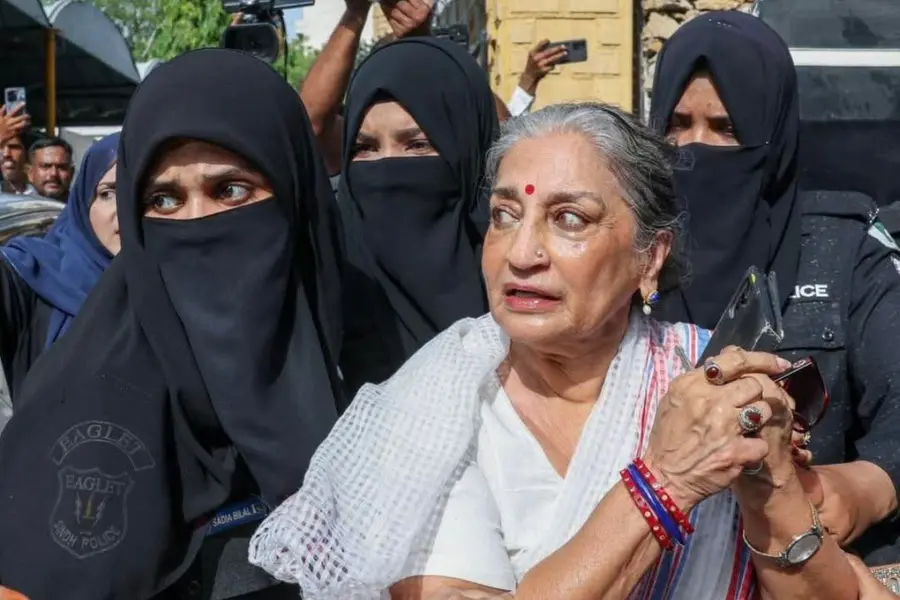
Pakistani classical dancer and feminist activist Sheema Kirmani has returned to the centre of national debate after videos showing hijab-clad policewomen escorting and detaining her in Karachi went viral over the past 24 hours, triggering outrage across social media and renewed criticism of the treatment of women’s rights activists in Pakistan.
Three Sindh Police officials were later suspended after an internal inquiry into the alleged mistreatment of Kirmani and fellow Aurat March activists during the incident, according to local reports.
The controversy stems from events on May 5, when the 75-year-old activist was detained alongside six others near the Karachi Press Club.
The group had reportedly gathered for a press conference linked to the upcoming Aurat March and was seeking a no-objection certificate (NOC) or official permit for the event.
Videos from the scene showed female police officers in hijabs escorting Kirmani away as activists protested police action.
The clips spread rapidly online this week, with many younger users recognising Kirmani from her appearance in the music video of Pasoori by Ali Sethi and Shae Gill.
Alongside Kirmani, transgender rights activist Shahzadi Rai was also detained during the police operation.
Organisers of the Aurat March alleged that activists were stopped, handled roughly, and taken to a police station while attempting to hold a peaceful press interaction regarding difficulties in obtaining permission for the march.
The detainees were later released following intervention from Sindh Home Minister Ziaul Hasan Lanjar.
The incident has since snowballed into a wider political and cultural debate in Pakistan, with rights groups, activists and social media users criticising the police response and questioning the shrinking space for civic activism in the country.
Supporters of Kirmani argued that the visuals of one of Pakistan’s best-known feminist and cultural figures being escorted away by police symbolised increasing pressure on progressive voices and women’s rights campaigners.
Kirmani has long been associated with feminist activism, theatre and classical dance in Pakistan. Born in Rawalpindi in 1951, she became widely known for promoting Bharatanatyam and cultural performance arts despite criticism from conservative sections of society.
She is also the founder of Tehrik-e-Niswan, a women’s rights and cultural organisation that has worked extensively on theatre, education and gender awareness initiatives since the late 1970s.
Her activism became especially prominent during the military rule of Muhammad Zia-ul-Haq, when restrictions on artistic expression and public cultural performances intensified across Pakistan.
The latest detention has once again revived conversations around artistic freedom, women’s rights, and the challenges faced by activists in Pakistan.
Many social media users expressed solidarity with Kirmani, saying the incident reflected growing intolerance toward peaceful dissent and feminist mobilisation in the country.
Published: 13 May 2026, 03:45 pm IST
Disclaimer: Kindly avoid objectionable, derogatory, unlawful and lewd comments, while responding to reports. Such comments are punishable under cyber laws. Please keep away from personal attacks. The opinions expressed here are the personal opinions of readers and not that of Mathrubhumi.
