
What sets Zuckerberg apart, Gates observed, is the early and substantial nature of his giving.
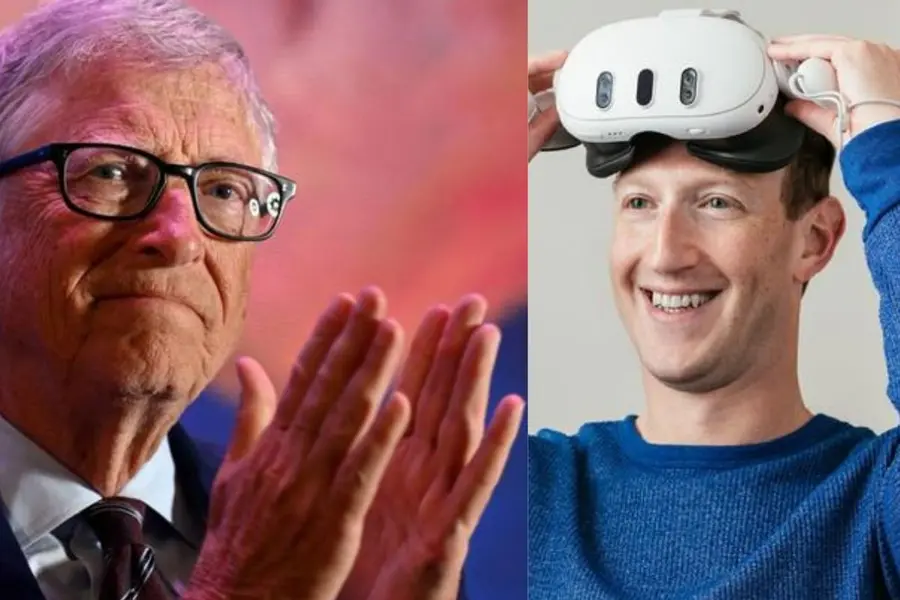
As scrutiny intensifies over how the world’s wealthiest individuals use their fortunes, a notable shift is emerging among tech billionaires who are choosing to give back earlier in life. Microsoft co-founder Bill Gates has applauded Meta CEO Mark Zuckerberg for his commitment to donate more than 90% of his wealth through the Chan-Zuckerberg Initiative—an ambitious philanthropic venture he launched with his wife Priscilla Chan.
In a recent interview with Fortune, Gates, a long-time advocate of large-scale giving, described Zuckerberg as a promising figure in the next generation of philanthropists. He noted that the Meta CEO was making impressive progress and said they frequently exchange ideas on philanthropy and broader global issues.
Zuckerberg and Chan first made headlines in 2015 when they pledged to give away 99% of their Facebook shares during their lifetimes. Since then, the Chan-Zuckerberg Initiative has taken on projects in education, healthcare and scientific research, positioning the couple among the leading voices in modern philanthropy.
Gates, meanwhile, has also taken a transformative step in reshaping his own charitable approach. He recently revealed that the Bill & Melinda Gates Foundation—one of the world’s largest private charitable organisations—will wind down its operations by 2045. The goal, he said, is to accelerate impact while he can still play an active role. Writing on his personal blog, Gates explained that although the foundation was originally intended to continue for decades after his and Melinda’s deaths, he had reconsidered. With input from the board, he concluded that concentrating efforts within a shorter timeline could produce greater results and provide clarity to partners.
He reaffirmed his personal pledge to donate 99% of his wealth, stating, “People will say a lot of things about me when I die, but I am determined that ‘he died rich’ will not be one of them.” He added that holding on to resources when urgent global challenges persist was not justifiable, reinforcing his commitment to philanthropy.
This evolving approach among tech billionaires is closely tied to the Giving Pledge—a campaign Gates co-founded with Warren Buffett and Melinda French Gates in 2010. The initiative encourages the ultra-wealthy to dedicate the majority of their fortunes to charitable causes either during their lifetimes or through their wills. According to Gates, a growing number of entrepreneurs from the tech sector are joining this movement and making meaningful contributions.
What sets Zuckerberg apart, Gates observed, is the early and substantial nature of his giving. While many billionaires take years—or even decades—to shift their focus to philanthropy, Zuckerberg began building a legacy of giving relatively early in his career.
The year 2025 will be especially significant for Gates, marking three major milestones: his 70th birthday, the 50th anniversary of Microsoft, and the 25th year of the Gates Foundation. He also paid tribute to his late father, who played a pivotal role in founding the organisation and would have turned 100 that same year.
With Gates fast-tracking the foundation’s mission and Zuckerberg steadily advancing his own philanthropic vision, a broader trend is becoming evident: today’s tech billionaires are increasingly choosing to make a difference now—rather than waiting for the end of their careers to start giving back.
Published: 17 May 2025, 06:13 pm IST
Related Topics
Disclaimer: Kindly avoid objectionable, derogatory, unlawful and lewd comments, while responding to reports. Such comments are punishable under cyber laws. Please keep away from personal attacks. The opinions expressed here are the personal opinions of readers and not that of Mathrubhumi.
