
Known online as Student Geng, Geng Hongwei was pursuing a PhD in biomedical engineering at Beihang University before leaving the programme in 2025.
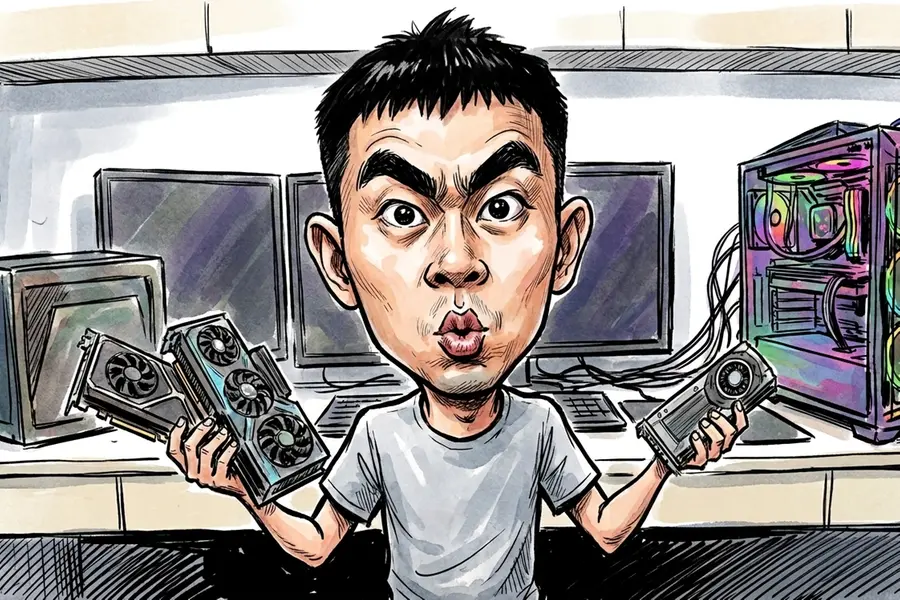
Beijing: A Chinese science blogger and former doctoral student has emerged at the centre of what is being described as the country’s biggest public crackdown on academic misconduct, after his social media revelations triggered investigations into prominent researchers.
Known online as Student Geng, Geng Hongwei was pursuing a PhD in biomedical engineering at Beihang University before leaving the programme in 2025. During his doctoral years, he had already begun creating science-related videos and eventually turned his online account, ‘Geng Tongxue Jiang Gushi’, or ‘Student Geng Tells Stories’, into a full-time career.
His Bilibili profile describes him as a “cyber graduate student” who shares research developments and occasionally discusses controversies in academia. His account has since grown to more than two million followers.
Geng’s growing influence in China’s research community came under greater scrutiny after he publicly flagged alleged problems in research papers and identified prominent academics whom he accused of misconduct.
His revelations on social media in April named four prominent academics at leading Chinese universities. All four had previously been recognised by the National Natural Science Foundation of China (NSFC) under its Distinguished Young Scholars programme.
Three of the academics had served as deans or associate deans of their respective schools.
The revelations were followed by the NSFC’s largest-ever public investigation into academic misconduct, according to a report by the Hong Kong-based South China Morning Post.
On August 26, the NSFC published details of 31 new misconduct cases involving more than 40 researchers at universities and hospitals across China.
The foundation also named the four academics highlighted by Geng in its August notice. Their funding and titles were revoked; they were ordered to return more than 10 million yuan (USD 1.49 million) in previously awarded grants and were barred from applying for funding again for periods ranging from three to seven years.
Within China’s research community, the move is widely seen as a “death sentence” for an academic career, the Post report said.
Who is Student Geng?
Geng Hongwei began building his online presence while studying biomedical engineering at Beihang University. Although he eventually left his PhD in 2025, his science communication work continued to grow.
His Bilibili account, ‘Geng Tongxue Jiang Gushi’, has developed into a major platform where he discusses scientific developments and scrutinises research that he believes may contain problems.
Geng had already posted videos on questionable research and academic controversies before the latest crackdown.
In a May 2026 interview, he said that many of his leads came from members of the academic community, who would send him research papers and suspected issues for examination.
His role has since expanded from science communicator to a prominent figure in China’s debate over research integrity.
How did student Geng trigger the crackdown?
Geng’s public allegations in April brought attention to the work of several prominent academics. The ensuing investigation by the NSFC resulted in sanctions against four of the researchers he had publicly identified.
The NSFC’s August 26 announcement also detailed 31 new misconduct cases involving researchers from universities and hospitals across the country.
The developments came nearly two months after Chinese President Xi Jinping called for tougher action against academic misconduct.
President Xi called for “stricter standards” and “more concrete measures” to tackle misconduct and “foster a clean and upright research ecosystem,” while addressing a joint meeting of the National Science and Technology Awards, Chinese Academy of Sciences, Chinese Academy of Engineering and China Association for Science and Technology.
Why is academic misconduct a growing concern in China?
China has rapidly expanded its investment in scientific research. Under the 15th Five-Year Plan, Beijing has set a target for society-wide research and development spending to increase by at least seven per cent annually between 2026 and 2030.
The expansion of research funding, however, has also intensified concerns surrounding academic integrity and oversight of research expenditure.
The latest action against senior academics signals a tougher approach by Chinese authorities towards alleged misconduct, while Geng’s rise illustrates the growing role social media can play in exposing questionable research practices.
For Geng, the journey from doctoral student to influential science blogger has placed him at the centre of an unusually public confrontation over research integrity in China.
Published: 05 Sept 2026, 03:54 pm IST
ABOUT THE AUTHOR

Related Topics
Disclaimer: Kindly avoid objectionable, derogatory, unlawful and lewd comments, while responding to reports. Such comments are punishable under cyber laws. Please keep away from personal attacks. The opinions expressed here are the personal opinions of readers and not that of Mathrubhumi.