
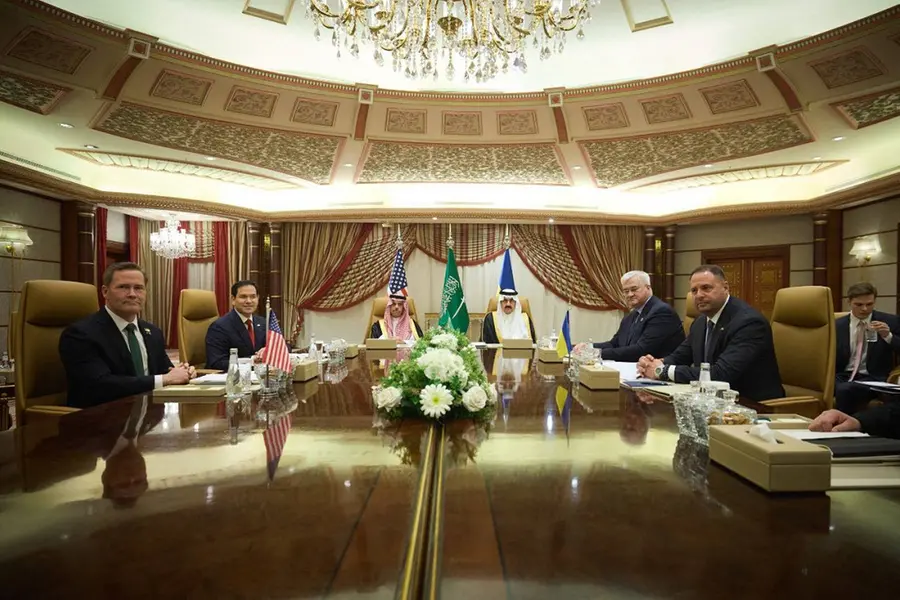
Jeddah, Saudi Arabia – Talks between Ukraine and the United States commenced "very constructively" on Tuesday, with a partial ceasefire with Russia under discussion. The meeting followed Ukraine’s largest drone attack on Moscow in three years of war.
US Secretary of State Marco Rubio and Ukraine’s Foreign Minister Andriy Sybiga attended the meeting in Jeddah, which Russia did not participate in. The talks come as US President Donald Trump increased pressure on Ukraine to end the war triggered by Russia’s 2022 invasion.
The meeting also follows Ukrainian President Volodymyr Zelensky’s contentious visit to the White House, after which the US cut off military aid, intelligence sharing, and satellite access. Kyiv hopes that the proposed partial ceasefire—limited to air and sea operations—will persuade Washington to restore support.
Ukraine’s drone attack and ceasefire offer
On the eve of the talks, Ukraine launched its "largest drone attack in history," targeting Moscow and other regions. Kyiv officials said the assault, which killed three people and saw Russia intercept 337 drones, was meant to push President Vladimir Putin towards agreeing to the proposed ceasefire.
“This is an additional signal to Putin that he should also be interested in a ceasefire in the air,” said Andriy Kovalenko, a national security council official.
Zelensky met Saudi Arabia’s de facto ruler in Jeddah on Monday before heading into the high-stakes talks. The Ukrainian president had previously refused to sign a Trump-backed agreement granting the US control over Ukrainian mineral resources but later signalled willingness to reconsider.
US stance on aid and negotiations
Rubio, accompanied by national security advisor Mike Waltz, acknowledged the suspension of military aid but expressed hope for a resolution.
“Hopefully, we’ll have a good meeting and good news to report,” he said, clarifying that intelligence sharing for defensive operations had not been entirely cut off.
Kremlin spokesperson Dmitri Peskov downplayed concerns that the drone strike would derail peace efforts, stating, “There are no (peace) negotiations yet, so there is nothing to disrupt here.” He declined to comment on Russia’s position regarding the proposed ceasefire, saying, “It is absolutely impossible to talk about positions yet.”
Ukraine’s concessions and US expectations
A Ukrainian official confirmed that Kyiv was prepared to support a limited ceasefire in the air and at sea, a move that Rubio suggested the Trump administration would welcome.
“I’m not saying that alone is enough, but it’s the kind of concession you would need to see in order to end the conflict,” Rubio said.
However, he tempered expectations, stating that the Jeddah meeting was not about "drawing lines on a map" but rather about exploring potential compromises to bring to Russia.
Shifting US policy and global response
Trump has recently taken an unexpectedly favourable stance towards Russia, including shifting blame for the war onto Ukraine and siding with Moscow in recent UN votes. His administration also threatened further sanctions against Russia to push it to the negotiating table.
Meanwhile, Rubio indicated that the US would oppose any "antagonistic" language on Russia at the upcoming Group of Seven foreign ministers’ meeting.
With AFP inputs
Published: 11 Mar 2025, 06:14 pm IST
Related Topics
Disclaimer: Kindly avoid objectionable, derogatory, unlawful and lewd comments, while responding to reports. Such comments are punishable under cyber laws. Please keep away from personal attacks. The opinions expressed here are the personal opinions of readers and not that of Mathrubhumi.
