
Economists warn that inflation pressures and higher borrowing costs are squeezing family budgets, with many Americans struggling to keep up with everyday expenses
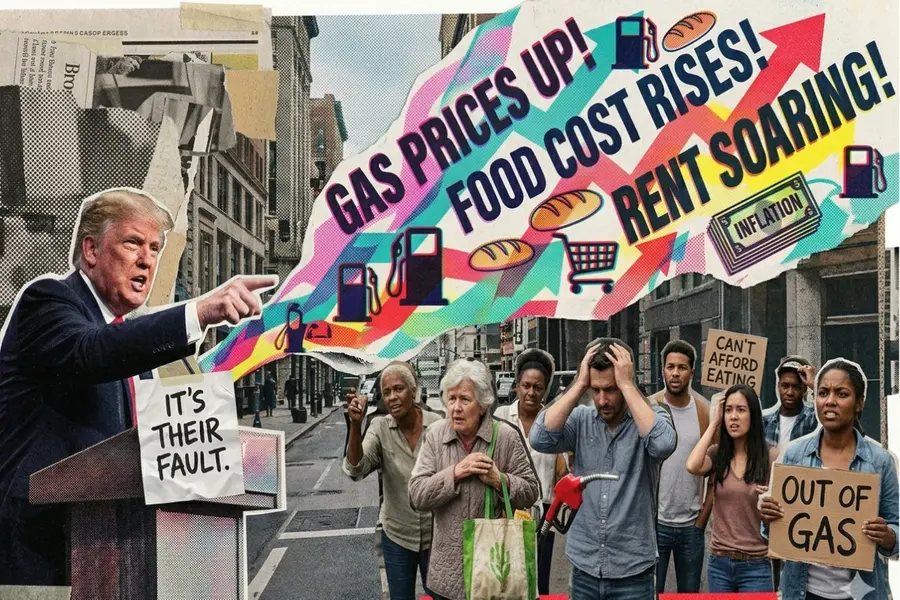
People across the United States are feeling the impact of increasing costs for groceries, fuel, and household utilities. Economists attribute this squeeze on household budgets to a combination of newly introduced US tariffs and a sharp rise in global energy prices linked to ongoing conflict, both of which are pushing up daily expenses and threatening economic growth just as many families had begun to recover financially.
One resident, Katie Peyrey, a 66-year-old grandmother and caregiver from Burbank, California, said she feels let down by the situation. She explained that she works as a minimum wage janitor at a rehabilitation facility and supports herself along with her autistic grandson.
She had previously believed that voting for Donald Trump would improve conditions for families like hers.
"I voted for Trump because he promised to make things better for us," she said
She described how her monthly expenses, which include rent, utilities, groceries, transport, clothing, taxes, and healthcare for her grandson, stood at around $2,300 before the current administration took office. At that time, she was barely managing on an income of around $2,400 per month.
However, she now reports that her monthly costs have risen to more than $2,500, making it difficult for her to balance her budget. She added that she has already borrowed money from relatives and friends, many of whom are also facing financial strain, and now sees her future as increasingly uncertain.
Widespread financial strain among workers
Concerns about rising living costs are not limited to a single household. Christian Devito, a 34-year-old health and safety worker at a large grocery chain in Los Angeles, said his monthly expenses have increased by at least 15 percent over the past three months.
He explained that commuting costs alone have risen significantly, with weekly travel expenses increasing from about $50 to more than $70. In addition, food and utility bills have also gone up sharply. He said the financial pressure is now forcing him to cut back even on essential spending such as food, after already reducing leisure activities like cinema visits and haircuts.
While he enjoys his job, he expressed concern about the future if prices continue to rise due to ongoing global instability and tariff-driven inflation.
Inflation data confirms rising energy costs
Recent US government data supports these concerns, showing that consumer prices continue to increase, with energy costs playing a major role. According to the US Bureau of Labor Statistics, energy prices rose by 10.9 per cent in March compared with the previous month, driven largely by a 21.2 per cent jump in gasoline prices.
This matters because consumer spending accounts for around two-thirds of the US economy, and the Federal Reserve has indicated that interest rates may remain high for longer if inflation pressures continue.
For many households, the impact is uneven but persistent. Fuel price spikes affect commuters immediately, utility bills rise after a delay, and food inflation, even when moderate overall, tends to hit essential goods more directly. Higher borrowing costs on credit cards and auto loans add further strain as interest rates remain elevated.
Everyday shopping becoming more expensive
Shoppers have also noticed rising prices in everyday retail settings. Allen Wang, speaking from a Costco store in Azusa, California, said that what once cost around $200 could fill a shopping cart, but now the same amount barely covers basic items. He also observed that even small goods, such as cat litter, have increased in price by around $2 to $3 over the past year.
Role of tariffs in inflation
Tariffs are increasingly being discussed as a factor behind inflation. A Federal Reserve analysis published in April estimated that tariffs introduced through November 2025 increased core goods prices in the personal consumption expenditures index, the Fed’s preferred inflation measure, by 3.1 percent by February 2026.
The study also suggested that there is a near one-to-one pass-through effect, meaning that when tariffs increase business costs, consumers eventually pay similar increases in retail prices.
Economists at the Peterson Institute for International Economics have also warned that broad tariff policies act like an indirect tax on households. In a February 2025 assessment, they estimated that tariffs on imports from Canada, Mexico, and China could cost the average US household more than $1,200 per year, even before considering secondary effects such as price increases from domestic producers.
Energy shock linked to global conflict
At the same time, rising energy costs linked to ongoing war conditions involving Iran are creating wider economic effects. These include higher shipping and production costs, which eventually feed into the price of groceries and manufactured goods.
Economists say the future direction of prices will depend on how long energy disruptions continue and whether tariff policies are expanded or reduced. The upcoming Consumer Price Index report, expected on May 12, will provide further insight into whether inflation is spreading beyond energy costs and whether households should expect continued financial pressure in the months ahead.
One resident summed up the sentiment by expressing hope that conditions will improve soon, adding that another year of similar cost pressures would be extremely difficult for many families to withstand.
Agency inputs
Published: 27 Apr 2026, 11:58 am IST
Related Topics
Disclaimer: Kindly avoid objectionable, derogatory, unlawful and lewd comments, while responding to reports. Such comments are punishable under cyber laws. Please keep away from personal attacks. The opinions expressed here are the personal opinions of readers and not that of Mathrubhumi.
