
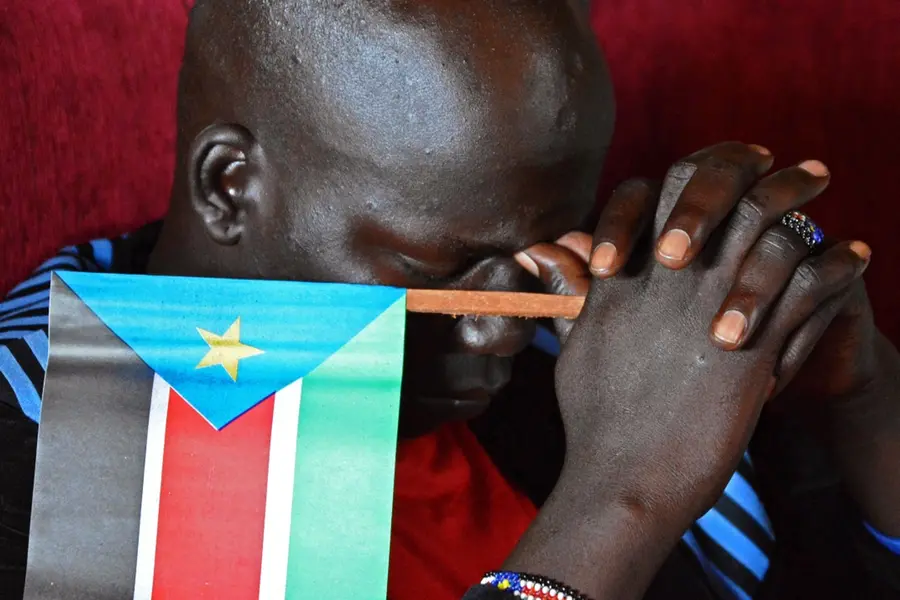
Washington DC: The United States has revoked all visas issued to South Sudanese passport holders, citing the country’s failure to accept the return of its deported citizens. The move, announced by Secretary of State Marco Rubio, targets what he called South Sudan’s “failure to meet international obligations regarding repatriation.”
At the centre of the controversy is a man identified as Makula Kintu, who had been deported from the US but was initially denied entry by South Sudan. Officials in Juba claimed that Kintu was Congolese, not South Sudanese. However, in a recent reversal, South Sudan has agreed to accept the deportee “in the spirit of friendly relations” with the US, despite maintaining that he is not one of their nationals.
US challenges South Sudan's claims
Deputy Secretary of State Christopher Landau disputed South Sudan’s position, highlighting that the country's own embassy in Washington had certified Kintu’s nationality. Landau called the government's reversal “unacceptable and irresponsible,” further intensifying the diplomatic rift.
Humanitarian fallout from aid cuts
The visa revocation comes amid a deepening humanitarian crisis in South Sudan, worsened by major US aid reductions. British charity Save the Children reported multiple child deaths in Jonglei state due to cholera, with children dying on foot journeys to health clinics that had been shuttered following cuts to USAID funding.
According to Save the Children, seven of its 27 clinics in Akobo County have been permanently closed, and nearly 200 staff members have been laid off. The remaining clinics are operating only partially, limiting the organisation's ability to respond to outbreaks.
Cholera outbreak reaches crisis point
UNICEF has recorded nearly 40,000 cases of cholera in South Sudan since September 2024, with around 700 deaths. Roughly half of these fatalities have involved children under the age of 15. The eastern state of Jonglei has borne the brunt of the epidemic, though nine out of the country’s ten states have been affected.
On the ground: “Dystopian” conditions
Save the Children’s country director, Chris Nyamandi, described conditions in Akobo County as “something out of a dystopian world.” In a statement to AFP, he recounted scenes of sick children being treated under trees due to a lack of space and medical infrastructure.
“There should be global moral outrage,” Nyamandi said, “that the decisions made by powerful people in other countries have led to child deaths in just a matter of weeks.”
Renewed political tensions
The situation is further complicated by renewed clashes between forces loyal to President Salva Kiir and First Vice President Riek Machar. These tensions threaten to unravel the fragile peace established following South Sudan’s five-year civil war and could further obstruct humanitarian access.
Aid organisations have warned that if violence escalates, it could prevent relief agencies from containing the cholera outbreak and exacerbate the country’s already dire public health emergency.
Published: 09 Apr 2025, 10:08 am IST
Related Topics
Disclaimer: Kindly avoid objectionable, derogatory, unlawful and lewd comments, while responding to reports. Such comments are punishable under cyber laws. Please keep away from personal attacks. The opinions expressed here are the personal opinions of readers and not that of Mathrubhumi.
