
US uranium production surged to its highest level since 2017 in 2025, but the country still relied heavily on Canada, Kazakhstan and Australia for nuclear fuel supplies.
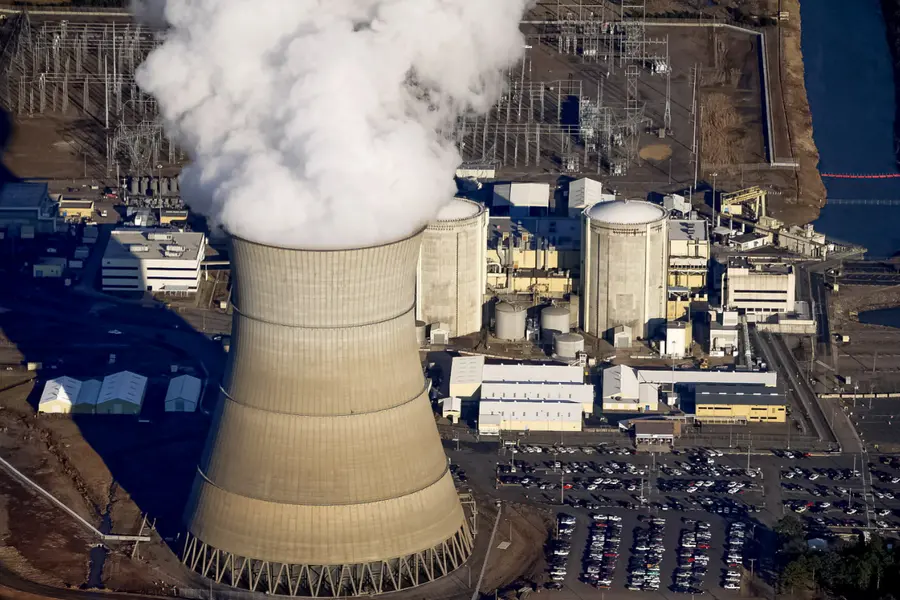
US uranium concentrate production more than tripled in 2025 to 2.1 million pounds, reaching its highest level since 2017 as Washington seeks to rebuild domestic nuclear fuel capacity and reduce reliance on overseas suppliers.
US mines produced 2.1 million pounds of uranium concentrate in 2025, more than three times the 657,000 pounds produced in 2024, according to the US Energy Information Administration (EIA).
The 2025 production level was the highest recorded in the US since 2017.
The increase points to renewed activity in the country's uranium mining sector as Washington seeks to strengthen its domestic nuclear fuel supply chain.
Exploration and drilling also increase
The rise in uranium production was accompanied by increased exploration and development activity.
Uranium exploration drilling rose to 1,824 holes covering more than 1 million feet in 2025, compared with 1,324 holes covering about 0.6 million feet in 2024.
Development drilling also increased to 3,708 holes, from 2,462 a year earlier. Total development drilling footage rose to 1.30 million feet from 1.26 million feet.
The figures indicate that mining companies are not only increasing current output but are also investigating and developing additional uranium resources.
US still relies heavily on foreign uranium
Despite the production surge, domestic mines supplied only a small proportion of the uranium used by US nuclear power plants.
US civilian nuclear reactor operators purchased 46.9 million pounds of U3O8 equivalent in 2025, down from 55.9 million pounds in 2024.
The average price paid for uranium increased by 11 per cent, from $52.71 per pound in 2024 to $58.46 per pound in 2025.
Foreign suppliers continued to dominate deliveries to US reactors.
Canada supplied 32 per cent, followed by Kazakhstan at 28 per cent and Australia at 15 per cent. Uranium originating in the US accounted for only 7 per cent of deliveries.
From yellowcake to reactor fuel
Uranium concentrate, commonly known as yellowcake, cannot be used directly in most nuclear reactors.
The material, primarily U3O8, must go through several stages of the nuclear fuel cycle, including conversion and enrichment, before it can be fabricated into fuel.
This means increasing uranium mining alone does not make the US fully independent in nuclear fuel.
The country also needs sufficient domestic conversion and enrichment capacity to turn mined uranium into fuel suitable for reactors.
Why enrichment matters to US security
The nuclear fuel supply chain has significance beyond civilian electricity generation.
Enriched uranium is used to fuel US nuclear-powered submarines and aircraft carriers. The broader nuclear fuel infrastructure is therefore linked to US national-security requirements.
A Government Accountability Office report found that the US had lacked the ability to produce enriched uranium meeting certain national-security requirements since 2013, increasing reliance on existing stocks and efforts to restore domestic capabilities.
Washington invests in domestic nuclear fuel
The US government has been increasing investment in the nuclear fuel sector.
The US Department of Energy announced $2.7 billion in funding in January 2026 to expand domestic uranium enrichment capacity.
The investment forms part of a wider effort to rebuild the US nuclear fuel supply chain and reduce exposure to foreign supply disruptions.
Why the uranium revival matters
The sharp increase in mining output marks a revival in an industry that has experienced years of declining production.
However, the gap between domestic production and reactor demand remains substantial. US mines produced 2.1 million pounds of uranium concentrate in 2025, while US civilian nuclear operators purchased 46.9 million pounds of U3O8 equivalent.
The figures show that rebuilding domestic mining is only one part of Washington's wider effort. Conversion, enrichment and fuel fabrication capacity will also determine how far the US can reduce its dependence on international nuclear fuel suppliers.
Analysis
The US uranium revival comes as governments increasingly view nuclear fuel supply chains as a strategic issue. For Washington, the challenge is not simply having uranium deposits underground but ensuring that the entire fuel cycle can operate reliably within the country or through secure allied supply chains.
Canada, Kazakhstan and Australia remained major suppliers to US reactors in 2025, demonstrating the continued importance of international uranium markets.
At the same time, increased US exploration and drilling suggest that domestic producers are responding to stronger strategic and commercial demand.
The 2.1-million-pound production figure is therefore significant but does not represent US energy independence. The country still imported the overwhelming majority of uranium required by its civilian nuclear sector, while rebuilding enrichment capacity remains a longer-term challenge.
Published: 30 Aug 2026, 07:24 pm IST
ABOUT THE AUTHOR

Related Topics
Disclaimer: Kindly avoid objectionable, derogatory, unlawful and lewd comments, while responding to reports. Such comments are punishable under cyber laws. Please keep away from personal attacks. The opinions expressed here are the personal opinions of readers and not that of Mathrubhumi.