
Trump says the US-Saudi nuclear deal depends on Riyadh joining the Abraham Accords. Here is what the agreement means, its benefits and nuclear concerns.
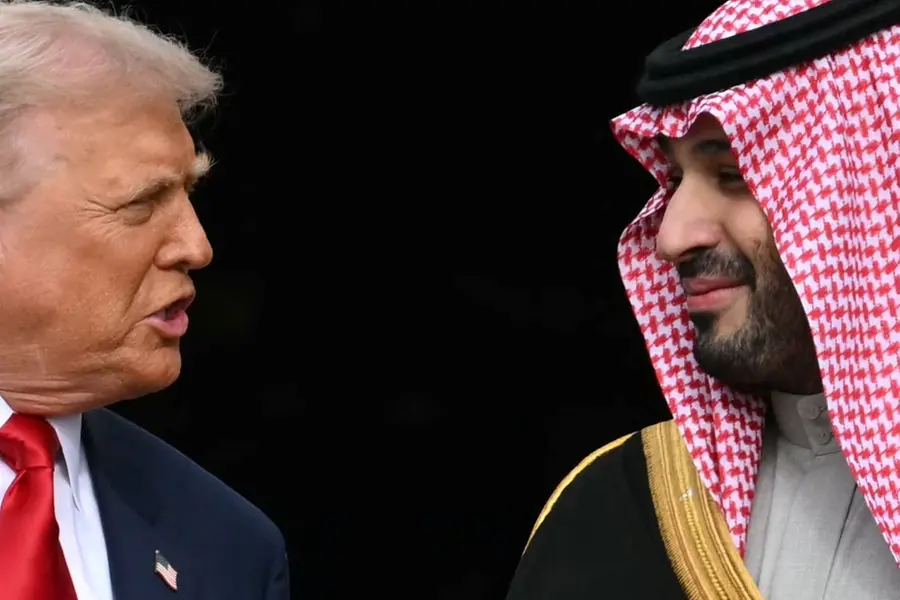
President Donald Trump on Thursday said a landmark civilian nuclear agreement between the United States and Saudi Arabia will only be approved if the kingdom recognises Israel and joins the Abraham Accords.
"The deal to establish a civilian nuclear program in the Gulf country "will be approved, but is totally subject to Saudi Arabia joining the very respected and successful Abraham Accords," Trump said on his Truth Social platform.
His remarks came after the United States and Saudi Arabia announced a civilian nuclear cooperation agreement that is expected to generate billions of dollars for American companies. The deal is also seen as a strategic boost for Riyadh, although it has drawn criticism over concerns that it could pave the way for uranium enrichment and fuel a regional nuclear arms race.
What is the US-Saudi nuclear deal?
The agreement aims to establish a civilian nuclear programme in Saudi Arabia with US cooperation. While the full text of the deal has not been made public, it is expected to expand nuclear energy cooperation between the two countries and strengthen their strategic partnership.
The announcement comes as the United States remains engaged in conflict with Iran, whose nuclear programme continues to be a major point of contention in stalled negotiations.
According to the report, the agreement is expected to generate billions of dollars for American companies while giving Saudi Arabia access to US nuclear technology without requiring it to normalise diplomatic relations with Israel.
Why has the deal raised concerns?
The agreement has triggered concerns among lawmakers and non-proliferation experts, particularly over reports that it could allow uranium enrichment in Saudi Arabia.
The Wall Street Journal reported that one provision could see US companies build a uranium enrichment facility in the kingdom. However, the US Energy Department neither mentioned such a provision nor commented on the report when asked by AFP.
Allison Minor, director of the Project for Middle East Integration at the Atlantic Council, said the agreement also sends a signal to Iran.
"By keeping the door open for uranium enrichment inside Saudi Arabia, the nuclear deal sends a powerful message to Tehran," she said.
US officials defend the agreement
The deal will now be submitted to the US Congress for review, although the Republican-controlled legislature is unlikely to block it.
US Secretary of State Marco Rubio said any agreement on civilian nuclear cooperation would include safeguards.
"Any agreement that we're going to make with any country in the world on civil nuclear energy is going to be one that will have safeguards in place to ensure that it can't be turned into a weapons programme," Rubio said.
US Energy Secretary Chris Wright also rejected concerns that the agreement could encourage nuclear proliferation.
"These agreements uphold the highest standards of nuclear safety and nonproliferation, while relying on the world's best nuclear technology and scientists, designed right here in the United States," he said.
Critics question enrichment provision
Several US lawmakers and Israeli officials have previously opposed any arrangement that could eventually enable Saudi Arabia to develop nuclear weapons.
US Senator Bernie Sanders criticised the agreement in a post on X.
"Trump claims his war on Iran is about stopping an authoritarian country from enriching nuclear fuel. Now he's letting his best friends in Saudi Arabia -- one of the most brutal dictatorships in the world -- do exactly that. This is absurd."
Experts also expressed differing views over the reported enrichment provision.
Matthew Kroenig of the Atlantic Council said allowing Saudi Arabia to enrich uranium would undermine US non-proliferation standards.
"It would be a mistake to allow Saudi Arabia the capability for enrichment. Washington is right to strengthen its relationship with Riyadh, but it should not do so at the expense of its effective nuclear weapons nonproliferation standards."
Paul Dickman, chair of the American Nuclear Society's External Affairs Committee, said he did not expect the agreement to create "additional proliferation challenges" but stressed the need for transparency.
"I would like to see within the language of this agreement how that transparency will be measured," he said.
Jennifer T. Gordon, director of the Atlantic Council's Nuclear Energy Policy Initiative, described the agreement as a strategic victory for Washington.
"Saudi Arabia has made it clear that it will purchase nuclear energy technologies... the only question has been whether the kingdom would choose to work with the US and its allies, or whether it would turn to Russia or China," she said.
With agency inputs
Published: 23 Jul 2026, 08:23 pm IST
Related Topics
Disclaimer: Kindly avoid objectionable, derogatory, unlawful and lewd comments, while responding to reports. Such comments are punishable under cyber laws. Please keep away from personal attacks. The opinions expressed here are the personal opinions of readers and not that of Mathrubhumi.
