
A US House amendment could name India for proposed 100% tariffs over Russian oil, while another seeks to remove the tariff provision from the bill.
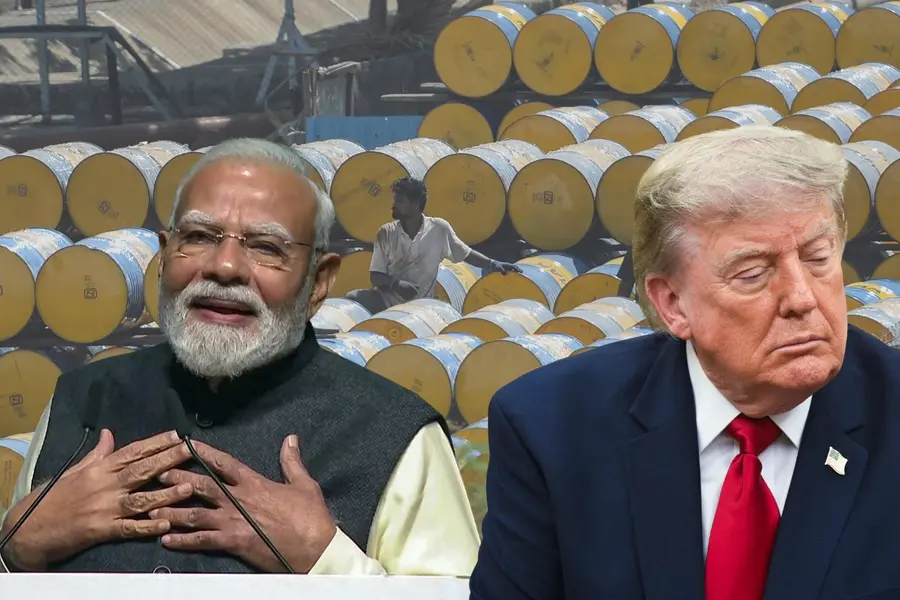
India could be explicitly named in a US bill that allows 100% tariffs on countries buying Russian oil, as lawmakers in the House of Representatives move amendments to the legislation before it can reach President Donald Trump.
The development puts the spotlight on India’s Russian oil purchases, with one proposed amendment seeking to specifically list India and China among countries that could face the steep tariffs. At the same time, another amendment would remove the tariff provision entirely, meaning the final version of the legislation remains uncertain.
Why India could face a 100% US tariff
The legislation, known as the Lindsey O. Graham Sanctioning Russia and Iran Act, was approved by the US Senate in an 86-11 vote on August 7.
The bill targets Russia’s leadership, energy sector and the so-called “shadow fleet” of vessels used to circumvent sanctions on Russian oil shipments.
It also gives the US president authority to impose tariffs of up to 100% on countries that continue to buy Russian oil, with the stated aim of putting economic pressure on Moscow over its war against Ukraine.
The Senate version does not specifically identify the countries that could be hit. Instead, it refers to the five largest importers of Russian oil and gas by volume.
That could have major implications for India, one of the countries that has increased its purchases of Russian crude oil.
Amendment could name India, China and other countries
A proposed amendment by Democratic Congressman Steny Hoyer would remove that ambiguity by explicitly naming countries eligible for the proposed 100% duties.
The list includes India, China, Turkiye, Azerbaijan, Hungary, the Slovak Republic, the UAE, Singapore, Kazakhstan and Kyrgyz Republic.
If the amendment is adopted, India would be directly identified in the legislation as one of the countries that could face the proposed tariffs.
However, that does not mean India has been hit with a 100% tariff. The legislation still has to clear the US House before it can be sent to Trump for his signature.
Another US amendment seeks to remove the tariffs
At the same time, another Democratic lawmaker is pushing in the opposite direction.
Congressman Gregory Meeks, who has opposed giving Trump additional tariff powers, has proposed removing Section 113 of the bill. That section would give the president authority to impose broad secondary tariffs on countries trading with Russia.
Meeks' amendment has three co-sponsors.
If the provision is removed, the proposed 100% tariffs on countries such as India and China would no longer be part of the legislation in its current form.
What happens to the Russia sanctions bill now?
The Senate has already passed the legislation, but it still needs approval from the House of Representatives before it can go to the president.
The House has four working days remaining before it goes into an early recess ahead of the November 3 midterm elections.
The House Rules Committee made the amendments public on Monday, setting up a debate over how far the US should go in targeting countries that continue to trade with Russia.
Meeks proposes other changes
Meeks has also introduced an amendment that would allow the US president to temporarily waive sanctions against a foreign person for 90 days if doing so is considered vital to US national security. The waiver could be renewed for further 90-day periods.
Another amendment from Meeks seeks to authorise $15 billion in direct loans to Ukraine to help finance the purchase of defence articles and services.
With PTI inputs
Published: 15 Sept 2026, 09:14 am IST
ABOUT THE AUTHOR

Related Topics
Disclaimer: Kindly avoid objectionable, derogatory, unlawful and lewd comments, while responding to reports. Such comments are punishable under cyber laws. Please keep away from personal attacks. The opinions expressed here are the personal opinions of readers and not that of Mathrubhumi.