
The US has issued a 30-day waiver allowing the delivery and sale of Iranian oil already at sea, aiming to stabilise global markets amid the Middle East conflict.
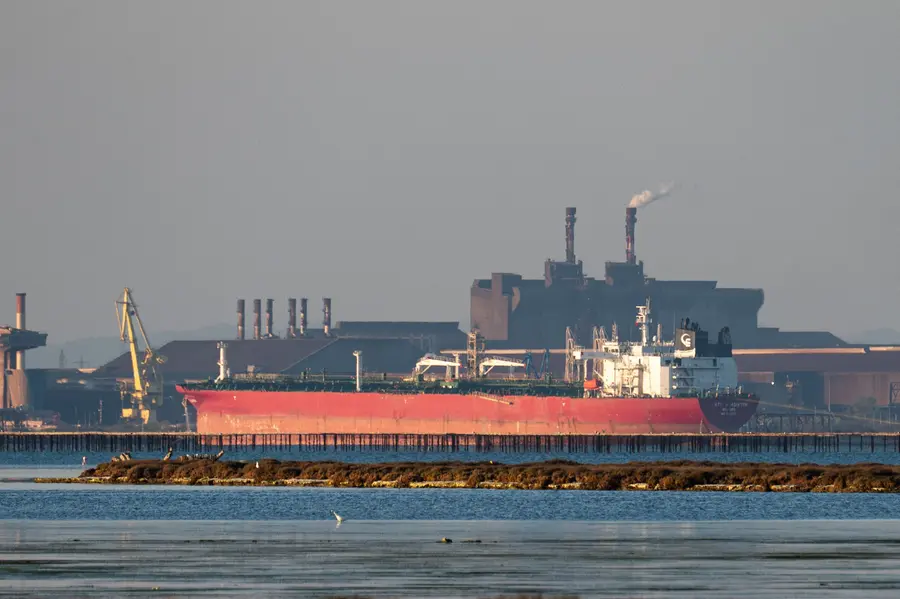
The US Treasury on Friday issued a temporary authorisation allowing the delivery and sale of Iranian crude oil already loaded onto tankers, marking Washington’s latest attempt to ease a mounting global energy crunch triggered by the escalating Middle East war.
The waiver applies exclusively to shipments that were loaded before 20 March and will remain in effect until 19 April, according to a statement from the Office of Foreign Assets Control (OFAC). Treasury Secretary Scott Bessent had signalled a day earlier that such a step was under active review.
The move mirrors a similar relaxation of restrictions recently applied to Russian oil at sea, as the US scrambles to stabilise worldwide supply flows amid conflict-driven disruptions.
Sanctions eased amid supply fears
The approval comes as Iran’s effective blockade of the Strait of Hormuz, a chokepoint for roughly 20% of global oil and gas, and repeated strikes on regional energy assets have fuelled a surge in crude prices.
Bessent framed the authorisation as a “narrowly tailored” measure designed to advance President Donald Trump’s aim to “maximise the flow of energy to the world” and restore market stability.
“At present, sanctioned Iranian oil is being hoarded by China on the cheap,” Bessent said. “By temporarily unlocking this existing supply for the world, the United States will quickly bring approximately 140 million barrels of oil to global markets, expanding the amount of worldwide energy and helping to relieve the temporary pressures on supply caused by Iran.”
The Treasury stressed that the waiver does not authorise new purchases or production and excludes deliveries to Cuba, North Korea and Russian-occupied areas of Ukraine.
Tehran disputes surplus oil claims
Iran quickly rejected the US characterisation of “unlocking” supply. Oil ministry spokesperson Saman Ghoddoosi wrote on X that Tehran has “no surplus crude oil left on the water or for supply in other international markets,” adding that the Treasury’s announcement aimed merely at “giving hope to buyers.”
Washington defends strategy as criticism mounts
The waiver marks the third sanctions relaxation in roughly two weeks. Bessent acknowledged in a Fox Business interview on Thursday that the policy was being considered, prompting some analysts to warn it might inadvertently aid Iran’s war effort.
Bessent dismissed that suggestion on Friday, insisting: “This temporary, short-term authorisation is strictly limited to oil that is already in transit and does not allow new purchases or production. Iran will have difficulty accessing any revenue generated and the United States will continue to maintain maximum pressure on Iran and its ability to access the international financial system.”
He added that “In essence, we will be using the Iranian barrels against Tehran to keep the price down as we continue Operation Epic Fury.”
Oil prices climb but stay below $120
Global oil benchmarks strengthened on Friday but remained below the $120-per-barrel level repeatedly approached since the conflict erupted three weeks ago.
A barrel of Brent crude settled 3.26% higher at $112.19, while West Texas Intermediate rose 2.27% to $98.32.
(With AFP inputs)
Published: 21 Mar 2026, 06:26 am IST
Disclaimer: Kindly avoid objectionable, derogatory, unlawful and lewd comments, while responding to reports. Such comments are punishable under cyber laws. Please keep away from personal attacks. The opinions expressed here are the personal opinions of readers and not that of Mathrubhumi.
