
A US fighter jet crash in Iran has triggered a high-risk rescue mission, highlighting how complex military operations are carried out to recover personnel in hostile territory.
Tehran: A high-stakes rescue mission is underway after a US fighter jet went down in Iran, leaving one crew member missing while another has been rescued. The incident has drawn attention to how the United States military conducts search and rescue operations in enemy territory.
Such missions are among the most complex and dangerous military efforts, involving coordination across air, ground, and intelligence units under extreme pressure and uncertainty.
Also Read

First priority: locating the crew
When a fighter jet crashes or a pilot ejects, the immediate focus is to locate the crew. Emergency beacons may transmit distress signals, but pinpointing the exact location is often difficult due to terrain, signal interference, or deliberate misinformation by enemy forces.
Military officials note that identifying the survivor’s location is the most critical and challenging step in launching a rescue operation.
Training for survival
US aircrew undergo rigorous preparation through the Survival, Evasion, Resistance, and Escape (SERE) program. This training equips them to survive in hostile environments, evade capture, and resist interrogation until rescue teams arrive.
Pilots are also equipped with survival kits that include communication tools, helping rescuers establish contact and assess the situation on the ground.
Once a probable location is identified, the military assembles a coordinated response known as a “rescue package.” This typically involves multiple aircraft and specialised personnel.
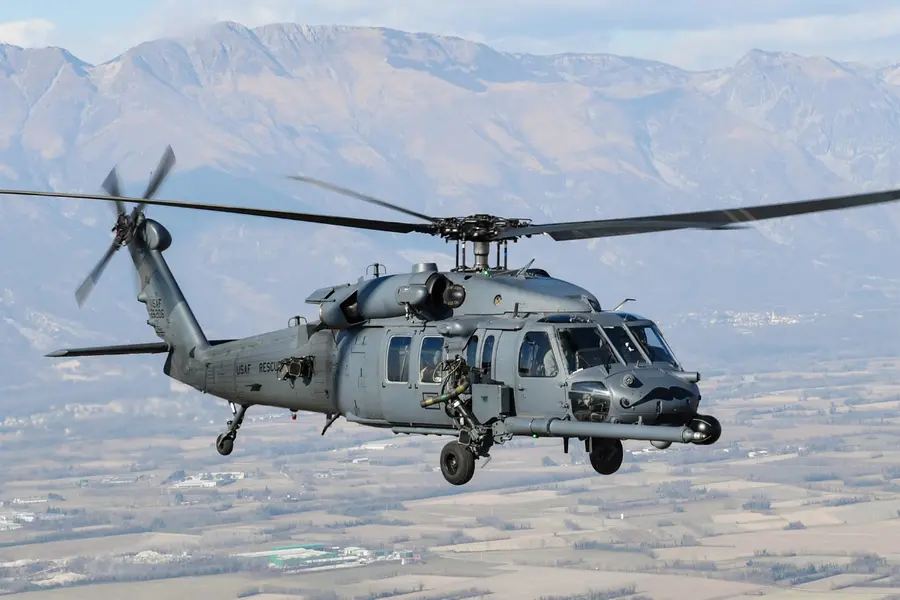
Helicopters such as the HH-60W helicopter are used for extraction, while aircraft like the HC-130J provide mid-air refuelling. Additional support may include attack aircraft for cover and electronic warfare systems to disrupt enemy defences.
Timing and terrain challenges
Rescue missions depend heavily on timing and environmental conditions. Daytime operations increase visibility and risk, while night missions offer concealment but require precise coordination.
Terrain also plays a crucial role. Deserts, mountains, or urban zones can complicate access. If helicopters cannot land, specialised equipment may be used to lift personnel from the ground.
Key risks: capture and survival
In hostile territory like Iran, the risk of capture is a major concern. Enemy forces may attempt to locate and detain downed aircrew before rescue teams arrive.
If capture is avoided, survival becomes the next challenge, especially in extreme conditions with limited access to water, shelter, and safe movement.
Despite the risks, recovering personnel is a top priority for the United States military. These operations are designed to reassure service members that every effort will be made to bring them back safely, even from the most dangerous situations.
The ongoing rescue effort underscores the complexity, urgency, and high stakes involved when military aircraft go down in enemy-controlled areas.
Published: 04 Apr 2026, 09:45 am IST
Disclaimer: Kindly avoid objectionable, derogatory, unlawful and lewd comments, while responding to reports. Such comments are punishable under cyber laws. Please keep away from personal attacks. The opinions expressed here are the personal opinions of readers and not that of Mathrubhumi.