
Higher rates may increase borrowing costs over time for everyday items like auto loans, mortgages, and credit cards.
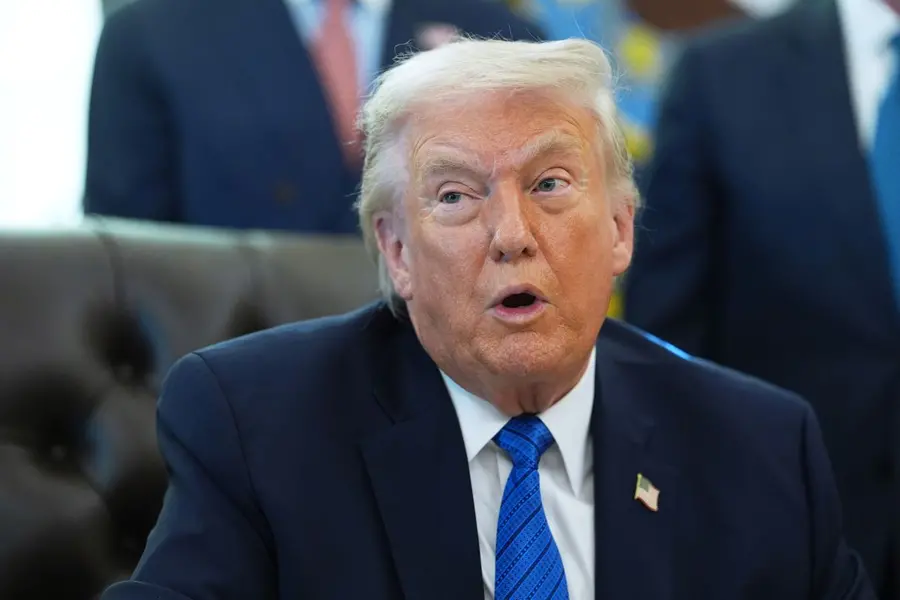
The U.S. Federal Reserve raised its benchmark interest rate on Wednesday for the first time since 2023, defying demands from President Donald Trump for rate cuts. The central bank's Federal Open Market Committee voted unanimously to increase the key rate by a quarter-percentage point (25 basis points), setting it between 3.75% and 4.00%.
Federal Reserve Chairman Kevin Warsh explained that the decision was necessary to tackle persistent inflation. “The plain fact is that inflation is too high, and has been for too long,” Warsh stated during a news conference. August consumer price index data showed inflation at 3.4%, remaining above the Fed's 2% long-term target. Consequently, central bank officials raised their Personal Consumption Expenditures inflation forecast to 3.7% and GDP growth expectations to 2.3% by year-end. Diane Swonk, chief economist at KPMG, noted that inflation had "forced the Fed's hand". She added, "Price pressures remain too elevated and too persistent for policymakers to look through, while the economy and labor market have held up well enough to absorb tighter policy".
Economic projections indicate that 12 out of 18 Fed policymakers expect at least one more rate hike before the end of the year, with four anticipating two additional increases. Warsh withheld his personal input from these projections. When asked about his private communications with the White House, Warsh declined to give details. “I’ve got nothing for you on a discussion with the president,” he said. Warsh noted that he “would be hard pressed to describe broad financial conditions as restrictive”, adding, “Given that resilience and the potential for even greater performance, an attitude of optimism is exactly what I heard”. Following the announcement, U.S. stock markets dropped, while 10-year Treasury bond yields rose above 5%. Higher rates may increase borrowing costs over time for everyday items like auto loans, mortgages, and credit cards.
Donald Trump hits back at central bank decision
President Trump reacted sharply to the rate increase, calling it a “raise against Trump”. He accused the central bank's rate-setting panel of acting out of political motives. Speaking in North Carolina, Trump described the board as “very hostile,” “very political,” “doing the wrong thing,” and “a bunch of politicians”. He claimed, “They’re raising rates to make Trump do as bad as they can possibly do”.
Trump reiterated his stance, stating multiple times that “Interest rates are too high”. He mentioned speaking to Warsh before the vote, telling him, “You might as well vote with the board because it’s not going to matter”. However, Trump insisted he wants Warsh “to be independent” and confirmed he still maintains confidence in him, saying, “I do”. Earlier, during Warsh's Senate confirmation, Democratic lawmakers had accused him of being a "sock puppet" for Trump, a claim Warsh denied.
Trump also took to social media to demand lower interest rates on national debt. “Interest Rates in the United States should be 1%, or less, because we are the Best Credit in the World — BY FAR,” Trump posted. He added, “We are ‘carrying’ almost every country in the World, and that cannot go on any longer”. This follows earlier actions by the administration, which included attempting to fire a Fed Governor and launching a criminal probe against former Fed Chair Jerome Powell.
High living costs and cash promises shape midterm campaign
With the U.S. midterm elections seven weeks away, affordability has become a central issue for voters facing high prices for groceries, housing, and energy. At a campaign rally in North Carolina, Trump dismissed the term affordability as a word Democrats “made up”. He acknowledged that petrol prices are “a little higher” following the outbreak of war in Iran in late February. However, he defended the military campaign, stating, “It’s a very inexpensive price to pay for what we’ve done,” adding it would be worth it “even if it was a lot more”. Trump remarked that he “could have sat back and enjoyed” the economy before launching the war, but believed military action was necessary.
To address economic concerns, Trump repeated a pledge to distribute $5,000 checks to Americans, making the proposal contingent on Republicans winning the midterms. “If we win, we’re going to get you $5,000,” Trump told the crowd. Analysts note the plan would cost over $1 trillion, require approval from a skeptical Congress, and expand the country's $1.8 trillion annual budget deficit.
Published: 17 Sept 2026, 06:42 am IST
Disclaimer: Kindly avoid objectionable, derogatory, unlawful and lewd comments, while responding to reports. Such comments are punishable under cyber laws. Please keep away from personal attacks. The opinions expressed here are the personal opinions of readers and not that of Mathrubhumi.
