
The IRGC said the attacks were carried out in response to overnight US strikes that it claimed targeted bridges and caused civilian casualties in Iran.
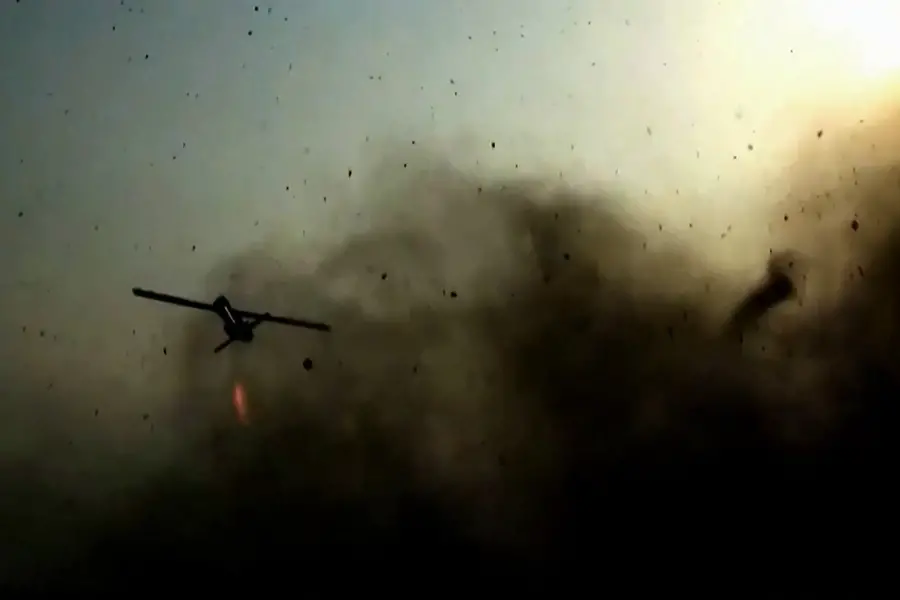
Washington: The United States has dismissed Iran's claims that two oil tankers exploded in the Strait of Hormuz after hitting mines, as Washington continued its military campaign against Iranian targets.
The US Central Command (CENTCOM) said US forces concluded the latest round of operations at 9:30 p.m. ET on July 17, targeting surveillance sites, military logistics infrastructure, underground weapons storage facilities and maritime capabilities across Iran.
In a statement, CENTCOM said US forces employed fighter aircraft, aerial drones and warships, along with other military assets, during the operation.
"CENTCOM continues to hold Iran accountable at the Commander in Chief's direction while fully enforcing a naval blockade against Iranian ports," the statement said.
It added that more than 50,000 American service members are operating across the Middle East and remain vigilant, lethal, and ready.
Earlier, in a post on X, CENTCOM had said, "CENTCOM launched a round of strikes against Iran at 3 p.m. ET today for the seventh consecutive night. The strikes are designed to continue degrading Iranian military capabilities at the Commander in Chief's direction."
The statement came after Iran on Friday (local time) claimed it had targeted US military facilities in Jordan, Kuwait and Bahrain in a fresh wave of retaliatory attacks, hours after CENTCOM announced its latest strikes.
The announcements were made through statements carried by Iran's state broadcaster, the Islamic Republic of Iran Broadcasting (IRIB), citing the Iranian Army and the Islamic Revolutionary Guard Corps (IRGC).
According to the Iranian Army's Public Relations, the country's armed forces carried out the 14th phase of "Operation Lightning", launching drone strikes against multiple US military facilities in Kuwait and Jordan.
The statement said Iranian drones targeted an ammunition depot at Al-Udairi Camp, headquarters buildings and ammunition depots at Ali Al-Salem Air Base in Kuwait, as well as several communication bridges.
It described Al-Udairi Camp as a key logistics and force-support hub for US troops, while Ali Al-Salem Air Base was identified as one of the largest centres supporting and coordinating US air operations in the Gulf region.
The Iranian Army further claimed that fuel storage tanks at Al-Azraq Air Base in Jordan were struck in the same operation.
It described the base as a critical US military facility used for regional operations because of its strategic location and military infrastructure.
Separately, the IRGC, in its 25th statement, claimed responsibility for the 17th wave of "Operation Nasr 2", saying it had targeted a US drone depot in Bahrain.
According to the IRGC, the operation destroyed an American unmanned aerial vehicle storage facility, setting fire to a large number of drones, and said ballistic missiles and dozens of drones struck what it described as the "main artificial intelligence centre" in Bahrain.
The IRGC said the attacks were carried out in response to overnight US strikes that it claimed targeted bridges and caused civilian casualties in Iran.
The statement also warned that if the United States continued attacking Iran's transport infrastructure, Tehran would target what it described as major industrial, information technology and artificial intelligence assets linked to American companies across countries hosting US military bases.
It further asserted that countries hosting US military installations in the region were "complicit" in the attacks on Iran.
Separately, claims circulated by IRGC-linked sources that two oil tankers exploded in the Strait of Hormuz after striking mines in the international waterway have not been substantiated, and US officials have dismissed the assertion.
The latest developments come amid escalating hostilities between the United States and Iran following the collapse of the 14-point memorandum of understanding between the two sides, with both countries exchanging military strikes in recent days.
Published: 18 Jul 2026, 08:05 am IST
Related Topics
Disclaimer: Kindly avoid objectionable, derogatory, unlawful and lewd comments, while responding to reports. Such comments are punishable under cyber laws. Please keep away from personal attacks. The opinions expressed here are the personal opinions of readers and not that of Mathrubhumi.
