
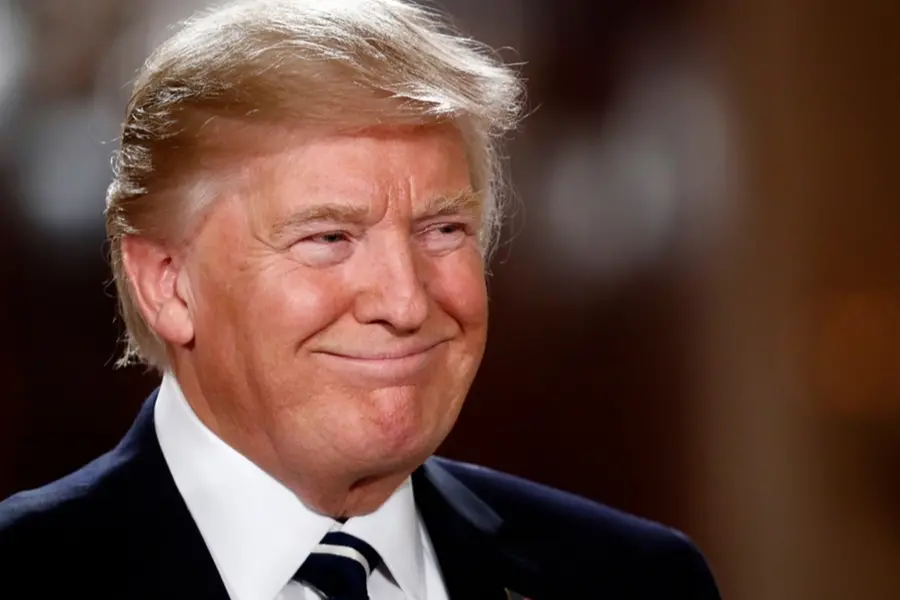
Washington: US president Donald Trump has followed through on his threat to impose an "additional 50 percent tariff" on China, with the White House confirming that the new tariffs will take effect Wednesday. This move brings the total tariff on Chinese goods to an unprecedented 104 percent, marking a dramatic escalation in the ongoing trade war between the two nations.
The new tariffs, set to take effect at 12:01 AM (0401 GMT) Wednesday, will push rates on Chinese imports to the highest levels yet since Trump reclaimed the White House. This move follows the imposition of a 10% tariff over the weekend, which sent shockwaves through global markets, triggering widespread sell-offs and sparking fears of a looming recession.
While Trump remains defiant, asserting that the tariffs will help revive America's manufacturing base, critics—including business experts and economists—warn that the tariffs could lead to higher inflation, as the increased levies push up prices on everyday goods.
Trump has expressed confidence in the tariff strategy, claiming the U.S. is “taking in almost $2 billion a day” from the new levies. He initially proposed a 34% additional tariff on Chinese imports, but after Beijing retaliated with its own 34% countermeasure, Trump vowed to impose another 50% duty, raising the cumulative tariff on Chinese goods to an unprecedented 104% during his second term.
Beijing has strongly condemned the tariffs, labeling them as "US blackmail" and pledging to "fight it to the end." Despite China's resistance, Trump insists that the U.S. has the upper hand, claiming that China “wants to make a deal badly, but they don't know how to get it started.”
In a related development, Canada announced that it would implement tariffs on certain U.S. auto imports starting Wednesday, adding to the complex web of trade tensions.
The European Union, which faces its own tariff challenges, has urged against further escalation. EU Commission President Ursula von der Leyen called for stability in global markets and warned that a prolonged trade conflict could have dire consequences for the global economy. In response, Chinese Premier Li Qiang reassured the EU that China remains confident in its ability to sustain healthy economic growth despite the pressures from the U.S.
Meanwhile, the U.S. stock market felt the strain, with the S&P 500 falling 1.6% on Tuesday. Overseas markets showed a more positive trend, with European and Asian indices recovering from earlier losses.
In a sign of growing domestic friction over the tariffs, Elon Musk, a staunch Trump ally, publicly criticized senior White House trade advisor Peter Navarro, calling him "dumber than a sack of bricks." Musk's comment came after Navarro referred to Musk’s Tesla company as merely a “car assembler” that sought cheap foreign parts.
Despite the increasing pressure from both domestic and international critics, Trump remains resolute in his aggressive stance on tariffs, emphasizing that his administration is working on "tailored deals" with key trading partners, including Japan and South Korea.
Published: 09 Apr 2025, 06:12 am IST
Related Topics
Disclaimer: Kindly avoid objectionable, derogatory, unlawful and lewd comments, while responding to reports. Such comments are punishable under cyber laws. Please keep away from personal attacks. The opinions expressed here are the personal opinions of readers and not that of Mathrubhumi.
