
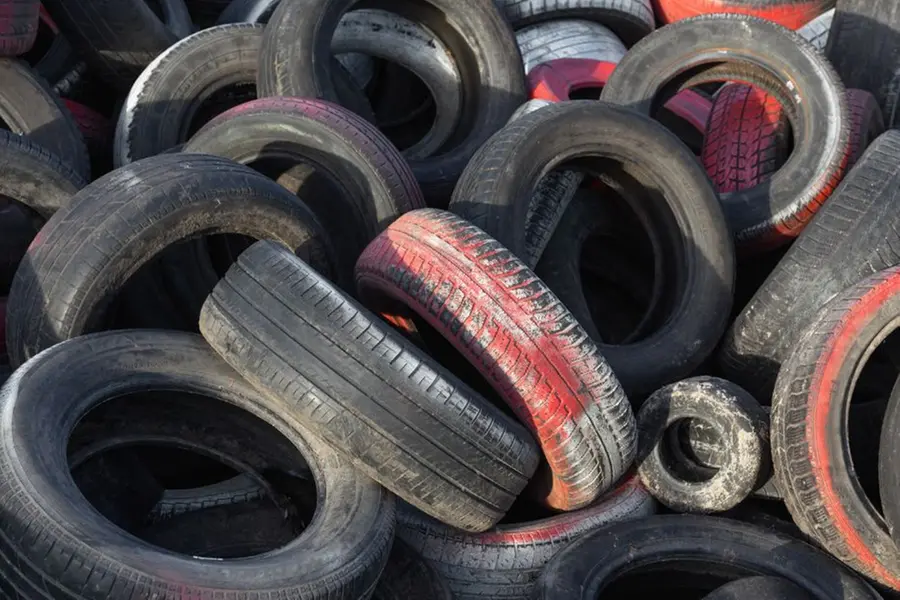
Tyres exported from the UK to India for recycling are instead being burned in unregulated furnaces, causing severe health and environmental hazards, according to a BBC investigation. The report reveals that a significant portion of the UK’s waste tyres enters India’s black market, where they are subjected to a dangerous process known as pyrolysis.
Tyres destined for recycling misused in India
Every year, the UK generates around 50 million waste tyres, amounting to nearly 700,000 tonnes. While official figures indicate that half of these tyres are sent to India for recycling, evidence suggests that many are diverted to makeshift industrial plants. These facilities, often located in remote areas, illegally process tyres in hazardous conditions.
Tyres exported from the UK are compressed into massive rubber bales before being shipped to India. While official documentation states they are destined for legitimate recycling centres, the Tyre Recovery Association (TRA) estimates that around 70% end up in unregulated pyrolysis plants.
The dangers of pyrolysis
Pyrolysis involves heating tyres in an oxygen-free environment at around 500°C, extracting steel, small amounts of oil, and carbon black, a material used in multiple industries. However, the process generates toxic gases and harmful chemicals, posing significant health risks to workers and local communities.
The BBC, working with non-profit journalism group SourceMaterial, tracked UK tyre shipments using hidden trackers. The tyres traveled for eight weeks before reaching an Indian port and being transported 800 miles inland. Drone footage captured in India revealed thousands of tyres awaiting incineration in these illicit plants.
At a site in Wada, near Mumbai, villagers reported severe health issues, including chronic coughs and eye irritation, expressing their desire for the removal of these companies from their village so they could breathe freely.
Scientists from Imperial College London warned that exposure to pollutants from pyrolysis plants increases the risk of respiratory diseases, cardiovascular issues, neurological disorders, and cancer.
Tragedy and government response
In January, an explosion at one of these plants, which had been processing European tyres, killed two women and two children. Following the incident, the local government shut down seven pyrolysis plants.
Despite the Indian government banning the use of imported tyres for pyrolysis, industry insiders confirmed that many UK tyre dealers knowingly sell to Indian buyers engaged in the practice. One UK trader admitted to shipping ten containers of tyres in a single week—five times the legally permitted amount. Another dealer acknowledged that while his paperwork showed tyres were sent for recycling, he was fully aware they were being used in pyrolysis.
The UK’s Department for Environment, Food and Rural Affairs (Defra) stated that strict controls exist for exporting waste tyres, with penalties including unlimited fines and imprisonment. However, the government is now considering reforms to waste exemptions to prevent unlawful shipments.
Published: 25 Mar 2025, 06:00 pm IST
Related Topics
Disclaimer: Kindly avoid objectionable, derogatory, unlawful and lewd comments, while responding to reports. Such comments are punishable under cyber laws. Please keep away from personal attacks. The opinions expressed here are the personal opinions of readers and not that of Mathrubhumi.
